Views: 10 Author: Site Editor Publish Time: 2026-04-23 Origin: Site


What is a Pipe-line centrifugal Pump?
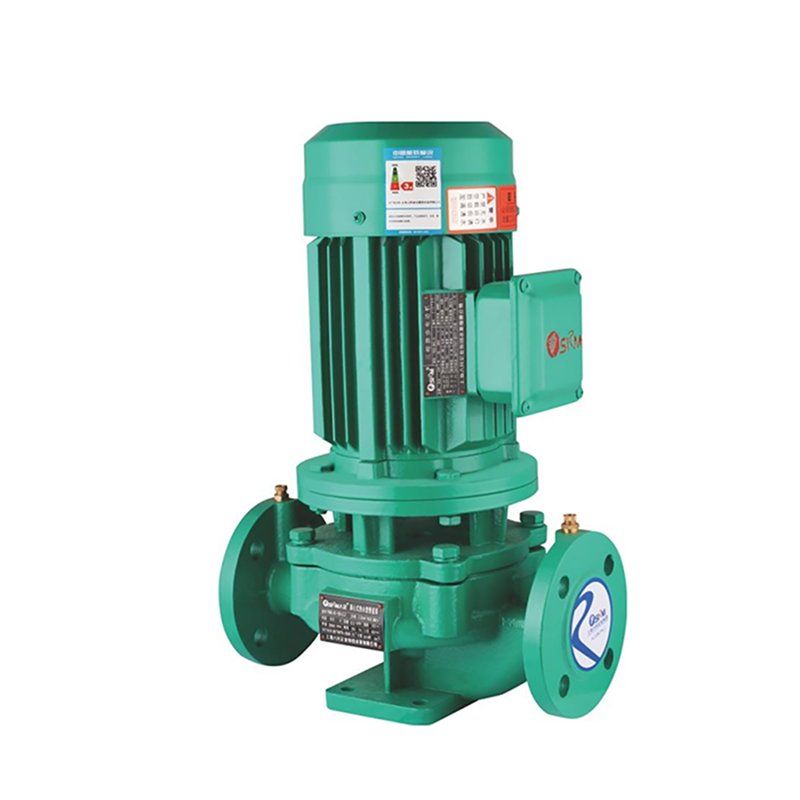
A pipeline centrifugal pump, also known as an inline centrifugal pump, is a high-efficiency vertical or horizontal fluid transportation device perfectly integrated with industrial and municipal pipeline systems. Unlike conventional centrifugal pumps with staggered inlet and outlet structures, this pump features a coaxial linear layout of inlet and outlet with identical calibers, allowing direct inline installation on existing pipelines without extra pipeline modification, bracket adjustment or complex foundation construction.
As a core piece of general fluid machinery, it utilizes centrifugal force to realize low-energy-consumption liquid transportation. With outstanding advantages including compact structure, stable running, low noise and easy installation, it is mainly used for conveying clean water and low-viscosity non-corrosive or weakly corrosive fluids. It has become the mainstream pumping equipment for closed-loop water circulation, pressurized water supply and fluid delivery in various industrial, civil and environmental protection scenarios.

The working process of a pipeline centrifugal pump follows the fluid dynamic principle of centrifugal energy conversion, realizing continuous and stable liquid transportation through mechanical energy conversion. Before formal operation, the entire pump cavity and suction pipeline must be fully filled with liquid to exhaust internal air, which is a prerequisite for normal operation.
When the driving motor is activated, it drives the internal impeller to rotate at a high speed through the pump shaft. The rotating impeller blades drive the liquid inside the pump cavity to perform circular movement. Under the action of high-speed centrifugal force, the liquid is rapidly thrown from the center of the impeller to the peripheral volute casing. In this process, the liquid obtains powerful kinetic energy and flow velocity.
The volute casing has a gradually expanding internal flow channel, which can effectively reduce the flow speed of the liquid. The kinetic energy of the liquid is converted into stable pressure energy, forming high-pressure fluid that is discharged outward along the pipeline outlet. At the same time, a stable negative pressure area is formed at the center of the impeller due to liquid outflow. Under the action of atmospheric pressure, the liquid in the front-end pipeline continuously enters the pump cavity, forming an uninterrupted liquid circulation and completing continuous water supply and pressurization work.
The reliable performance and long service life of pipeline centrifugal pumps stem from precision component design and high-quality structural materials. The core components and mainstream materials are specified as follows:
Impeller is the key power component of the pump. Common materials include high-quality cast iron, 304 stainless steel and 316L stainless steel. Closed impellers are widely used for higher conveying efficiency. Cast iron impellers are cost-effective for conventional clean water delivery, while stainless steel impellers feature anti-corrosion, anti-rust and anti-scaling properties, suitable for industrial sanitary and corrosive fluid scenarios.
Pump Casing adopts integrated one-piece casting technology. Ductile iron casing has strong pressure resistance and impact resistance, adapting to conventional municipal and building water supply. Stainless steel casing is applied in chemical, food and pharmaceutical industries to resist medium corrosion.
Pump Shaft is made of high-strength stainless steel or carbon steel with overall quenching and tempering treatment, featuring high rigidity, wear resistance and deformation resistance, ensuring stable high-speed rotation for a long time.
Mechanical Seal is the core anti-leakage component, adopting silicon carbide-graphite composite wear-resistant materials. It has excellent high-temperature and pressure resistance, effectively preventing medium leakage and air inhalation, and greatly improving the stability of long-term operation.
Bearings and Bracket Assembly use high-precision silent bearings with low friction and low loss. The integrated metal fixing bracket fixes the motor and pump body as a whole, reducing vibration and noise during operation.


Pipeline centrifugal pumps have formed a complete product system to meet differentiated working condition needs, with three mainstream categories in the market:
First, Vertical Pipeline Centrifugal Pump (ISG/CDLF Series). It is the most widely used model with a vertical integrated structure, ultra-small floor space and simple installation. The ISG series is for conventional water supply, while the multi-stage CDLF series is applicable to high-lift pressurized water supply scenarios.
Second, Horizontal Pipeline Centrifugal Pump (ISW Series). With a stable horizontal structure, it is convenient for daily disassembly, maintenance and overhaul, suitable for large-flow and long-term continuous industrial circulation work.
Third, Anti-corrosion Pipeline Centrifugal Pump (IHG Series). Made of full stainless steel, it is specially developed for weakly corrosive media such as chemical solvent, industrial wastewater and beverage liquid.

In municipal engineering, it is used for urban tap water pressurized transportation, residential community secondary water supply, fire water supply and municipal greening water delivery. In industrial manufacturing, it undertakes factory equipment cooling water circulation, boiler make-up water, production process fluid transportation and water treatment system pressurization. In civil building engineering, it is applied to high-rise building water supply, central air conditioning circulating water and heating pipeline circulation. In environmental protection industry, it is used for clean water transportation and pipeline pressurization in sewage pretreatment and water purification systems.


Reasonable model selection is the basis for efficient and stable operation of pipeline centrifugal pumps. The core selection parameters and professional calculation formulas for industrial standard selection are as follows:
1. Flow Rate (Q): Refers to the volume of liquid transported per unit time, unit: m³/h, which determines the overall conveying capacity of the pipeline system.
2. Head (H): Represents the total pressure and lifting height required for liquid transportation, unit: m, including actual lifting height and pipeline resistance loss.
3. Rotational Speed (n): Conventional standard speeds are 1450r/min and 2900r/min, directly affecting pump flow and head performance.
4. NPSH: Net Positive Suction Head, a key parameter to prevent pump cavitation; the actual effective NPSH of the system must be higher than the pump’s required NPSH.
5. Shaft Power Calculation Formula: P = (ρ×g×Q×H) / (3600×η)(P: Shaft power kW; ρ: Liquid density kg/m³; g: Gravitational acceleration 9.8m/s²; Q: Flow rate m³/h; H: Total head m; η: Pump comprehensive efficiency)
6. Total Head Matching Formula: Htotal = Hvertical + Hfriction(Htotal: System total required head; Hvertical: Actual liquid vertical lifting height; Hfriction: Pipeline friction resistance loss)
Selection Principle: Reserve a 10%-15% performance margin on the basis of actual working condition flow and head to avoid long-term overload operation and extend equipment life.

MODEL | Flow | Head | Power | Voltage | Speed | |
(m³/h) | (L/S) | |||||
25-125 | 4 | 1.1 | 20 | 0.75 | 380 | 3000 |
25-160 | 4 | 1.1 | 32 | 1.5 | 380 | 3000 |
25-160A | 3.7 | 1 | 28 | 1.1 | 380 | 3000 |
32-125 | 4.5 | 1.3 | 20 | 0.75 | 380 | 3000 |
32-160 | 4.5 | 1.3 | 32 | 1.5 | 380 | 3000 |
32-160A | 4 | 1.1 | 25 | 1.1 | 380 | 3000 |
32-200 | 4.5 | 1.3 | 50 | 3 | 380 | 3000 |
32-200A | 4 | 1.1 | 40 | 2.2 | 380 | 3000 |
40-100 | 6.3 | 1.8 | 12.5 | 0.75 | 380 | 3000 |
40-125 | 6.3 | 1.8 | 20 | 1.1 | 380 | 3000 |
40-125A | 5.6 | 1.6 | 16 | 0.75 | 380 | 3000 |
40-160 | 6.3 | 1.8 | 32 | 2.2 | 380 | 3000 |
40-160A | 5.9 | 1.6 | 28 | 1.5 | 380 | 3000 |
40-160B | 5.2 | 1.4 | 24 | 1.1 | 380 | 3000 |
40-200 | 6.3 | 1.8 | 50 | 4 | 380 | 3000 |
40-200A | 5.9 | 1.6 | 44 | 3 | 380 | 3000 |
40-200B | 5.5 | 1.5 | 38 | 2.2 | 380 | 3000 |
40-250 | 6.3 | 1.8 | 80 | 7.5 | 380 | 3000 |
40-250A | 5.9 | 1.6 | 70 | 5.5 | 380 | 3000 |
40-250B | 5.5 | 1.5 | 60 | 4 | 380 | 3000 |
40-125(1) | 12.5 | 3.5 | 20 | 1.5 | 380 | 3000 |
40-125(1)A | 11.2 | 3.1 | 17.2 | 1.1 | 380 | 3000 |
40-160(1) | 12.5 | 3.5 | 32 | 3 | 380 | 3000 |
40-160(1)A | 11.7 | 3.3 | 28 | 2.2 | 380 | 3000 |
40-160(1)B | 10.5 | 2.9 | 22.5 | 1.5 | 380 | 3000 |
40-200(1) | 12.5 | 3.5 | 50 | 5.5 | 380 | 3000 |
40-200(1)A | 11.7 | 3.3 | 40 | 4 | 380 | 3000 |
40-200(I)B | 10.5 | 2.9 | 35 | 3 | 380 | 3000 |
50-100 | 12.5 | 3.5 | 12.5 | 1.1 | 380 | 3000 |
50-100A | 11.2 | 3.1 | 10 | 0.75 | 380 | 3000 |
50-125 | 12.5 | 3.5 | 20 | 1.5 | 380 | 3000 |
50-125A | 11.2 | 3.1 | 17.2 | 1.1 | 380 | 3000 |
50-160 | 12.5 | 3.5 | 32 | 3 | 380 | 3000 |
50-160A | 11.7 | 3.3 | 28 | 2.2 | 380 | 3000 |
50-160B | 10.5 | 2.9 | 22.5 | 1.5 | 380 | 3000 |
50-200 | 12.5 | 3.5 | 50 | 5.5 | 380 | 3000 |
50-200A | 11.7 | 3.3 | 44.5 | 4 | 380 | 3000 |
50-200B | 10.5 | 2.9 | 35 | 3 | 380 | 3000 |
50-250 | 12.5 | 3.5 | 80 | 11 | 380 | 3000 |
50-250A | 11.7 | 3.3 | 70 | 7.5 | 380 | 3000 |
50-250B | 10.8 | 3 | 60 | 5.5 | 380 | 3000 |
50-100(1) | 25 | 6.9 | 12.5 | 1.5 | 380 | 3000 |
50-100(I)A | 22.4 | 6.2 | 10 | 1.1 | 380 | 3000 |
50-125(1) | 25 | 6.9 | 20 | 3 | 380 | 3000 |
50-125(1)A | 22.4 | 6.2 | 16 | 2.2 | 380 | 3000 |
50-160(1) | 25 | 6.9 | 32 | 4 | 380 | 3000 |
50-160(1)A | 23.4 | 6.5 | 28 | 3 | 380 | 3000 |
50-160(1)B | 21.6 | 6 | 24 | 2.2 | 380 | 3000 |
During installation, ensure the pipeline is fixed firmly without forced butt joint, so as to avoid pump body deformation caused by pipeline tension. A filter device must be installed at the inlet end to block granular impurities and protect the impeller and mechanical seal. Completely fill the pump body with liquid and exhaust all internal air before startup to avoid cavitation failure. The motor must be reliably grounded, and the rotating direction must be consistent with the marked direction on the pump body to prevent reverse rotation damage.
Carry out daily inspection of pump running noise, vibration and liquid leakage to find abnormal problems in advance. Check bearing lubricating grease every month, replenish or replace lubricant regularly to reduce friction loss. Inspect the tightness and wear of mechanical seals quarterly, replace aging accessories in time for slight leakage. For long-term shutdown equipment, drain the residual liquid inside the pump body to prevent freezing, cracking and internal rust. Clean the inlet filter regularly to ensure unobstructed fluid circulation and stable pumping efficiency.
Different from ordinary centrifugal pumps with irregular inlet and outlet positions, pipeline centrifugal pumps adopt inline coaxial design, which can be directly embedded in the pipeline. They require no special foundation fixation and pipeline conversion accessories, saving installation space and engineering cost. Meanwhile, they feature more stable operation, lower noise and simpler maintenance, which are irreplaceable advantages in closed-loop pipeline systems.
The pipeline centrifugal pump relies on negative pressure suction to absorb liquid. If air remains in the pump cavity, effective negative pressure cannot be formed during impeller rotation, resulting in no water output or insufficient flow. In addition, idling without water will cause high-temperature friction of internal components, trigger cavitation erosion, and seriously wear the impeller and mechanical seal, leading to permanent equipment damage.
Conventional cast iron series pumps are suitable for clean water, industrial circulating water and other non-corrosive clean liquids. Stainless steel series pumps can convey weakly corrosive media such as food beverages, pharmaceutical liquids and dilute acid-base solutions. They are not suitable for high-viscosity oil, liquid with a large number of solid particles and strong corrosive chemical media.
Insufficient pressure is mainly caused by pipeline blockage, air inhalation, mismatched model and seal failure. Users can clean the pipeline filter and internal dirt first, check air leakage at the suction port, and replace aging mechanical seals. If the actual pipeline resistance and lifting height exceed the pump’s rated parameters, it is necessary to replace a high-lift pump model.
Under standard working conditions with regular maintenance, the overall service life of the pump body can reach 8–12 years. Vulnerable parts such as mechanical seals and bearings are consumables, which need to be replaced every 1–2 years. Standardized installation, regular cleaning and lubrication maintenance can effectively reduce failure rate and prolong the service life of the equipment.