
Views: 0 Author: Site Editor Publish Time: 2026-03-13 Origin: Site


Centrifugal pumps move water everywhere, but how does a centrifugal pump work? Many engineers ask this question when learning the centrifugal pump working principle. In this article, you will learn the core mechanism and key components. We also mention reliable centrifugal pumps from Shanghai People Enterprise Group Pump Co., Ltd. Learn more about our products.
A centrifugal pump is a mechanical device designed to move liquids by converting rotational kinetic energy into fluid flow energy. The energy usually comes from an electric motor or engine connected to a rotating shaft. As the shaft rotates, it drives the pump impeller, which transfers energy to the liquid inside the pump chamber. The fluid enters at the center of the impeller and is pushed outward through the blades due to centrifugal force.
The centrifugal pump working mechanism relies on the interaction between fluid dynamics and rotational motion. When liquid enters the pump, it experiences acceleration along the impeller blades. This movement increases the fluid’s velocity and creates a pressure difference between the inlet and outlet. As a result, fluid continuously flows through the pump and into the discharge piping system.
Centrifugal pumps are widely used because they offer high flow capacity and smooth operation. Their design allows them to move large volumes of fluid efficiently with relatively low vibration and minimal pulsation. For many industrial processes, these characteristics are essential for maintaining system stability and equipment reliability.
The concept of centrifugal pumping dates back several centuries. Early designs appeared in the 17th century, but modern centrifugal pumps became widely adopted during the industrial revolution when reliable fluid transport systems were required for factories, waterworks, and mining operations. Over time, improvements in materials, motor technology, and hydraulic engineering greatly enhanced pump efficiency and durability.
Today, centrifugal pumps represent one of the most common pump types used in industrial operations. In many chemical plants, they account for a large majority of pumping equipment installed throughout the facility. Their ability to handle a wide range of liquids and operating conditions makes them extremely versatile.
Modern pump manufacturers have further improved reliability by integrating precision machining and advanced hydraulic modeling. For example, industrial centrifugal pumps produced by SRM incorporate optimized impeller structures and CNC-machined components to maintain stable performance even in demanding operating environments.
One reason centrifugal pumps dominate industrial pumping systems is their relatively simple design. They contain fewer moving parts compared to many other pump types, which reduces mechanical complexity and maintenance costs. Operators can also scale centrifugal pumps easily by adjusting impeller size or motor speed to achieve the desired flow rate.
Another advantage is their ability to deliver continuous and smooth fluid flow. Unlike positive displacement pumps, centrifugal pumps do not create pulsating output, which helps protect sensitive piping systems and instrumentation. This stable operation is especially beneficial in chemical processing and water treatment facilities.
Additionally, centrifugal pumps are highly adaptable. Different impeller designs, casing configurations, and materials allow manufacturers to tailor pumps for specific applications. Large pump manufacturers such as SRM support this adaptability by offering multiple material options, including cast iron, stainless steel, and bronze, allowing pumps to operate reliably in corrosive or high-temperature environments.
Note: Most centrifugal pumps operate most efficiently when pumping low-viscosity liquids such as water, light oils, or solvents.
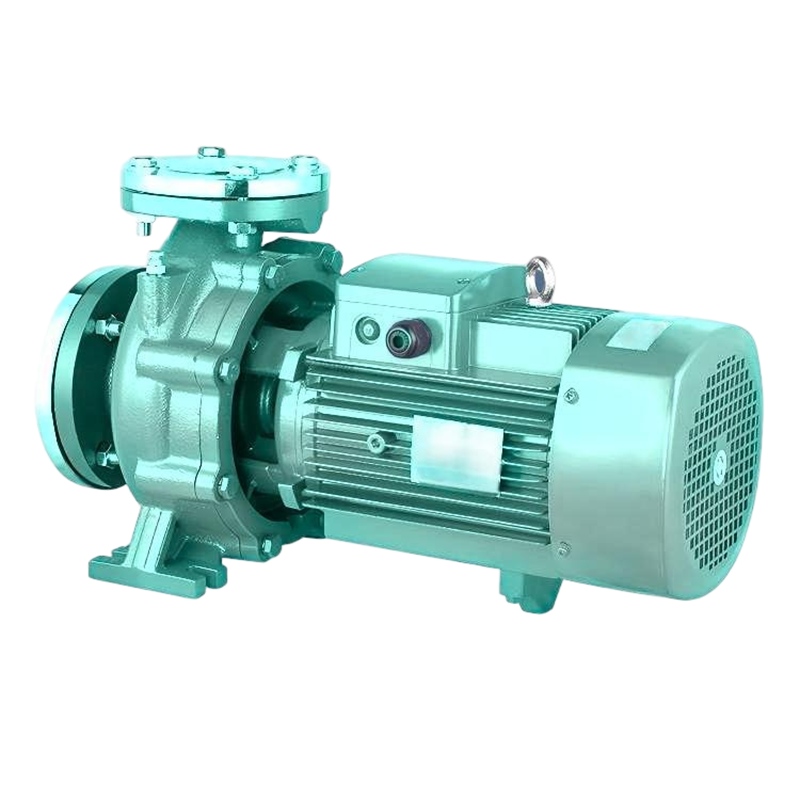
The impeller is the central component responsible for transferring energy from the motor to the fluid. It consists of curved vanes attached to a rotating hub. When the motor drives the shaft, the impeller spins at high speed and accelerates the liquid outward from the center toward the outer edges of the pump chamber.
As the impeller rotates, it creates centrifugal force that pushes fluid through the pump. The fluid gains velocity as it moves along the curved vanes. This increase in velocity represents the primary energy transfer stage of the centrifugal pump operation process.
Impeller design plays a major role in pump performance. Different vane shapes, diameters, and blade angles influence flow rate, pressure generation, and efficiency. Modern industrial pumps often use hydraulically optimized impellers to reduce turbulence and energy losses.
The pump casing surrounds the impeller and performs an important hydraulic function. After fluid leaves the impeller, it enters the casing where its velocity is gradually reduced. As the flow slows down, kinetic energy converts into pressure energy. This process increases the discharge pressure of the fluid before it exits the pump.
Two common casing designs exist: volute casings and diffuser casings. Volute casings use a spiral-shaped chamber that gradually expands toward the outlet. This design helps convert velocity into pressure efficiently. Diffuser casings use stationary guide vanes that direct the fluid and optimize pressure recovery.
The casing also protects internal pump components and directs fluid toward the discharge outlet. Proper casing design improves overall pump efficiency and reduces hydraulic losses.
The pump shaft connects the impeller to the motor. It transmits mechanical energy from the motor to the impeller so that the pump can operate. The shaft must be precisely aligned and supported by bearings to ensure smooth rotation.
If the shaft becomes misaligned or damaged, the pump may experience vibration, noise, or mechanical wear. Therefore, maintaining proper shaft alignment is essential for long-term pump reliability.
The pump inlet allows fluid to enter the pump and reach the impeller. At the center of the impeller lies the pump eye, which acts as the entry point for liquid into the rotating impeller blades. Once fluid enters the eye, it quickly accelerates outward through the impeller vanes.
The outlet or discharge port allows pressurized fluid to leave the pump and travel through the connected piping system. The design of both inlet and outlet channels influences pump efficiency and flow stability.
The centrifugal pump working principle is based on energy conversion. Mechanical energy generated by a motor rotates the impeller, which then transfers energy to the fluid. As the fluid moves through the rotating impeller, its velocity increases dramatically.
This increase in velocity represents kinetic energy added to the fluid. When the fluid leaves the impeller and enters the pump casing, the system converts this kinetic energy into pressure energy. The pressure rise enables the fluid to move through pipes and overcome system resistance.
Centrifugal force is the main driving factor behind fluid motion inside the pump. As the impeller rotates, fluid particles experience outward acceleration. This force pushes the liquid from the center toward the outer edges of the pump chamber.
The continuous rotation of the impeller ensures a steady flow of fluid through the system. As liquid leaves the pump outlet, new fluid enters through the inlet to replace it. This continuous cycle creates a stable pumping process.
After the fluid gains velocity inside the impeller, it enters the pump casing where the cross-sectional area gradually increases. This design slows the fluid while increasing its pressure. The result is a controlled discharge flow with sufficient pressure to travel through pipelines.
This conversion process explains why centrifugal pumps can efficiently move large volumes of liquid with relatively simple mechanical components.
The operation of a centrifugal pump begins when liquid enters the suction pipe and moves toward the pump inlet. This stage is often called the suction phase of the pumping cycle. The pressure difference between the pump inlet and the surrounding system causes the fluid to flow naturally into the pump housing. In most installations, gravity or system pressure helps push the liquid toward the pump.
Once the liquid reaches the inlet, it moves toward the impeller eye, which is located at the center of the rotating impeller. The design of the inlet ensures smooth fluid entry with minimal turbulence. Smooth entry is important because turbulence can reduce pump efficiency and increase energy loss. Proper inlet conditions also help prevent cavitation, which occurs when vapor bubbles form due to low pressure.
At this stage, the pump does not yet increase pressure significantly. Instead, it prepares the fluid for acceleration inside the impeller chamber. A well-designed suction line ensures that liquid flows steadily into the pump and maintains stable system performance.
Once the liquid reaches the impeller eye, the next stage of the centrifugal pump working mechanism begins. The motor rotates the impeller at high speed, typically ranging from hundreds to several thousand revolutions per minute. As the impeller spins, the curved blades push the fluid outward along the vane channels.
This movement transfers kinetic energy from the rotating impeller to the liquid. As a result, the velocity of the fluid increases rapidly. The centrifugal force generated by the rotating impeller pushes the liquid toward the outer edges of the pump chamber. During this stage, the fluid gains both velocity and a moderate increase in pressure.
The shape and angle of the impeller blades play a major role in determining pump efficiency. Proper blade geometry ensures that fluid flows smoothly through the pump while minimizing hydraulic losses. Advanced centrifugal pump designs often use computational fluid dynamics to optimize impeller performance.
After the liquid leaves the impeller blades, it enters the pump casing. At this point, the fluid already has high velocity but relatively moderate pressure. The pump casing plays a critical role in converting this velocity into usable pressure energy.
Most centrifugal pumps use a volute casing, which has a spiral shape that gradually increases in cross-sectional area. As the liquid moves through this expanding chamber, its velocity decreases while its pressure increases. This process follows the principles of fluid dynamics where kinetic energy converts into pressure energy.
Some pumps use diffuser vanes instead of a volute casing. These stationary vanes guide the fluid flow and improve pressure recovery. Both casing designs perform the same basic function, but they may be optimized for different industrial applications.
After the fluid pressure increases inside the casing, the liquid is directed toward the discharge outlet of the pump. From here, the pressurized fluid enters the pipeline system and continues toward its final destination. This may include water distribution networks, industrial processing equipment, irrigation systems, or cooling circuits.
The pump continues this cycle continuously as long as the motor rotates the impeller. Because centrifugal pumps operate using continuous flow rather than pulsed displacement, they produce smooth and stable fluid movement. This characteristic makes them ideal for applications that require constant fluid circulation.
Proper system design ensures that the pump operates within its optimal performance range. When the system resistance matches the pump curve, the pump can deliver maximum efficiency and long service life.
Tip: Always ensure centrifugal pumps are properly primed before operation to avoid dry running damage.
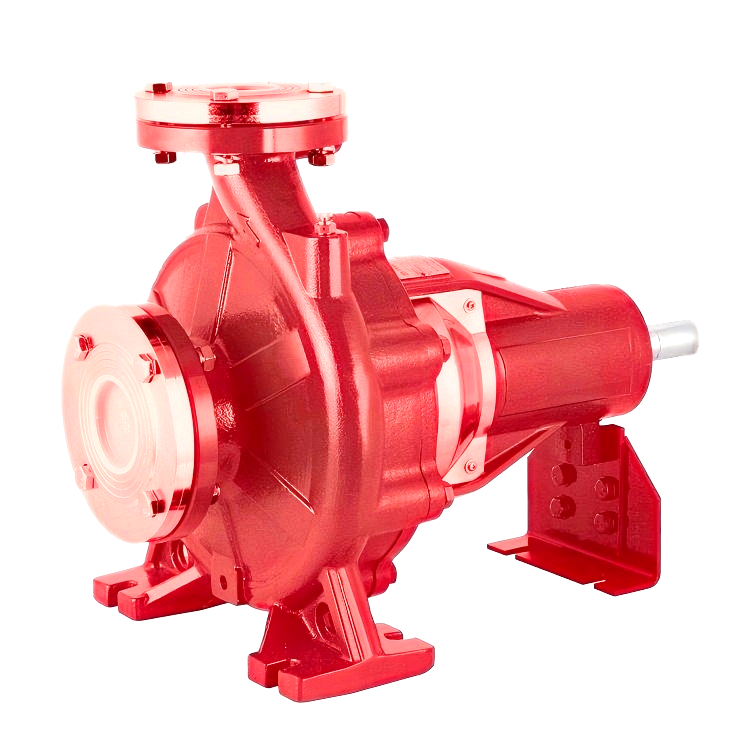
Impeller design is one of the most important factors affecting pump performance. Different impeller configurations are used to handle various fluid types and operating conditions. The choice of impeller depends on factors such as fluid cleanliness, viscosity, and the presence of solid particles.
Impeller Type | Design Characteristics | Typical Applications |
Closed Impeller | Enclosed blades between two plates | Clean water, chemicals |
Semi-Open Impeller | One plate supporting the vanes | Liquids with small particles |
Open Impeller | Exposed blades without side plates | Slurries or solids-containing fluids |
Closed impellers provide the highest hydraulic efficiency and are commonly used for clean liquids. Because the blades are enclosed between two plates, the flow path is well controlled and energy loss is minimized.
Semi-open impellers allow small particles to pass through the pump without clogging. This design is often used in wastewater treatment or industrial process systems where fluids may contain suspended solids.
Open impellers are used when pumping liquids containing larger particles or debris. Although their efficiency is slightly lower, they provide greater resistance to clogging and wear.
Pump performance is closely related to rotational speed and flow rate. When the impeller rotates faster, it transfers more energy to the fluid. This increases both the velocity and pressure of the pumped liquid. However, extremely high speeds can cause excessive mechanical stress and reduce the lifespan of pump components.
In most systems, engineers design pumps to operate near the best efficiency point (BEP). This point represents the operating condition where the pump delivers maximum efficiency with minimal vibration and energy loss.
The physical properties of the fluid significantly influence centrifugal pump performance. Low-viscosity liquids such as water flow easily through the pump and produce high efficiency. High-viscosity fluids, on the other hand, create greater internal friction and resistance.
As viscosity increases, the pump requires more energy to maintain the same flow rate. In extreme cases, centrifugal pumps may become inefficient for pumping thick oils or slurries. In these situations, alternative pump types may be more suitable.
System design also plays a major role in pump efficiency. The diameter and length of pipes, elevation differences, and suction conditions all influence pump performance. Improperly designed systems may cause excessive energy consumption or unstable operation.
Factor | Effect on Pump Performance | Recommended Action |
High viscosity fluid | Reduced flow efficiency | Use specialized pump design |
Improper suction conditions | Cavitation risk | Improve suction head |
Oversized pump | Energy waste | Match pump size to system |
Note: Pump efficiency often decreases significantly when operating far from its best efficiency point.
Centrifugal pumps are often compared with positive displacement pumps because both are widely used in industrial fluid handling systems. However, their operating principles are fundamentally different.
Feature | Centrifugal Pump | Positive Displacement Pump |
Flow Type | Continuous smooth flow | Pulsating flow |
Best Fluid Type | Low viscosity liquids | High viscosity liquids |
Pressure Sensitivity | Flow changes with pressure | Flow remains constant |
Maintenance | Generally simpler | Often more complex |
Centrifugal pumps work best in applications requiring large flow rates and moderate pressure. Their continuous flow output makes them suitable for water supply, cooling circulation, and chemical transfer systems.
Positive displacement pumps are typically used when precise flow control is required. They are also better suited for pumping high-viscosity fluids such as heavy oils, syrups, or industrial pastes.
Centrifugal pumps play a vital role in municipal water supply systems. They help move water from reservoirs and treatment plants to homes, businesses, and industrial facilities. Their ability to maintain steady pressure ensures reliable water delivery throughout large distribution networks.
In agriculture, centrifugal pumps are widely used in irrigation systems. Farmers rely on them to distribute water across large fields efficiently. Their high flow capacity makes them ideal for large-scale irrigation operations.
Chemical and petrochemical plants require reliable pumping systems to move process fluids safely. Centrifugal pumps are commonly used to transfer solvents, acids, and other industrial liquids through complex processing systems.
These pumps must operate continuously and handle demanding conditions. Proper material selection and corrosion-resistant designs help ensure long-term durability in harsh chemical environments.
Heating, ventilation, and air conditioning systems rely on centrifugal pumps to circulate water or coolant through heat exchangers and pipes. This circulation process helps regulate temperature in buildings, factories, and commercial facilities.
Many infrastructure projects use industrial centrifugal pump systems from manufacturers such as SRM. Their equipment is commonly installed in municipal water supply projects and high-rise building pressure boosting systems.
Tip: Selecting corrosion-resistant materials can significantly extend pump life in chemical processing environments.
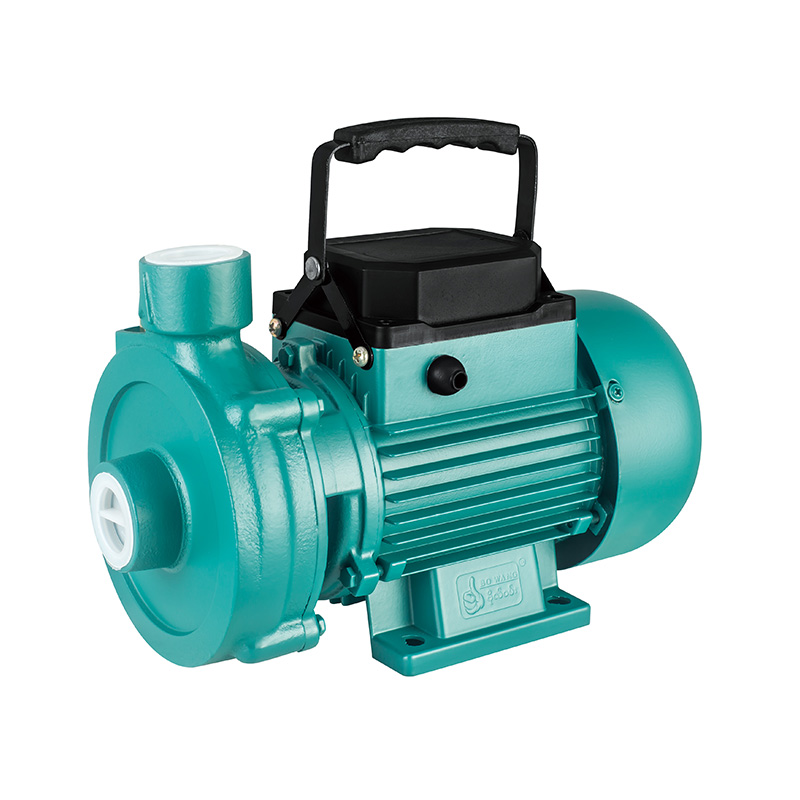
Centrifugal pumps offer several advantages that make them popular across many industries. Their relatively simple design reduces manufacturing complexity and maintenance requirements. With fewer moving parts compared to other pump types, they often provide reliable long-term operation.
Another major advantage is their ability to deliver high flow rates with smooth, continuous output. This characteristic makes them ideal for systems that require stable fluid movement. High-efficiency pump designs also help reduce energy consumption, lowering operating costs for industrial facilities.
Despite their benefits, centrifugal pumps have some limitations. They are generally less efficient when pumping highly viscous fluids because thick liquids create higher internal resistance. In addition, centrifugal pumps must be primed before operation to ensure proper suction.
If a pump operates without liquid inside the casing, it may experience dry running damage. Therefore, proper system preparation and maintenance procedures are essential for safe operation.
In applications where precise dosing is required, positive displacement pumps may provide better control. These pumps move a fixed volume of fluid with each cycle, ensuring consistent output regardless of system pressure.
They are also more effective for pumping thick fluids, slurries, or materials that require careful handling. Choosing the correct pump type ensures that the system operates efficiently and avoids unnecessary mechanical stress.
Understanding how a centrifugal pump works helps engineers choose the right system. The centrifugal pump working principle uses a rotating impeller to increase fluid velocity and pressure. Reliable centrifugal pumps from Shanghai People Enterprise Group Pump Co., Ltd. deliver efficient flow, durable performance, and stable operation for many industrial fluid transfer applications.
A: A centrifugal pump works by using a rotating impeller to accelerate fluid outward, increasing velocity and pressure before the liquid leaves the pump casing.
A: The centrifugal pump working principle converts motor rotation into fluid energy through an impeller that pushes liquid from the center to the pump outlet.
A: They provide continuous flow, simple design, and efficient liquid transfer, making centrifugal pump systems ideal for water supply and industrial circulation.
A: Issues such as poor priming, cavitation, or incorrect pump sizing can reduce centrifugal pump efficiency and affect fluid flow performance.


