
Views: 0 Author: Site Editor Publish Time: 2026-03-10 Origin: Site


Why do modern cities move water so easily? One key reason is the centrifugal pump. Many engineers ask: what is centrifugal pump and why is it widely used?
A centrifugal pump moves liquid using rotating energy. It pushes water, chemicals, and light oils through pipes in many systems.
In this article, you will learn how centrifugal pumps work, their key components, and common applications. You will also discover reliable centrifugal pump products from Shanghai People Enterprise Group Pump Co., Ltd., and learn more about our pump solutions.
A centrifugal pump is a mechanical device designed to move fluid through rotational motion. At the center of the pump is an impeller, a rotating component fitted with curved vanes. When the impeller rotates at high speed, it transfers energy to the liquid inside the pump casing.
This energy conversion process increases the velocity of the fluid. As the fluid moves outward through the pump casing, the kinetic energy is partially converted into pressure energy. The increased pressure allows the fluid to move through pipelines and reach the desired destination.
Centrifugal pumps are considered dynamic pumps because they rely on motion and velocity to move liquids rather than trapping and pushing fixed volumes of fluid.
The primary function of a centrifugal pump is fluid transport. It moves liquids from one location to another through piping systems. In many applications, pumps lift water from underground reservoirs to storage tanks or distribute water through municipal pipelines.
In industrial processes, centrifugal pumps circulate fluids through reactors, cooling systems, and heat exchangers. These pumps can operate continuously for long periods, making them suitable for large-scale production environments.
Because centrifugal pumps can move large volumes of liquid quickly and smoothly, they are widely used in water supply, irrigation, manufacturing, chemical processing, and power generation.
One major advantage of centrifugal pumps is their relatively simple mechanical design. Compared with many other pump types, centrifugal pumps contain fewer moving parts. This simplicity reduces mechanical wear and lowers maintenance requirements.
Another important advantage is smooth and continuous fluid flow. Unlike positive displacement pumps that deliver fluid in pulses, centrifugal pumps provide steady flow. This stable flow reduces pressure fluctuations in pipelines and protects connected equipment.
In addition, centrifugal pumps are easy to install and operate. Many modern pump systems feature compact designs that combine the pump body and motor into a single unit. This integrated structure simplifies installation and maintenance.
Energy efficiency also contributes to their popularity. With optimized impeller geometry and improved hydraulic design, modern centrifugal pumps can achieve high efficiency under the correct operating conditions.
Centrifugal pumps are best suited for low-viscosity liquids. These liquids flow easily through the pump passages and allow the impeller to transfer energy efficiently.
Typical fluids include:
● Water
● Industrial chemicals
● Light oils
● Solvents
● Cooling liquids
When handling thicker liquids such as heavy oil or slurry, centrifugal pump efficiency may decrease. In such cases engineers may select alternative pump types designed for viscous fluids.
The performance of a centrifugal pump depends on flow rate, system pressure, and pump design. These pumps typically deliver large flow volumes with moderate pressure levels.
Feature | Description | Operational Impact |
Flow Type | Continuous fluid flow | Stable system performance |
Energy Source | Electric motor or engine | Rotational motion drives impeller |
Fluid Type | Low viscosity liquids | High efficiency operation |
Pressure Range | Moderate pressure levels | Suitable for pipelines and distribution |
Note: Correct pump selection is essential to achieve optimal efficiency and avoid operational problems.
Understanding how a centrifugal pump works helps engineers and operators select the correct equipment and maintain reliable system performance. The operation of a centrifugal pump is based on the conversion of mechanical energy into hydraulic energy through a rotating impeller. This process allows liquids to move through pipelines efficiently and continuously.
The working principle of a centrifugal pump begins with the rotation of the impeller. An electric motor or engine drives the impeller through a shaft, transferring rotational energy directly to the pump components.
As the impeller rotates at high speed, its curved blades interact with the fluid inside the pump casing. This motion transfers mechanical energy from the motor into the liquid. The spinning blades accelerate the liquid outward from the center of the impeller toward its outer edges.
During this process, the fluid gains velocity and kinetic energy. The faster the impeller rotates, the greater the energy transferred to the liquid. This transformation from mechanical energy into fluid motion is the foundation of centrifugal pump operation.
In industrial systems, this energy conversion allows pumps to move large volumes of water or process fluids through pipelines, cooling circuits, and circulation systems.
Liquid enters the pump through the suction pipe and flows toward the center of the impeller. This central opening is called the impeller eye. At this location, the pressure becomes lower than the pressure at the fluid source.
Because fluid naturally flows from higher pressure to lower pressure, the liquid is drawn into the pump chamber. This pressure difference ensures continuous fluid intake while the pump is operating.
The design of the suction pipe and inlet geometry plays an important role in pump efficiency. Smooth fluid entry reduces turbulence and minimizes energy losses before the liquid reaches the impeller.
Proper suction conditions are essential for maintaining stable pump performance and preventing operational problems such as cavitation.
As the impeller rotates, centrifugal force acts on the liquid inside the pump. The fluid is pushed outward along the curved blades of the impeller toward the outer edge of the pump casing.
This outward movement significantly increases the velocity of the fluid. As the liquid travels along the impeller channels, it gains both speed and kinetic energy.
The shape and angle of the impeller blades are carefully designed to maximize this acceleration while minimizing hydraulic losses. Modern pump designs often use optimized blade geometry to improve efficiency and reduce energy consumption.
This stage of the process is where the majority of the pump's energy transfer occurs.
After leaving the impeller, the fluid enters the pump casing. The casing is designed to gradually expand in cross-sectional area. This expansion slows down the velocity of the fluid.
According to fluid dynamics principles, when velocity decreases, pressure increases. This process converts kinetic energy into pressure energy.
The increased pressure allows the fluid to move through the discharge pipe and travel through the pipeline system toward its destination.
Two common casing designs are used to accomplish this pressure conversion:
● Volute casing
● Diffuser casing
Both designs help transform velocity into pressure while maintaining stable flow conditions.
Once the pump starts operating, the entire process becomes continuous. Fluid enters through the suction pipe, gains energy inside the impeller, and exits through the discharge outlet.
As long as the motor continues rotating the impeller, the pump maintains steady fluid movement through the system.
This continuous cycle allows centrifugal pumps to operate reliably in applications that require constant fluid circulation, such as cooling systems, irrigation networks, and industrial production lines.
Tip: Proper priming removes air from the pump and ensures smooth startup operation. Without priming, the pump may not be able to generate sufficient suction pressure.
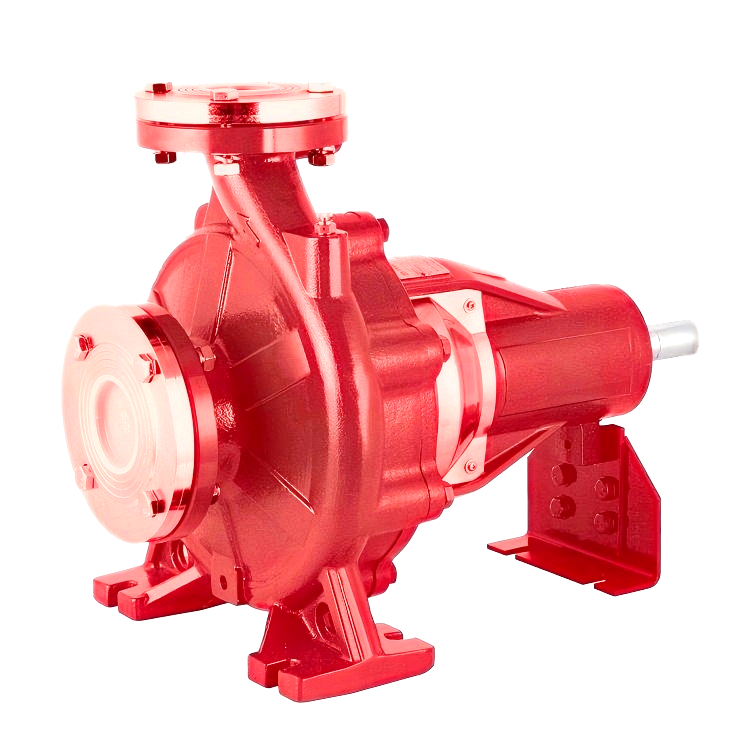
A centrifugal pump contains several essential components that work together to transfer energy and move fluids efficiently. Each component has a specific function that contributes to the pump's overall performance and reliability.
The impeller is the most important part of the pump. It transfers energy from the motor to the liquid by accelerating fluid outward from the center of the pump.
Impellers are typically made from materials such as cast iron, stainless steel, or bronze depending on the application and fluid type.
Impeller Type | Structure | Typical Use |
Closed Impeller | Enclosed blades | Clean liquids |
Semi-Open Impeller | Partial blade support | Light solids |
Open Impeller | Exposed blades | Slurries |
Closed impellers are highly efficient and commonly used for clean liquids. Semi-open and open impellers allow small particles to pass through, making them suitable for wastewater or slurry applications.
Selecting the correct impeller design ensures stable pump performance and reduces the risk of clogging or wear.
The pump casing surrounds the impeller and collects fluid leaving the impeller blades. Its primary function is to convert the fluid's velocity into pressure.
In a volute casing, the fluid flows through a spiral-shaped chamber that gradually increases in area. This design slows the fluid and converts velocity energy into pressure energy.
In a diffuser casing, stationary guide vanes direct the fluid flow and help convert kinetic energy into pressure more efficiently.
Both casing types are widely used depending on pump size and application requirements.
The motor provides the rotational energy needed to drive the impeller. Most centrifugal pumps use electric motors because they are efficient, reliable, and easy to control.
In remote or heavy-duty installations, diesel engines may also be used as the driving power source.
Modern centrifugal pumps often integrate high-efficiency motors with compact pump structures. This integrated design reduces installation space and improves overall system reliability.
The shaft connects the motor to the impeller and transmits rotational motion. Bearings support the shaft and allow it to rotate smoothly inside the pump housing.
Proper bearing alignment reduces friction and prevents vibration. Well-maintained bearings extend pump service life and ensure stable operation.
Seals are also often included near the shaft to prevent fluid leakage from the pump casing.
Centrifugal pumps can be classified into several categories based on design, flow direction, and application. Different pump types are used to meet specific operating conditions such as pressure requirements, flow rate, and installation space.
Single-stage pumps contain one impeller and are typically used in applications that require moderate pressure and high flow rates. These pumps are common in water supply systems, circulation systems, and irrigation applications.
Multi-stage pumps contain multiple impellers arranged in sequence along the shaft. Each stage increases the pressure of the fluid, making these pumps suitable for high-pressure applications such as boiler feed systems and high-rise building water supply.
Centrifugal pumps can also be classified based on the direction of fluid flow relative to the pump shaft.
Pump Type | Flow Direction | Typical Application |
Radial Flow | Perpendicular to shaft | High pressure systems |
Axial Flow | Parallel to shaft | Large flow systems |
Mixed Flow | Combination flow | Irrigation and drainage |
Radial flow pumps generate higher pressure, while axial flow pumps are designed to move extremely large volumes of fluid at low pressure.
Mixed flow pumps combine characteristics of both types and are commonly used in agricultural irrigation and flood control systems.
Centrifugal pumps may be installed horizontally or vertically depending on system design and available installation space.
Horizontal pumps are widely used in industrial plants because they are easy to install and maintain.
Vertical pumps are often used in deep wells, municipal water systems, and applications where floor space is limited.
Specialized centrifugal pumps are designed to meet specific industrial requirements.
Examples include:
● Slurry pumps for abrasive materials
● Magnetic drive pumps for chemical handling
● Canned motor pumps for sealed environments
● Multistage pumps for high-pressure systems
Note: Magnetic drive pumps reduce leakage risks in hazardous chemical environments by eliminating mechanical shaft seals.
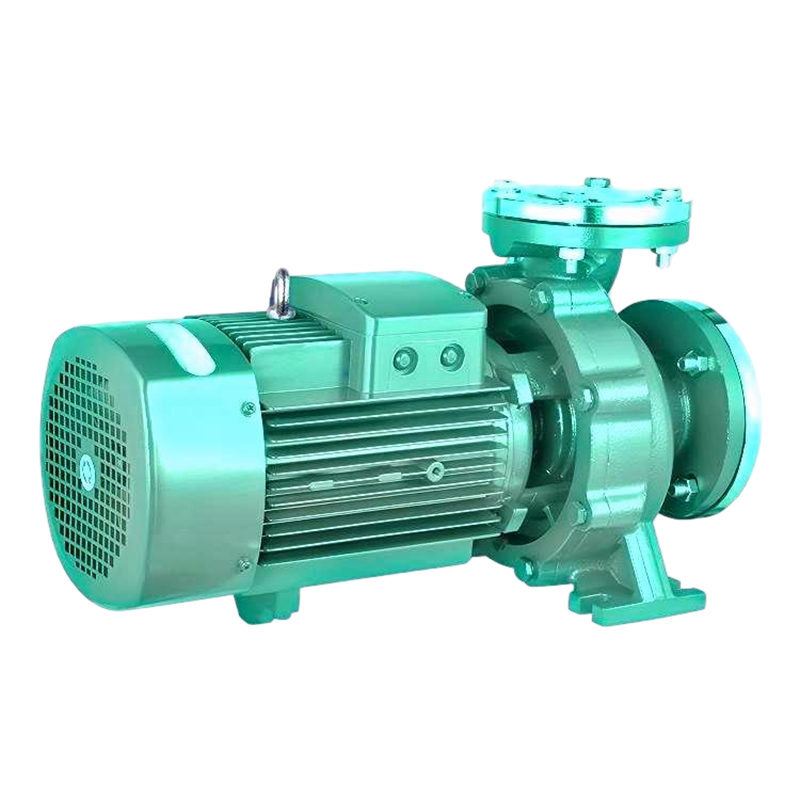
Centrifugal pumps are used across numerous industries because they can handle large volumes of fluid efficiently and reliably.
Cities depend on centrifugal pumps to transport clean water from treatment plants to residential and commercial areas. These pumps also move wastewater through sewage networks to treatment facilities.
Manufacturing plants use centrifugal pumps to move chemicals, cooling liquids, and process fluids through pipelines and equipment. These pumps ensure stable flow conditions during industrial operations.
Large irrigation systems rely on centrifugal pumps to distribute water across farmland. These pumps enable farmers to maintain consistent water supply and improve crop productivity.
Power plants use centrifugal pumps to circulate cooling water, transport boiler feedwater, and move process fluids throughout the energy production system.
Tip: Selecting corrosion-resistant materials can greatly extend pump service life in chemical applications.
Centrifugal pumps perform best when handling large volumes of liquid. Their efficiency improves as flow rate increases, making them ideal for municipal water systems, industrial circulation systems, and irrigation networks.
The mechanical structure of centrifugal pumps is relatively simple compared with other pump technologies. Fewer moving parts reduce the risk of mechanical failure and simplify maintenance procedures.
Centrifugal pumps deliver smooth and uninterrupted fluid flow. This continuous operation prevents pressure surges and protects pipelines, valves, and connected equipment.
Centrifugal pumps can operate in many environments including industrial manufacturing plants, water treatment facilities, agricultural irrigation systems, and power generation stations.
Despite their advantages, centrifugal pumps also have certain limitations that must be considered during system design.
Thick liquids create resistance to flow, reducing pump efficiency. Positive displacement pumps may be more suitable for handling viscous fluids such as heavy oil or sludge.
Many centrifugal pumps require priming before startup. Priming removes air from the suction pipe and pump casing so that liquid can enter the system properly.
Cavitation occurs when vapor bubbles form inside the pump due to low pressure conditions. When these bubbles collapse, they create shock waves that can damage the impeller and casing.
Proper pump selection and system design can help minimize cavitation risk.
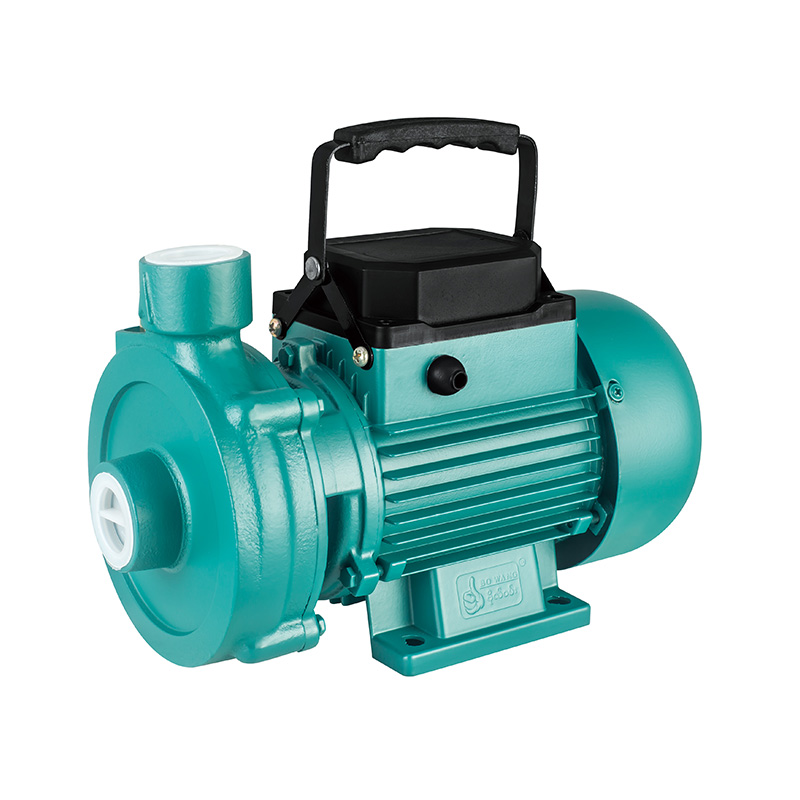
Positive displacement pumps move fixed volumes of liquid per cycle, while centrifugal pumps deliver continuous flow. This difference affects performance depending on system requirements.
Centrifugal pumps perform best in high-flow conditions with moderate pressure. Positive displacement pumps are better suited for high-pressure or viscous fluid applications.
Engineers must consider several factors when selecting a pump:
● Required flow rate
● System pressure conditions
● Fluid viscosity and temperature
● Installation environment
Proper pump selection ensures efficient system operation and long equipment life.
Fluid viscosity, temperature, and chemical composition influence pump performance and material selection. Some fluids may require corrosion-resistant materials such as stainless steel or special alloys.
Correct pump sizing ensures efficient operation. Oversized pumps waste energy, while undersized pumps may fail to meet system demands.
Pump materials such as cast iron, stainless steel, and bronze provide different levels of corrosion resistance and durability depending on the fluid and operating environment.
Energy consumption, maintenance intervals, and equipment reliability all influence the long-term operating cost of a pump system. Choosing an efficient and durable pump reduces lifecycle costs and improves system reliability.
Centrifugal pumps move water and other liquids efficiently across many systems. Their simple design and stable performance support industry and infrastructure. Shanghai People Enterprise Group Pump Co., Ltd. provides reliable centrifugal pump products with efficient operation and durable performance, helping users achieve stable and cost-effective fluid transport.
A: A centrifugal pump moves liquids by rotating an impeller. It is commonly used for water supply, irrigation, cooling systems, and industrial fluid transfer.
A: A centrifugal pump working principle uses a spinning impeller to increase fluid velocity and pressure, allowing liquid to flow through pipelines continuously.
A: Centrifugal pumps provide stable flow, simple design, and high efficiency for large liquid volumes, making them ideal for water systems and industrial applications.
A: Common centrifugal pump issues include cavitation, air blockage, and improper priming, which may reduce efficiency or damage pump components.


