
Views: 351 Author: Site Editor Publish Time: 2026-02-21 Origin: Site


If you rely on a private well, your submersible pump is the heart of your home. It sits deep underground, out of sight and often out of mind, until the water stops flowing. Naturally, the biggest question homeowners and facility managers ask is: "How long will it stay functional?"
The short answer is that a high-quality submersible pump typically lasts between 10 to 15 years. However, this isn't a fixed rule. Some heavy duty units can push past 20 years, while others might fail in just five. Its lifespan depends on water quality, installation depth, and the build material—whether it is a standard model or a high-grade stainless steel variant.
In this guide, we will break down the variables that dictate the survival of your water system. We will look at why deep well environments are tough on equipment and how to extend the life of your investment. By the end, you will know exactly what to look for and when to prepare for a replacement.
Most industry experts agree on a 15-year average for a residential submersible pump. This estimate assumes the unit was sized correctly and installed in a well with relatively clean water. Unlike jet pumps that sit above ground, this type of pump is submerged in water, which actually helps cool the motor. This cooling effect is a primary reason they often outlast surface-mounted counterparts.
However, "average" is a tricky word. In a deep well where the pump must push water up several hundred feet, the motor works much harder. This increased load can shave years off the lifespan. Conversely, a pump in a shallow, clean aquifer might hum along for decades. We often see heavy duty industrial models lasting longer because they are engineered to handle more frequent start-stop cycles.
It is also worth noting that the mechanical components usually outlast the electrical ones. Most failures occur in the motor windings or the starting capacitor rather than the impellers. If you choose a pump with a stainless steel shell, you are already ahead of the curve, as it resists the external "pitting" that destroys cheaper plastic or cast-iron housings.
What causes one submersible pump to die early while another survives? It rarely comes down to just one thing. It is usually a combination of environment and usage patterns.
Duty Cycle: This refers to how often the pump turns on and off. Constant cycling is the number one killer. Every time the motor starts, it experiences a surge of heat and mechanical stress.
Water Quality: If your water contains abrasive sand or silt, it acts like sandpaper on the internal impellers. For these conditions, a heavy duty design with sand-handling capabilities is vital.
Power Stability: Voltage spikes or "brownouts" can cook the motor's internal insulation. Using a dedicated surge protector or a high-quality control box can prevent this.
| Factor | Impact on Lifespan | Mitigation Strategy |
| Sand/Silt | High Wear | Install a sand shroud or sediment filter |
| Frequent Cycling | Motor Burnout | Increase pressure tank size |
| Hard Water | Scale Buildup | Regular chemical cleaning or water softening |
| Acidic Water | Corrosion | Use a stainless steel or chemical resistant pump |
Environment plays a massive role. In industrial sewage applications, for example, the presence of corrosive agents requires a chemical resistant build. Without these specific protections, a standard pump would fail within months rather than years.
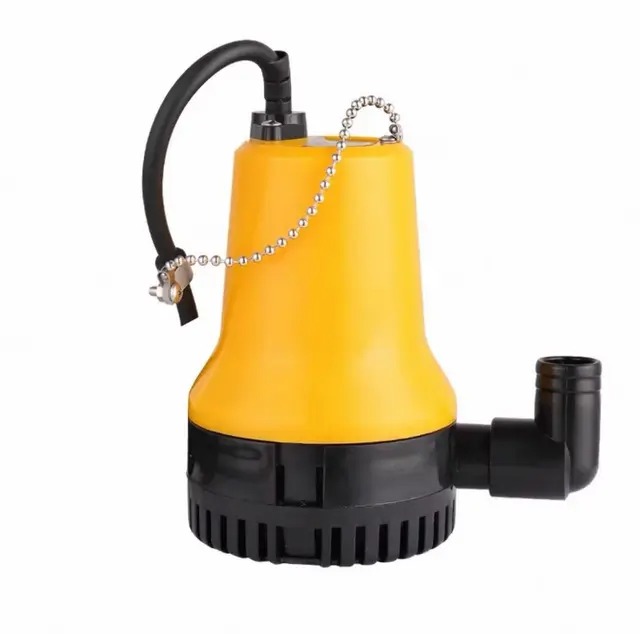
When you are browsing for a new submersible pump, you will notice a huge price gap between plastic and metal models. This price difference directly translates to how many years of service you get.
In a deep well, the pressure at the bottom is immense. Stainless steel is the preferred material for these depths because it does not warp or crack under pressure. Furthermore, it provides superior heat dissipation. A cool motor is a long-lived motor. We recommend stainless steel components for any installation deeper than 100 feet to ensure the unit remains structurally sound for over a decade.
Groundwater is rarely "just water." It often contains dissolved minerals, gases, and salts. Over time, these elements eat away at the pump body. A chemical resistant coating or high-grade alloy construction prevents this electrolysis. In specialized cases, such as industrial sewage management, the pump must deal with even harsher fluids. In those scenarios, using anything less than a heavy duty metallic pump is a recipe for frequent, expensive replacements.
It isn't just the outer shell that matters. The internal impellers—the parts that actually move the water—are subject to high-velocity friction. While some modern thermoplastics are incredibly tough, they cannot match the longevity of precision-cast metal impellers when debris is present. If you want a pump to last 20 years, look at what is inside the box, not just the outside.
The deeper you go, the harder the work. A deep well installation puts unique stresses on a submersible pump that shallow wells simply don't have.
TDH is the total equivalent height that a fluid is to be pumped. It includes the vertical distance plus the friction loss in the pipes. If a pump is rated for a 200-foot max head but you install it at 190 feet, it is running at near-maximum capacity all the time. This "redlining" creates excess heat. For maximum longevity, we suggest selecting a heavy duty unit where your required lift is only 60-70% of the pump’s maximum capability.
At great depths, the weight of the water column above the pump exerts significant pressure on the mechanical seals. If these seals fail, water enters the motor housing, causing an instant short circuit. High-end submersible pump models use double mechanical seals or silicon carbide faces to maintain a watertight barrier. These features are standard in industrial sewage and heavy duty mining pumps, but they are increasingly popular in residential deep well systems for those who want the best reliability.
You don't want to wait until you have zero water to realize your submersible pump is dying. Most pumps give "hints" that their end is near. Recognizing these can save you from a mid-winter emergency.
Fluctuating Water Pressure: If your shower suddenly loses pressure and then regains it, the pump might be struggling to keep up with the pressure tank's demands.
Spitting Faucets: This often means air is getting into the system. It could be a leak in the drop pipe, or the well level has dropped, forcing the pump to run "dry." Running dry is fatal for most submersible pump motors.
Rising Electricity Bills: As the internal components wear out, the motor becomes less efficient. It has to run longer and draw more current to move the same amount of water.
Cloudy or Sandy Water: This indicates the pump is pulling in sediment, which will quickly erode a heavy duty impeller.
If you hear "clicking" from your pressure switch or control box, it means the pump is short-cycling. This is an urgent mechanical "fever." If you don't fix the pressure tank or the check valve immediately, you will burn out even a brand-new stainless steel pump in a matter of weeks.
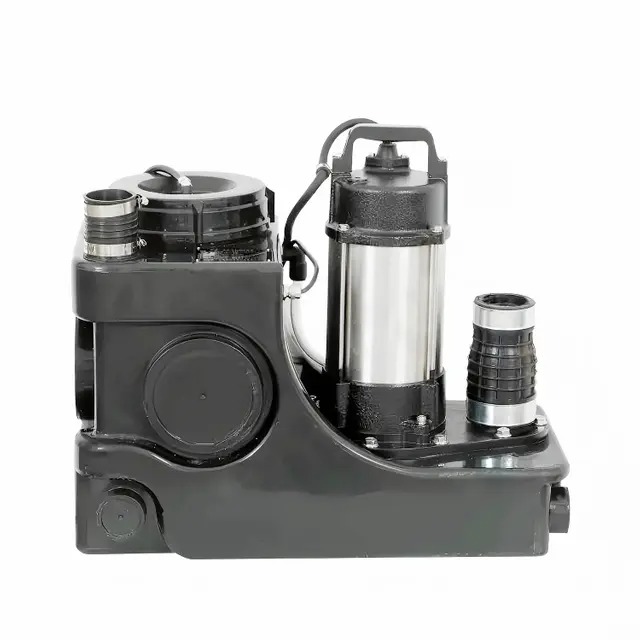
Can you actually maintain a pump that is 300 feet underground? Yes, but maintenance for a submersible pump is mostly about the "support system" above ground.
The pressure tank acts as a buffer. It stores pressurized water so the pump doesn't have to turn on every time you flush a toilet. If the tank's internal bladder fails, the tank becomes "waterlogged." This causes the pump to turn on and off rapidly (short-cycling). We recommend checking your tank's air pressure once a year. Keeping the tank healthy is the single most effective way to protect your submersible pump.
In rural areas, power fluctuates. A heavy duty control box with built-in thermal overloads can save the motor from burning out during a voltage drop. For deep well systems, we often suggest installing a "soft start" controller. Instead of the motor slamming from 0 to 3,450 RPM instantly, it ramps up slowly. This reduces mechanical "kick" and extends the life of the motor windings significantly.
Test your water every two years for corrosivity and sediment levels. If the water becomes more acidic, you might need to add a neutralizer to protect your pipes and the stainless steel casing of the pump. If sand levels increase, you may need to raise the pump a few feet higher in the well to get it away from the sediment layer.
Should you pull the pump and fix it, or just buy a new one? Since the cost of pulling a pump from a deep well is high (often requiring a specialized rig), the labor usually dictates the decision.
If the pump is more than 10 years old and has a motor failure, it is almost always better to replace it. The cost of a new submersible pump is often only a fraction of the total labor bill. Putting an old, repaired pump back down into a deep well is a gamble. You don't want to pay the labor costs twice if a different part fails six months later.
Some things are worth fixing above ground. Control boxes, pressure switches, and tanks can be replaced without touching the actual submersible pump. If your pump is a heavy duty model and is relatively young (under 7 years), and the water is simply not reaching the house, check these surface components first. You might find a $50 part is the culprit rather than a $1,000 pump.
In the world of industrial sewage and waste management, the rules of "15 years" don't always apply. These environments are much more aggressive than a clean residential well.
An industrial sewage pump must handle solids, strings, and grease. These units use "grinder" or "vortex" impellers. Because the environment is so abrasive, these pumps are built with heavy duty cast iron or stainless steel internals. In these high-stress roles, a lifespan of 5 to 8 years is considered excellent.
If the pump is submerged in runoff that contains manufacturing byproducts, it must be chemical resistant. Standard seals would dissolve. We use Viton or other specialized elastomers to ensure the motor stays dry. When we design these systems for B2B clients, we emphasize that longevity is a result of matching the pump’s material to the specific chemical profile of the fluid being moved.
A submersible pump is a remarkable piece of engineering. Designed to live in a dark, wet, high-pressure environment for over a decade, it is the silent workhorse of modern water systems. While the average lifespan is 10 to 15 years, your choices in material—like opting for stainless steel—and your commitment to protecting the motor from short-cycling will determine if you reach that 20-year milestone.
Whether you are managing a deep well for a rural home or a heavy duty system for industrial sewage, the key is to avoid "stressing" the motor. Keep your pressure tank in check, ensure your water is as clean as possible, and never settle for sub-par materials. A little bit of prevention above ground ensures years of reliable water from below.
Q: Does a stainless steel pump really last longer than plastic?
A: Yes. Stainless steel handles heat better and resists corrosion from minerals in the water. In deep well applications, it also maintains its shape better under pressure, preventing internal leaks.
Q: Can I replace a submersible pump myself?
A: If the well is shallow (under 30 feet), it is possible. However, for a deep well, the weight of the pipe and the pump requires a hoist. Furthermore, improper wiring can lead to a "dead" pump before it even moves any water.
Q: Why did my pump fail after only 4 years?
A: The most common reasons are a waterlogged pressure tank (causing short-cycling), lightning strikes/surges, or high sand content in the water "eating" the impellers.
Q: What is the difference between a standard and a heavy duty pump?
A: A heavy duty pump usually features higher-grade bearings, more robust cooling, and impellers designed to pass small amounts of debris without clogging or eroding.
At SRM Pumps, we understand that reliability isn't just a goal; it's a requirement for your operations. As a premier manufacturer with our own high-tech production facility, we specialize in crafting the submersible pump solutions that the market demands. We don't just assemble parts; we engineer excellence. Our factory utilizes precision CNC machining and rigorous testing protocols to produce stainless steel, heavy duty, and chemical resistant units that stand the test of time.
We are deeply committed to our B2B partners, offering tailored solutions for industrial sewage, deep well irrigation, and municipal water projects. Our strength lies in our ability to provide large-scale production without sacrificing the meticulous quality control that ensures every pump leaving our floor is ready for the toughest environments. When you work with us, you are working directly with the source—a factory that prioritizes technical innovation, rapid lead times, and the structural integrity required to keep your water moving for decades.


