
Views: 316 Author: Site Editor Publish Time: 2026-02-17 Origin: Site


If you have a basement, you likely have a sump pit. Inside that pit sits a critical piece of machinery: the submersible pump. Its job is simple but vital. It prevents your home from flooding by moving water away from your foundation. But have you ever wondered what actually happens when the water rises? Unlike its cousin, the pedestal pump, this device operates entirely underwater.
Understanding how a submersible pump works requires a look at physics and engineering. It uses a combination of mechanical pressure and centrifugal force. These units are designed to be "set and forget," but knowing their inner workings helps you maintain them better. In this guide, we will break down the mechanics, the float switches, and the specialized materials like stainless steel that keep these machines running in harsh conditions.
The fundamental operation of a submersible pump relies on the conversion of rotational energy into kinetic energy. It does not "suck" water in the traditional sense. Instead, it pushes water upward. Because the motor is submerged, it uses the surrounding water to stay cool during heavy duty operation. This design is highly efficient because it doesn't have to fight gravity to prime itself; the water is already there, exerting pressure on the intake.
Inside the hermetically sealed housing, an electric motor spins a shaft. This shaft connects to an impeller. As it spins, it creates a low-pressure zone at the center. This vacuum-like effect draws water into the housing. Once inside, the spinning blades fling the water outward toward the edges of the pump casing. This is centrifugal force at work. By the time the water hits the discharge pipe, it has enough velocity to travel up and out of your basement.
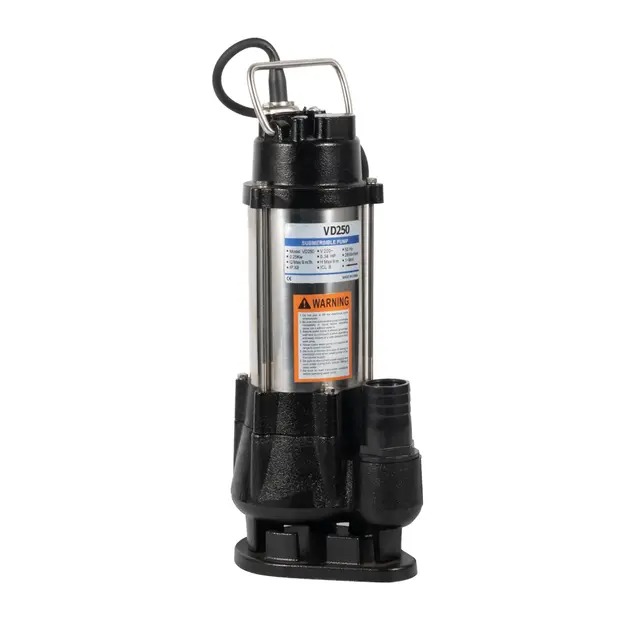
A submersible pump cannot run constantly. If it did, the motor would burn out quickly. It needs a reliable way to detect water levels. Most residential units use a float switch. This is a buoyant device that sits on the water surface. As the sump pit fills during a rainstorm, the float rises. Once it reaches a pre-set height, it tips a ball bearing or pulls a lever that completes the electrical circuit.
There are several types of switches used in submersible pump systems:
Tethered Floats: A bulb on a wire that swings upward.
Vertical Floats: A plastic donut that slides up and down a metal rod.
Electronic Sensors: These use electrical conductivity to sense water without moving parts.
The vertical float is often preferred for tight pits. It prevents the switch from getting stuck against the wall of the basin. When the water level drops back down, gravity pulls the float back, breaking the connection and turning the motor off. This automated cycle ensures your basement stays dry without manual intervention.
Not all water is clean. In many cases, a submersible pump must handle debris, silt, or even chemicals. This is where material science becomes important. For standard groundwater, a plastic or cast iron housing might suffice. However, for industrial sewage or situations involving corrosive runoff, the internal components must be chemical resistant.
Manufacturers often utilize stainless steel for the motor shaft and fasteners. This metal resists rust and pitting, which are the primary killers of underwater machinery. Furthermore, high-end units feature double mechanical seals. These seals act as a barrier, preventing water from entering the motor chamber. If a seal fails, the motor shorts out, and the pump becomes useless. In heavy duty applications, these seals are often cooled by an oil chamber to extend their lifespan during long run times.
| Component | Material Type | Benefit |
| Housing | Cast Iron / Stainless steel | Heat dissipation and corrosion resistance |
| Impeller | Thermoplastic / Bronze | Resists clogging and wear |
| Seals | Carbon Ceramic | Prevents water ingress into motor |
| Hardware | Stainless steel | Prevents rust in submerged conditions |
To understand the workflow, follow the water's journey. It begins at the base of the submersible pump. Most units have a screen or a "volute" at the bottom. This part acts as a filter. It stops large pebbles or trash from entering the impeller. If these objects got inside, they would jam the spinning blades and likely snap the motor shaft.
Once the water moves through the impeller and enters the discharge pipe, it passes through a check valve. This is a one-way flap. Why is it there? When the submersible pump shuts off, gravity wants to pull the water in the vertical pipe back down into the pit. Without a check valve, that water would fill the pit again, immediately triggering the pump to turn back on. We call this "short-cycling." It leads to premature motor failure.
In an industrial sewage context, the "path of water" is more complex. These pumps often use "vortex impellers." Instead of the water passing directly through the blades, the impeller creates a whirlpool that pulls solids through the pump without touching the mechanical parts. This prevents clogs when moving thick liquids or waste.
Since a submersible pump operates in water, electrical safety is paramount. The power cord is specially insulated to prevent leaks. It usually features a grounded plug that must be connected to a GFCI (Ground Fault Circuit Interrupter) outlet. This outlet monitors the flow of electricity. If it detects even a tiny amount of current "leaking" into the water, it snaps the power off instantly to prevent electrocution.
Modern heavy duty pumps also include thermal overload protection. Inside the motor windings, a small sensor monitors the temperature. If the pump runs for hours or gets jammed, it will get hot. Before the insulation melts, the thermal sensor trips and shuts the unit down. Once it cools off, it resets itself. This feature is a lifesaver for homeowners who might not be home to hear the pump struggling during a massive storm.
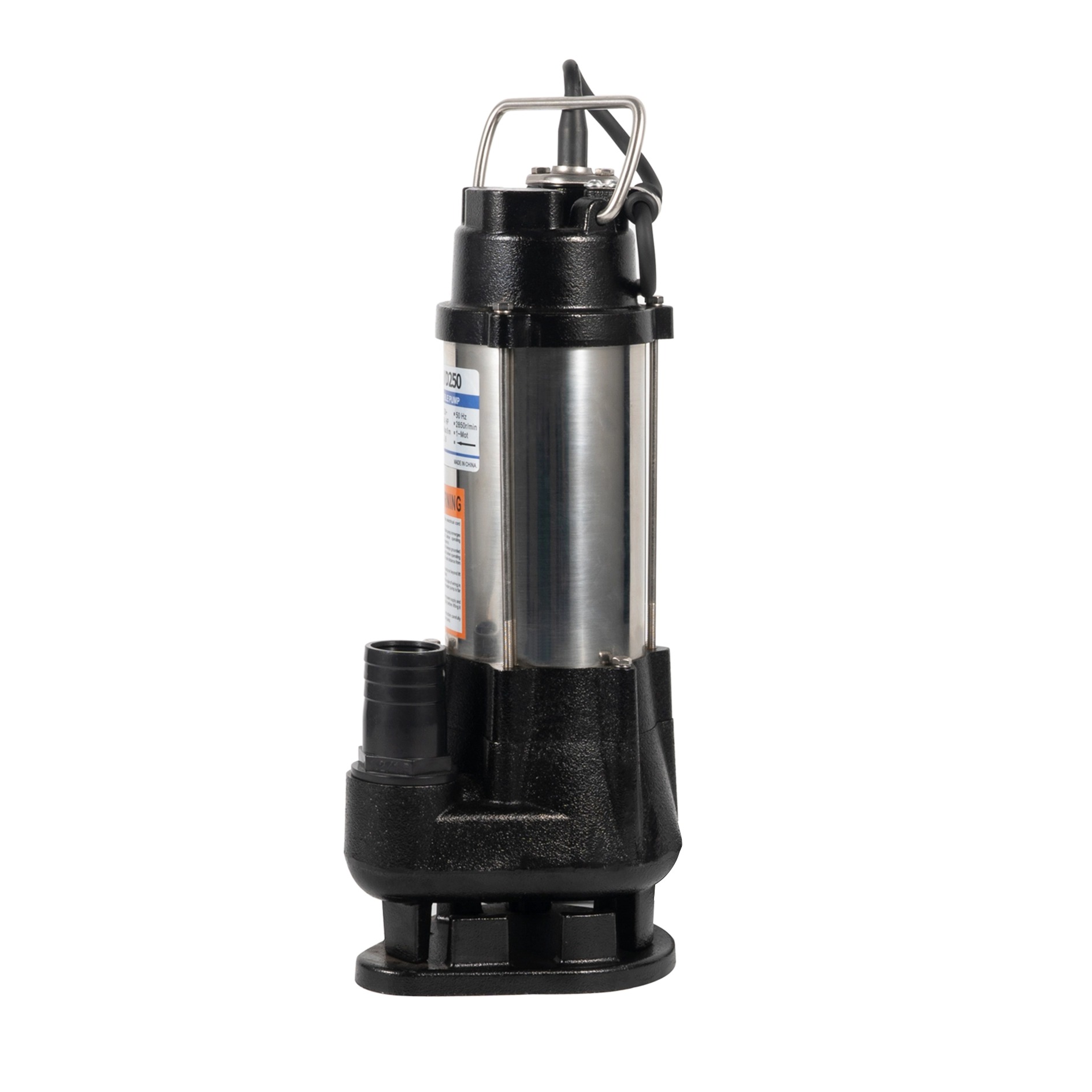
While the focus is often on basements, the submersible pump technology extends much deeper. A deep well pump uses the same basic principles but is shaped like a long, thin cylinder. This allows it to fit inside a 4-inch or 6-inch well casing. These units are often multi-stage, meaning they have several impellers stacked on top of each other.
Each impeller adds more pressure. This allows the water to be pushed hundreds of feet up to the surface. Unlike a shallow well jet pump that sits above ground, the deep well submersible pump is much quieter. It also never loses its prime because it is permanently under the water table. This makes it the most reliable choice for rural water systems where the water level might be 200 feet below the house.
You might think a submerged tool needs no maintenance, but that is a mistake. Minerals in the water can build up on the float and the intake screen. Over time, these deposits turn into a hard crust. This can weigh down the float or choke the water flow. We recommend a "vinegar bath" once a year. You pull the pump out, put it in a bucket of water and vinegar, and run it to clear out the internals.
Testing is simple. Pour a few buckets of water into your sump pit. Watch the float rise. Listen for the motor to hum. If you hear a grinding noise, the bearings might be wearing out. Also, check the discharge pipe outside. Ensure the water is moving far away from the house. If the water just pools next to the foundation, it will seep back into the pit, and your submersible pump will work twice as hard for no reason.
Even the best stainless steel pump eventually wears out. Knowing the signs of failure can save you from a flooded basement. One common issue is a stuck float. If debris gets in the pit, the float can't rise, and the water will overflow. Another issue is an "air lock." This happens when air gets trapped in the pump housing. The impeller spins, but it can't push the air out. Most experts drill a tiny "weep hole" in the discharge pipe inside the pit to let this air escape.
If your pump is making a loud clanging sound, it might be the check valve. Some valves "slam" shut, which is annoying but not always dangerous. However, if the pump runs but the water level doesn't drop, the impeller might have sheared off the shaft. At this point, the unit is essentially a heavy paperweight. Knowing these symptoms helps you decide whether to clean the unit or replace it entirely with a more heavy duty model.
The submersible pump is a marvel of hidden engineering. It stays out of sight, underwater, and silent until it is needed. By utilizing centrifugal force and smart switch designs, it keeps millions of homes dry every year. Whether you need a standard residential unit or a stainless steel version for industrial sewage, the core mechanics remain consistent. Keep your pit clean, check your valves, and ensure your electrical connections are safe. A well-maintained pump is your best defense against the elements.
Q: Can a submersible pump run dry?
A: Generally, no. Water acts as both a lubricant for the seals and a coolant for the motor. Running it dry for more than a few minutes can cause permanent damage.
Q: How long do these pumps typically last?
A: A high-quality submersible pump usually lasts between 7 to 10 years. Units made with stainless steel or cast iron often outlast cheaper plastic models.
Q: What size pump do I need for my basement?
A: Most homes use a 1/3 HP or 1/2 HP motor. If you live in an area with a very high water table or frequent heavy storms, a 1/2 HP heavy duty model is a safer bet.
Q: Is it okay to use a sump pump for sewage?
A: No. A standard sump pump is for clear water. For waste, you need a specific industrial sewage pump or an effluent pump designed to handle solids.
We are a premier manufacturer dedicated to the global submersible pump market. With our expansive, high-tech factory and years of engineering heritage, we focus on delivering B2B solutions that stand the test of time. We understand that our clients require reliability, which is why we specialize in heavy duty equipment ranging from deep well irrigation systems to chemical resistant industrial units. Our strength lies in our rigorous quality control and our ability to customize pumps for specific fluid challenges. We don't just sell hardware; we provide the peace of mind that comes with superior fluid management technology. Whether you are looking for high-volume industrial sewage solutions or precision-engineered stainless steel components, we have the capacity and the technical expertise to support your infrastructure projects worldwide.


