
Views: 0 Author: Site Editor Publish Time: 2025-10-31 Origin: Site


Submersible pumps are essential in industries like dewatering, irrigation, and sewage management. But can a submersible pump run continuously without issues?
In this article, we’ll explore continuous operation for submersible pumps, including their key features and challenges. You’ll learn how to ensure optimal performance and choose the right pump for non-stop use.
Continuous operation refers to the ability of a submersible pump to operate non-stop without the need for breaks. Unlike intermittent pumps, which require periodic rests to avoid overheating and damage, continuous-duty pumps are designed to run for extended periods—often 24 hours a day, seven days a week. However, for a pump to run continuously, it must be specifically designed with the necessary components to withstand the physical strain of prolonged use.
Continuous-duty pumps are typically built with high-quality motors, advanced sealing mechanisms, and thermal overload protection to ensure that they can withstand the heat and mechanical wear generated by continuous operation. The motor’s cooling system, often using the pumped fluid itself to cool the pump, is key in enabling these systems to run efficiently for extended periods.
Not all submersible pumps are suitable for continuous use. The pumps that can handle continuous operation are specifically rated for "continuous-duty," meaning they are equipped with features that allow them to function without needing regular rest periods. For instance, a pump with a thermal overload protection system will automatically shut off the motor to prevent overheating when the pump is under strain.
Submersible pumps designed for continuous duty are used in environments where water needs to be pumped for long durations, such as construction sites, mines, and residential applications that require consistent drainage or flood control. These pumps are built to handle the demand of non-stop operation, unlike intermittent-duty pumps, which would require frequent downtime.
Duty cycles are a critical factor in determining whether a pump can run continuously. A pump's duty cycle refers to the ratio of the time it can run continuously versus the time it must rest. For instance, a pump with a 50% duty cycle can run for 30 minutes and must rest for the next 30 minutes. Conversely, a continuous-duty pump is specifically designed to run without this cycle, as it’s built with components capable of handling the wear and tear that would otherwise necessitate a break.
When selecting a submersible pump for continuous use, it’s essential to check the duty cycle and ensure that the pump is rated for continuous operation to prevent overheating and damage. A submersible pump that isn't designed for continuous use might experience a shorter lifespan due to the excessive strain on its motor, seals, and impellers.
Thermal overload protection is one of the most crucial features for a submersible pump that is used continuously. When a pump runs for extended periods, the internal temperature of the motor can rise significantly. Without thermal protection, this heat buildup can lead to motor failure and premature wear of the pump components.
Continuous-duty pumps often include a thermal overload protection system that automatically shuts off the pump when the internal temperature reaches a critical level. This safety mechanism prevents damage and allows the pump to cool down before it starts operating again. This feature is essential to ensure the longevity and reliability of the pump, especially in high-demand environments.
Submersible pumps designed for continuous use are equipped with high-quality seals and impellers to prevent internal wear and tear. The seals, which prevent water from entering the motor, must be durable enough to withstand constant exposure to water and prevent leaks. Over time, poor-quality seals can degrade, leading to water ingress and motor damage. Regular maintenance and seal replacement are necessary to ensure the pump remains in optimal condition for continuous operation.
The impellers, which help to move the water, must also be durable and capable of handling prolonged use. Impellers made from high-strength materials such as stainless steel are ideal for continuous-duty pumps, as they are less prone to erosion or wear. A durable impeller helps maintain the pump's efficiency and ensures reliable performance over long periods of time.
Another important feature for submersible pumps intended for continuous operation is the ability to handle debris. Many submersible pumps, especially those used in construction or flood-prone areas, must deal with dirty water, including sediments, debris, and solid particles. The ability to handle such debris without clogging or jamming is essential for continuous operation.
Submersible pumps with a vortex impeller or other specialized designs are equipped to pass solids and debris efficiently, ensuring that the pump can continue running without interruptions. This is particularly important in environments where the water quality is not pristine, as debris can damage the motor and other critical parts of the pump if not properly handled.
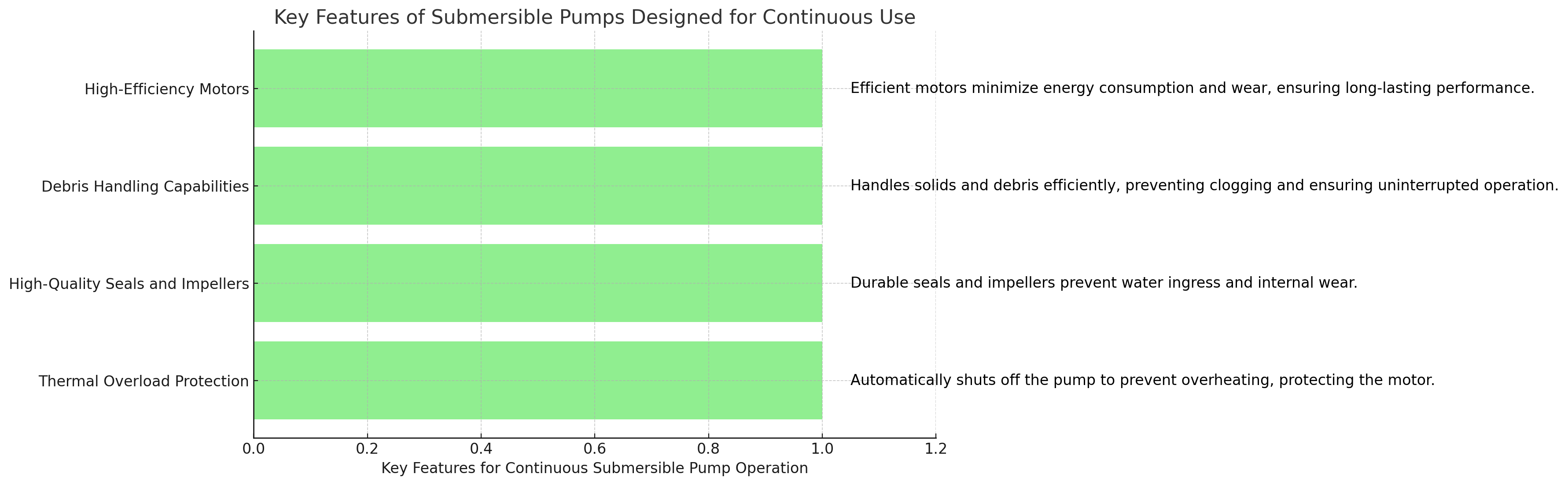
Feature | Description |
Thermal Overload Protection | Automatically shuts off the pump to prevent overheating, protecting the motor. |
High-Quality Seals and Impellers | Durable seals and impellers prevent water ingress and internal wear. |
Debris Handling Capabilities | Efficiently handles solids and debris, preventing clogging and ensuring continuous operation. |
High-Efficiency Motors | Efficient motors minimize energy consumption and wear, ensuring long-lasting performance. |
One of the biggest risks of running a submersible pump continuously is overheating. Pumps rely on the water they are pumping to cool their motors. If the pump is run without adequate water or the water level fluctuates, it may lead to overheating, potentially damaging the motor or other components. This is why it’s crucial to keep the pump fully submerged at all times and monitor the water level.
Dry running—where the pump operates without water—is another critical issue. Submersible pumps can be damaged if they run dry, as they rely on water to lubricate and cool the internal parts. Installing a float switch that automatically turns off the pump when the water level drops can help prevent this issue.
Even with continuous-duty pumps, prolonged operation can lead to motor wear and tear. The internal components of the motor, including bearings and seals, can degrade over time, reducing efficiency and increasing the risk of failure. Regular maintenance, including cleaning and lubrication, is necessary to keep the pump running smoothly.
It’s also important to monitor the pump's performance during extended use. If the motor is running under excessive strain or if the pump is showing signs of wear, it may be time for repairs or replacements to avoid a total breakdown.
Stable power supply is essential for submersible pumps running continuously. Voltage fluctuations or power surges can put stress on the motor, leading to premature failure. To protect against this, it’s essential to use stabilizers or surge protectors, especially in areas prone to electrical issues.
Ensuring that the pump is connected to a reliable power source with proper grounding is crucial for avoiding electrical hazards and ensuring smooth operation. Inconsistent power can also lead to the pump operating inefficiently, affecting its long-term reliability.
When selecting a submersible pump for continuous operation, motor power and efficiency are crucial considerations. The motor must be powerful enough to handle the demands of continuous use while also being energy-efficient to minimize operating costs. Pumps with high-efficiency motors are designed to operate at optimal power levels, reducing energy consumption and wear on the motor.
The size of the submersible pump should also match the specific requirements of the application. For example, a larger pump may be needed for high-flow applications or deep wells, while smaller pumps may suffice for residential dewatering or low-flow applications. It’s important to match the pump size to the job at hand to ensure optimal performance and avoid overworking the pump.
Continuous operation places more demand on a submersible pump, so regular maintenance is crucial to keep it running efficiently. It’s important to inspect the pump regularly for signs of wear, check the seals and impellers, and clean any debris that may have accumulated. Monitoring the motor temperature and performance during extended use will also help detect potential issues before they cause a breakdown.
Performing regular maintenance on your submersible pump is the key to ensuring its longevity. This includes cleaning the pump and its components, checking for wear and tear, and ensuring that all parts are functioning correctly. Timely inspections will help identify issues early on and prevent costly repairs.
For operations that require non-stop pumping, it’s important to use backup power systems, such as batteries or generators, to ensure that the pump continues running even in the event of a power outage. A backup power system can provide peace of mind during critical tasks, such as dewatering construction sites or handling floodwaters.
Proper placement of the submersible pump is essential for continuous operation. Ensure that the pump is positioned correctly and fully submerged to prevent dry running and overheating. It’s also important to monitor the pump during prolonged use, especially in harsh environments where debris may clog the pump or affect its performance.
In summary, a submersible pump can run continuously if it’s designed for such operation and properly maintained. Continuous-duty pumps are built for extended use and can run efficiently with the right care. By selecting a high-quality pump from a trusted supplier like SRM, you ensure optimal performance. SRM’s submersible pumps are equipped with thermal overload protection, durable seals, and energy-efficient motors, making them ideal for demanding applications requiring non-stop operation.
A: Yes, a submersible pump can run continuously if it is designed for continuous-duty operation. These pumps are equipped with features like thermal overload protection and high-quality seals to handle extended use without overheating.
A: A submersible pump designed for continuous use can run 24/7 without rest. However, it’s essential to ensure proper maintenance and avoid issues like dry running to ensure optimal performance.
A: A continuous-duty submersible pump offers reliability and efficiency for long-term applications, such as dewatering or flood control. It is built to handle the heat and strain of constant use, reducing downtime.
A: For continuous use, look for a submersible pump with features like thermal overload protection, durable seals, and an efficient motor. It’s also important to consider the pump size and application needs.
A: Yes, a submersible pump can overheat if it is not properly maintained or if the water level drops, causing the motor to run dry. Thermal overload protection helps prevent damage by shutting the pump off when needed.
A: Install a float switch to automatically turn off the submersible pump when the water level gets too low. This prevents the pump from running dry and protects it from damage.
A: Continuous-duty submersible pumps are designed for non-stop operation. Look for pumps with high-efficiency motors, durable impellers, and advanced sealing mechanisms to ensure long-term reliability.


