
Views: 0 Author: Site Editor Publish Time: 2025-09-20 Origin: Site


Ever wondered how fluid transfer systems operate efficiently? Discover the end suction pump, a key player in this process. These pumps are vital in various applications, ensuring smooth and effective fluid movement. In this post, you'll learn about their design, operation, advantages, and applications across industries.
End suction pumps belong to the centrifugal pump family. Their design is straightforward yet effective. The pump has an inlet on one end where fluid enters axially, meaning the fluid flows straight into the impeller along the pump’s shaft axis. After the fluid is drawn in, the impeller spins and pushes it outward, changing the flow direction by 90 degrees. This action sends the fluid out through the discharge port, which is perpendicular to the suction side.
Typically, the pump’s shaft is mounted horizontally, making the pump easy to install and maintain. The casing around the impeller is volute-shaped, which helps convert the velocity of the fluid into pressure. This design also reduces turbulence, improving efficiency.
The pump’s operation starts when the motor powers the shaft, which rotates the impeller. The impeller blades accelerate the fluid outward from the center, creating a low-pressure zone at the eye of the impeller. This pressure difference causes fluid to be sucked into the pump through the end suction inlet.
As the fluid moves through the impeller, it gains kinetic energy. The volute casing then slows the fluid, converting kinetic energy into pressure energy. This pressure rise pushes the fluid out through the discharge outlet, ready for transport through piping systems.
This mechanism allows end suction pumps to handle a wide range of fluids efficiently, especially in low to medium pressure applications.
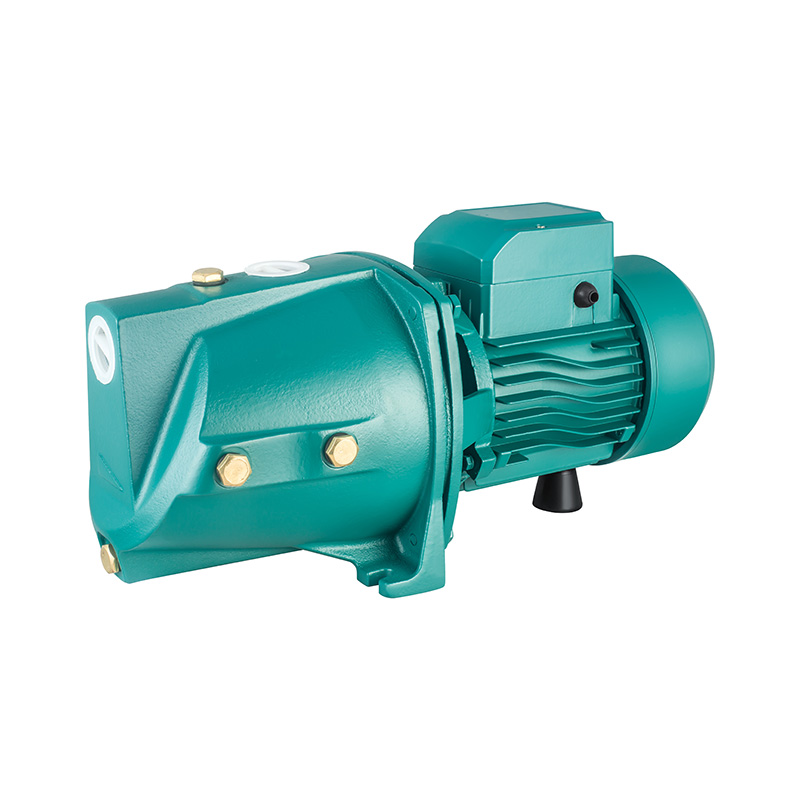
Impeller: The rotating part that imparts energy to the fluid. It draws fluid in and accelerates it outward.
Pump Casing (Volute): Houses the impeller and collects fluid, converting velocity into pressure.
Shaft: Connects the impeller to the motor, transmitting rotational energy.
Bearings: Support the shaft and allow smooth rotation.
Seal: Prevents fluid leakage along the shaft.
Suction Inlet: The entry point where fluid enters the pump axially.
Discharge Outlet: The exit point where pressurized fluid leaves at a 90-degree angle to the inlet.
Each component plays a vital role in ensuring smooth operation, energy efficiency, and durability.
Note: Proper alignment of the impeller and shaft is critical to prevent vibration and wear, ensuring long-term reliability of end suction pumps.
End suction pumps come in several types, each tailored to specific applications and performance needs. Understanding these types helps in selecting the right pump for your fluid transfer requirements.
Single-stage end suction pumps feature one impeller mounted on the shaft. They are the most common type, ideal for low to medium pressure applications. Their simple design makes them cost-effective and easy to maintain. These pumps excel in moving large volumes of fluid at relatively low pressures, suitable for water supply, HVAC systems, and general industrial use.
Key characteristics:
One impeller for a single pressure boost
Compact and straightforward design
Efficient for steady, moderate flow rates
Easy to install and maintain
Multi-stage end suction pumps contain two or more impellers arranged in series on the same shaft. Each impeller adds pressure, allowing the pump to achieve higher discharge pressures than single-stage models. These pumps are perfect for applications requiring high pressure, such as boiler feedwater, reverse osmosis systems, and high-rise building water supply.
Features include:
Multiple impellers for increased pressure
Suitable for high-pressure, moderate flow applications
Larger and more complex than single-stage pumps
Require careful maintenance due to multiple stages
Close-coupled end suction pumps attach the pump impeller directly to the motor shaft without a separate coupling. This design reduces the pump’s footprint and simplifies installation. They are compact and often used where space is limited. Maintenance involves removing the motor and impeller assembly as a unit, which can be easier for smaller motors but challenging for larger ones.
Advantages:
Smaller footprint than base-mounted pumps
No shaft alignment needed due to direct coupling
Simplified installation without base grouting
Lower net positive suction head required (NPSHr)
Considerations:
Motor and impeller removal needed for seal servicing
Larger motors may require additional support or lifting equipment
Note: Selecting between single-stage, multi-stage, or close-coupled end suction pumps depends on your pressure requirements, available space, and maintenance capabilities to optimize performance and cost-efficiency.
End suction pumps offer several benefits that make them a popular choice across various industries. Their design and operation contribute to efficiency, ease of use, and reliability.
End suction pumps are known for their efficient fluid transfer capabilities. The volute casing design helps convert kinetic energy into pressure effectively, minimizing energy losses. This efficiency translates to lower power consumption, which reduces operational costs and environmental impact. In industrial settings, where pumps often run continuously, these energy savings can be significant. Moreover, many modern end suction pumps come with optimized impeller designs and variable speed drives, further enhancing energy efficiency.
One of the standout advantages of end suction pumps is their straightforward installation process. Their horizontal shaft and compact footprint allow for easy integration into existing piping systems without extensive modifications. Close-coupled end suction pumps simplify this further by eliminating the need for shaft alignment or base grouting.
Maintenance is also more manageable due to the pump’s simple construction. Components like seals, bearings, and impellers are accessible and can be serviced or replaced without specialized tools. This reduces downtime and maintenance costs. Additionally, the availability of multiple nozzle configurations provides flexibility during installation and repairs.
End suction pumps are built to withstand demanding conditions. Their robust casing and quality materials ensure resistance to wear, corrosion, and mechanical stress. This durability extends the service life of the pump, making it a cost-effective investment over time.
The pump’s design minimizes vibration and mechanical strain, which helps prevent premature failure of components. Regular maintenance combined with sturdy construction results in reliable performance, even in harsh industrial environments. Pumps made from corrosion-resistant alloys or equipped with specialized seals can handle aggressive fluids, expanding their application range.
Tip: To maximize energy savings and lifespan, select an end suction pump sized correctly for your flow and pressure needs and schedule regular maintenance checks.
End suction pumps are versatile and widely used across many sectors due to their efficient design and reliable performance. Their ability to handle various fluids, pressures, and flow rates makes them a go-to choice for many fluid transfer needs.
In industries, end suction pumps play a crucial role in transferring liquids efficiently and safely. They are commonly found in:
Chemical and Petrochemical Plants: These pumps handle corrosive and non-corrosive chemicals, feeding reaction tanks and circulating process fluids. Their construction materials can be tailored to resist chemical attack, ensuring longevity.
Water and Wastewater Treatment: End suction pumps move water through filtration systems and distribute treated water. They also manage sewage and wastewater, as they handle fluids containing small solids without clogging.
Food and Beverage Processing: Hygienic designs of these pumps make them suitable for transporting, mixing, or filling liquid foods. Their smooth operation ensures product quality and safety.
Energy Sector: They feed boilers and cooling systems, supporting continuous production and energy efficiency in power plants.
Their robust design withstands harsh industrial environments, reduces downtime, and lowers maintenance costs.
End suction pumps are common in homes and commercial buildings for water supply and circulation:
Water Supply and Pressure Boosting: They pump water from wells or municipal sources to storage tanks or directly into plumbing systems, ensuring steady pressure.
Heating, Ventilation, and Air Conditioning (HVAC): These pumps circulate chilled or heated water in HVAC systems, maintaining comfort in offices, malls, and apartments.
Irrigation Systems: For gardens and small agricultural plots, end suction pumps provide reliable water flow to sprinklers and drip systems.
Fire Protection Systems: Their ability to deliver high flow rates at moderate pressures makes them suitable for fire sprinkler systems.
Their ease of installation and maintenance makes them popular among homeowners and building managers.
Certain sectors rely on end suction pumps for specialized tasks:
Agriculture: Used for irrigation, pesticide spraying, and drainage, these pumps support crop health and yield.
Mining and Construction: They handle water transfer, dewatering, and slurry pumping, often in challenging conditions.
Marine Applications: End suction pumps assist in ballast water transfer and bilge pumping due to their reliability and corrosion resistance.
Pharmaceutical Industry: Pumps with sanitary designs help move sensitive liquids without contamination.
Their adaptability to different fluids and environments makes them invaluable across these specialized fields.
Note: Selecting the right end suction pump for your application requires considering fluid type, flow rate, pressure, and environmental conditions to ensure optimal performance and longevity.
End suction and inline pumps are both centrifugal pumps but differ mainly in their design and flow direction. End suction pumps draw fluid axially through an inlet on one end and discharge it at a 90-degree angle. Their shaft is usually horizontal, making them sometimes called horizontal pumps. Inline pumps, however, have both inlet and outlet aligned on the same axis, allowing fluid to flow straight through. Their shaft is often vertical, so they are also known as vertical pumps.
The horizontal shaft and volute casing of end suction pumps provide a traditional, robust design that is easy to maintain. Inline pumps’ vertical shaft and radial split casing save space, making them ideal for installations with limited room.
End suction pumps generally offer high efficiency in low to medium pressure applications. Their volute casing converts fluid velocity to pressure effectively, resulting in good energy savings. However, their performance can degrade when the net positive suction head required (NPSHr) exceeds the available suction head (NPSHa), especially at higher pressures and temperatures.
Inline pumps handle higher pressures and temperatures better than end suction pumps. They also generate lower vibration due to their vertical shaft design. However, inline pumps can be more complex to maintain because servicing the mechanical seal requires separating the motor from the pump casing.
End suction pumps typically have a larger footprint compared to inline pumps, which can be a disadvantage in tight spaces. But their simpler construction makes installation and repair easier and less costly.
End suction pumps are versatile and widely used in commercial, residential, and industrial settings. They perform well in applications involving water supply, wastewater management, chemical transfer, and HVAC systems. Their ability to handle fluids with small solids makes them suitable for sewage and wastewater.
Inline pumps excel in environments where space is limited and where higher pressure or temperature fluids are involved, such as thermal plants and industrial booster systems. Their compact design allows easy integration into piping systems as pressure boosters.
Choosing between these pump types depends on your specific needs:
Space availability: Inline pumps save space.
Pressure and temperature: Inline pumps better for high pressure/temperature.
Maintenance capabilities: End suction pumps easier to maintain.
Cost considerations: End suction pumps usually lower initial and maintenance costs.
Tip: When selecting a pump, consider installation space, operating pressure, and maintenance access to decide between end suction and inline pumps for optimal performance and cost-efficiency.
Choosing the right end suction pump is crucial for ensuring efficient operation, long service life, and cost-effectiveness. Several key factors should guide your selection process.
First, clearly define your flow rate and pressure needs. End suction pumps are versatile but excel in low to medium pressure applications. Determine the volume of fluid to move per unit time (usually gallons per minute or liters per second) and the pressure needed to overcome system resistance, including pipe friction and elevation changes.
Selecting a pump with the correct flow and pressure rating prevents energy waste and premature wear. Oversized pumps consume more power and may cause hydraulic issues, while undersized pumps fail to meet system demands. Consider peak and average flow conditions to choose a pump that performs efficiently under varying loads.
The pump's material must suit the fluid type and operating environment. For clean water, cast iron or stainless steel may suffice. For corrosive or abrasive fluids, specialty alloys, corrosion-resistant coatings, or engineered plastics are better choices.
Quality construction ensures durability and resistance to wear, corrosion, and mechanical stress. Look for pumps with robust casings, precision-machined impellers, and reliable seals. Proper material selection helps avoid frequent repairs and downtime, especially in industrial or chemical applications.
Energy consumption impacts operational costs significantly. Pumps with high hydraulic efficiency reduce power usage. Features like optimized impeller design and smooth volute casings enhance efficiency by minimizing turbulence and energy losses.
Variable frequency drives (VFDs) offer energy savings by adjusting pump speed to match demand. Choosing energy-efficient models aligns with sustainability goals and lowers total cost of ownership.
Tip: Always match pump specifications closely to your system’s flow and pressure needs, and select materials compatible with your fluid to maximize efficiency and lifespan.
End suction pumps are centrifugal pumps with a simple design, drawing fluid axially and discharging it at a 90-degree angle. They offer high efficiency, easy installation, and maintenance, making them ideal for various applications. SRMPUMP provides top-quality end suction pumps, ensuring durability and energy savings. Their products are tailored to meet diverse fluid transfer needs efficiently. For more insights into pump selection and applications, explore SRMPUMP's offerings and discover how their solutions can enhance your operations.
A: An End Suction Pump is a type of centrifugal pump where fluid enters axially and exits at a 90-degree angle. It features a horizontal shaft and volute casing, ideal for low to medium pressure applications.
A: An End Suction Pump operates by using an impeller to create a low-pressure zone, drawing fluid in through the suction inlet and converting kinetic energy into pressure energy via the volute casing.
A: End Suction Pumps are chosen for their efficiency, ease of installation, maintenance, and durability, making them suitable for various applications, including water supply and industrial processes.
A: Benefits of End Suction Pumps include high efficiency, energy savings, straightforward installation, ease of maintenance, and robust construction for durability in demanding environments.
A: End Suction Pumps are more versatile and easier to maintain than inline pumps, but they require more space. They excel in low to medium pressure applications, unlike inline pumps suited for higher pressures.


