
Views: 0 Author: Site Editor Publish Time: 2025-09-22 Origin: Site


Did you know pumps are essential for fluid movement in various industries? Centrifugal and end suction pumps play key roles in this process. Understanding their differences is crucial for optimal performance. In this article, you'll learn what centrifugal and end suction pumps are and their importance in fluid transportation.
Centrifugal pumps and end suction pumps both move fluids by converting rotational energy from an impeller. However, their designs differ significantly:
Centrifugal Pumps: These pumps generally include various configurations like single-stage, multi-stage, vertical, or horizontal designs. The impeller spins inside a casing, pushing fluid outward from the center to the edges, creating flow and pressure.
End Suction Pumps: These are a subtype of centrifugal pumps featuring a horizontal shaft and a single axial inlet for fluid suction. The fluid enters the pump at one end and discharges at a right angle (90 degrees) to the inlet. This traditional design is simple and widely used.
The key structural difference lies in the suction and discharge arrangement. End suction pumps have the inlet and outlet perpendicular, while other centrifugal pumps might have different orientations.
Both pump types operate on centrifugal force principles but differ in flow paths and pressure handling:
Centrifugal Pumps: The impeller imparts kinetic energy, converting it to pressure to move liquid. Multi-stage centrifugal pumps add pressure in successive impeller stages, suitable for high-pressure needs.
End Suction Pumps: They typically operate as single-stage pumps, ideal for high flow but low to medium pressure applications. Their horizontal shaft and axial suction reduce the net positive suction head required, enhancing suction performance.
End suction pumps are simpler and often more efficient in low to medium pressure scenarios, while centrifugal pumps offer flexibility for varied pressure and flow demands.
The choice between centrifugal and end suction pumps depends on the application requirements:
Centrifugal Pumps: Used across many industries for tasks ranging from water supply, irrigation, chemical processing, to fire protection. Multi-stage versions handle high-pressure systems like boiler feed or high-rise building water supply.
End Suction Pumps: Popular in commercial, residential, and industrial sectors. They handle water supply, wastewater, chemical transfer, and HVAC systems efficiently. Their simple design and cost-effectiveness make them ideal for many fluid transport needs.
For example, end suction pumps are common in sewage treatment plants due to their ability to handle fluids with small solids. Centrifugal pumps are preferred when variable pressure or multi-stage pumping is essential.
Note: When selecting between centrifugal and end suction pumps, consider flow rate, pressure requirements, and fluid properties to ensure optimal performance and energy efficiency.
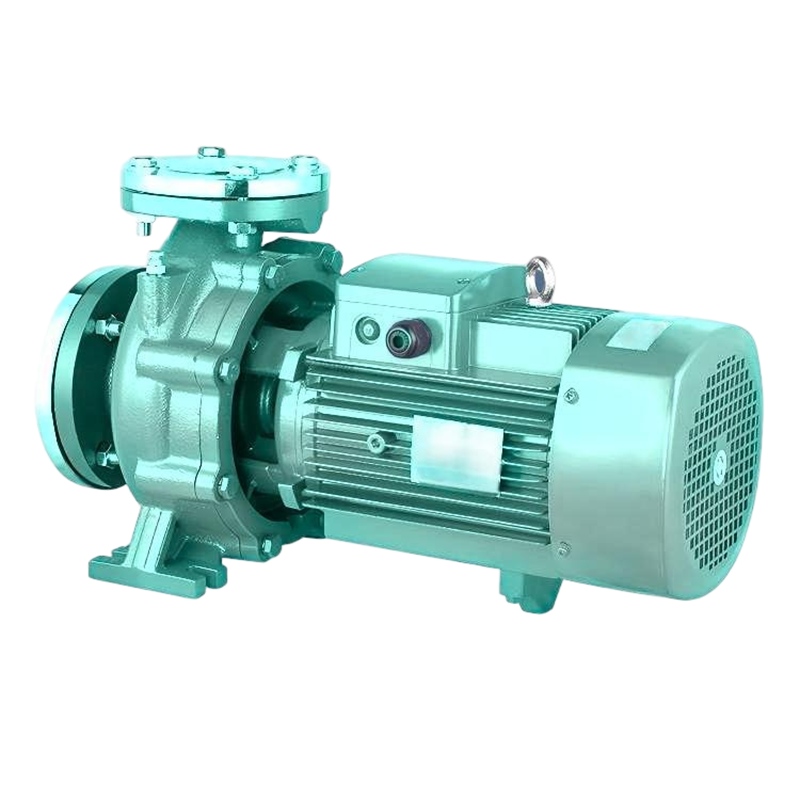
End suction pumps typically feature a horizontal shaft design. The shaft runs parallel to the surface, rotating the impeller inside the pump casing. This orientation allows the fluid to enter axially through the suction nozzle at one end, then be discharged radially at a 90-degree angle. The horizontal shaft setup simplifies alignment and maintenance, making it a popular choice in many industries. It also helps keep the pump stable during operation, reducing vibration.
Most end suction pumps are single-stage, meaning they have one impeller that increases fluid pressure and flow. Single-stage pumps suit applications requiring moderate pressure and high flow rates, such as water supply or HVAC systems. However, multi-stage end suction pumps exist, incorporating multiple impellers in series. Each stage adds pressure, enabling the pump to handle higher pressure requirements. Multi-stage designs are beneficial in industrial processes needing elevated discharge pressures but still want to maintain the compactness of an end suction pump.
End suction pumps are built from various materials to match the fluid properties and operating environment. Common materials include cast iron, stainless steel, bronze, and specialized alloys. Cast iron suits general water applications, offering durability and cost-effectiveness. Stainless steel or alloy materials are preferred for corrosive or abrasive fluids, ensuring longer pump life and resistance to wear. The casing, impeller, and shaft are designed to withstand mechanical stresses and fluid dynamics, ensuring reliable operation. High-quality seals and bearings also contribute to the pump’s durability and maintenance ease.
Tip: Choose end suction pumps with material compatibility to the fluid for longer service life and fewer maintenance issues.
End suction pumps often come with a lower initial cost compared to other pump types. Their simple design means fewer parts, which reduces manufacturing expenses. This cost advantage extends to operation as well. These pumps typically offer high hydraulic efficiency in low to medium pressure applications, helping reduce energy consumption. Because they usually operate as single-stage pumps, they require less power, leading to lower electricity bills over time. Their straightforward design also means fewer breakdowns, which cuts downtime and maintenance costs.
One of the biggest benefits of end suction pumps is how easy they are to install. Their horizontal shaft and single suction inlet simplify piping arrangements. They do not require complex alignment or special foundations, so installation is quicker and less costly. Maintenance is also straightforward. Since these pumps have fewer moving parts and a simple casing design, technicians can access components like the impeller and seals easily. This reduces labor time and the need for specialized tools. Additionally, many models feature split-coupled designs, allowing the motor and pump to be serviced separately without disturbing the piping.
End suction pumps adapt well to a wide range of uses. Their ability to handle clean water, wastewater, and certain chemical fluids makes them common in residential, commercial, and industrial sectors. They perform well in HVAC systems, irrigation, water treatment plants, and chemical transfer processes. Their robust construction allows them to manage fluids containing small solids, making them suitable for sewage and wastewater pumping. Moreover, different materials and coatings are available to match various fluid properties, from corrosive chemicals to potable water. This versatility makes them a go-to choice for many fluid transport tasks.
Tip: When selecting an end suction pump, consider the fluid type and pressure needs to maximize cost savings and operational efficiency.
End suction pumps perform well in many applications, but certain factors can reduce their efficiency. One key issue is the Net Positive Suction Head (NPSH) requirement. If the available NPSH (NPSHa) falls below the required NPSH (NPSHr), cavitation may occur. Cavitation damages the impeller and decreases pump performance. Additionally, these pumps tend to lose efficiency when operating under high pressure or elevated temperatures. The traditional horizontal shaft and single-stage design limit their capability to handle extreme pressure or temperature conditions without performance loss.
End suction pumps often have a larger footprint compared to other pump types like inline pumps. Their horizontal shaft and volute casing design require more floor space, which might be a challenge in compact installations. For facilities with limited room, this size can complicate layout planning and increase installation costs. Even close-coupled designs, which reduce some space by integrating the pump and motor, still occupy more area than vertical or inline alternatives. This is an important factor when space optimization is critical.
While end suction pumps are generally easy to maintain, certain challenges exist. Mechanical seal replacement often requires disassembly of the pump from the motor, especially in close-coupled models. For larger motors, removing the motor and impeller can be physically demanding and may need lifting equipment. The horizontal shaft design, while simplifying alignment, can expose bearings and seals to wear if not properly maintained. Also, pumps handling abrasive or corrosive fluids require frequent inspection to prevent premature failure. Proper maintenance planning and skilled technicians are essential to avoid downtime.
Tip: Regularly monitor NPSH conditions and maintain proper alignment to minimize cavitation and extend your end suction pump’s lifespan.
End suction pumps are widely used in residential and commercial settings due to their simplicity and efficiency. In homes, they often pump water from wells or storage tanks to supply faucets, showers, and irrigation systems. Their ability to handle clean water and moderate flow rates makes them ideal for these tasks. Commercial buildings rely on end suction pumps for HVAC systems, boosting water pressure, and circulating chilled or heated water. Their cost-effectiveness and ease of installation make them a favorite choice for property managers and builders.
Industries depend heavily on end suction pumps for various fluid transfer needs. These pumps handle water, chemicals, and wastewater in sectors like manufacturing, petrochemical, and food processing. Their robust design allows them to transport fluids containing small solids, making them suitable for sewage treatment and slurry handling. Single-stage end suction pumps manage high flow rates at moderate pressures, perfect for cooling systems, boiler feed, and chemical dosing. Multi-stage versions extend their use to higher pressure applications without compromising the compact footprint.
Water treatment plants use end suction pumps for feeding filtration units, transferring treated water, and managing wastewater flows. Their ability to handle corrosive and abrasive liquids, when made from suitable materials, ensures longevity and reliability in harsh environments. In chemical processing, these pumps transfer acids, solvents, and other fluids safely and efficiently. Custom materials and coatings protect against corrosion, while precise engineering maintains consistent flow and pressure. Their versatility and durability make them indispensable in these specialized fields.
Tip: Match end suction pump materials to the specific fluid and industry conditions for optimal performance and longer service life.
End suction pumps have a horizontal shaft and volute casing, which usually means they occupy more floor space. Their design requires a larger footprint, making them less suitable for tight or compact areas. Inline pumps, on the other hand, align the inlet and outlet along the same axis. This vertical shaft design allows inline pumps to fit into smaller spaces and makes them ideal for installations where space is limited. Facilities aiming to maximize floor area often prefer inline pumps due to their compactness.
End suction pumps typically perform best in low to medium pressure and temperature ranges. Their single-stage, horizontal design limits their efficiency under high-pressure or high-temperature conditions. When pressure or temperature rises, these pumps may experience performance degradation. Inline pumps excel in these environments. Their vertical shaft and radial split case design allow them to handle higher pressures and temperatures more effectively. This makes inline pumps a preferred choice for thermal plants, chemical processing, and other demanding industrial applications.
Installing end suction pumps is generally straightforward. Their horizontal shaft and simple piping connections simplify setup. Maintenance is also easier because components like the impeller and seals are more accessible. However, due to their larger size, end suction pumps may require more floor space and foundation work.
Inline pumps, while compact, can be more challenging to maintain. The vertical shaft design means that to service mechanical seals, the motor often must be separated from the pump casing. This increases maintenance time and complexity. Additionally, inline pumps may require more precise installation to avoid balance issues and vibrations. Despite these challenges, their smaller footprint and superior performance in tough conditions often outweigh maintenance difficulties.
Tip: Choose inline pumps for space-constrained areas and high-pressure applications, but plan for more complex maintenance compared to end suction pumps.
When selecting between centrifugal and end suction pumps, assess your requirements for flow rate and pressure. Balancing cost and efficiency is crucial, as end suction pumps offer simplicity and affordability, while centrifugal pumps provide versatility. Future trends in pump technology focus on enhancing energy efficiency and performance. SRMPUMP specializes in high-quality pumps, ensuring optimal fluid transport solutions for diverse applications. Their products deliver exceptional value, meeting industry demands with reliability and innovation.
A: An End Suction Pump is a type of centrifugal pump with a horizontal shaft and a single axial inlet for fluid suction, discharging fluid at a right angle.
A: End Suction Pumps operate by converting rotational energy from an impeller to move fluid, ideal for high flow and low to medium pressure applications.
A: End Suction Pumps are simpler, cost-effective, and efficient for low to medium pressure needs, unlike multi-stage centrifugal pumps for high-pressure scenarios.
A: End Suction Pumps offer cost-effectiveness, ease of installation and maintenance, and versatility in handling various fluids across residential and industrial applications.
A: End Suction Pumps require more space due to their horizontal design, while inline pumps are compact and better suited for high-pressure and temperature applications.


