
Views: 0 Author: Site Editor Publish Time: 2025-09-23 Origin: Site


Ever wondered how fluids move efficiently in industries? Suction pumps play a crucial role. But what exactly are suction pumps? Understanding their types is vital for selecting the right one. In this post, you'll learn about end suction pumps, their operation, features, and applications.
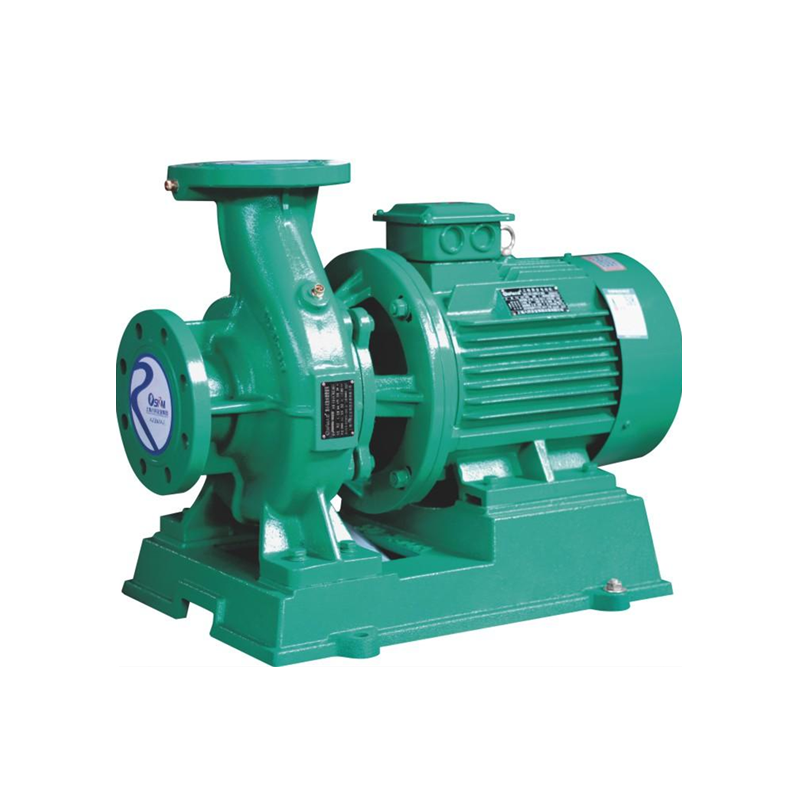
End suction pumps are a type of centrifugal pump designed to move fluids efficiently. They feature a horizontal shaft and an axial inlet where the fluid is drawn into the pump. The impeller, mounted on the shaft, spins and pushes the fluid out at a 90-degree angle to the inlet. This simple mechanism makes end suction pumps one of the most common and widely used pumps in various industries.
Simple Design: Their straightforward construction makes them easy to install and maintain.
Cost-Effective: Generally lower in cost compared to other pump types, making them ideal for budget-conscious projects.
Versatile Materials: Available in various materials to handle different fluids, including corrosive chemicals.
High Efficiency: Suitable for high flow and low to medium pressure applications.
Durability: Robust construction allows them to handle fluids containing small solid particles without significant wear.
Multiple Configurations: Options such as close-coupled or base-mounted designs cater to different installation needs.
End suction pumps are popular across many sectors due to their reliability and adaptability:
Residential: Pumping water from wells or reservoirs to storage tanks.
Industrial: Transferring chemicals, feeding reaction tanks, or circulating process fluids in chemical and petrochemical plants.
Water Treatment: Used in water and wastewater treatment plants for filtration and distribution.
Agriculture: Irrigation systems benefit from their high flow rates.
Food and Beverage: Hygienic models transport, mix, and fill liquid food products.
Sewage and Wastewater: Their ability to handle fluids with solids makes them suitable for sewage pumping.
Note: When selecting an end suction pump, consider the fluid's properties and operating conditions to ensure material compatibility and optimal performance.
Inline pumps are a type of centrifugal pump where the inlet and outlet are aligned on the same axis. This design allows the fluid to flow straight through the pump without changing direction. The impeller inside spins, adding energy to the fluid, which then moves along the pipe line. Because of this inline configuration, these pumps are often called vertical pumps, as their shaft is oriented vertically.
Compact Design: Inline pumps take up less space than end suction pumps, making them ideal for areas with limited room.
Lower Vibration: Their vertical shaft reduces vibration, which can extend the life of the pump and connected equipment.
High Pressure and Temperature Handling: Inline pumps perform well under higher pressures and temperatures, unlike some end suction pumps.
Easy Integration: They fit directly into piping systems, often eliminating the need for additional piping or support structures.
Quiet Operation: The design often results in quieter operation, beneficial in noise-sensitive environments.
Inline pumps are widely used in industries where space is tight or where high pressure and temperature conditions exist:
Booster Systems: Used to increase pressure in water supply lines or industrial processes.
HVAC Systems: Common in heating and cooling systems to circulate water or other fluids.
Thermal Power Plants: Handle high temperature fluids effectively.
Chemical Processing: Suitable for pumping chemicals that require high pressure or temperature resistance.
Industrial Manufacturing: Used in processes needing precise flow control and compact pump installations.
Tip: When selecting inline pumps, consider the available installation space and operating pressure to ensure optimal performance and ease of maintenance.
End suction pumps have a horizontal shaft and a volute casing where fluid enters axially and exits at a right angle. This layout often results in a larger footprint due to the horizontal orientation and the need for base mounting. The impeller is mounted on the shaft, which is supported by bearings aligned horizontally.
Inline pumps feature a vertical shaft with inlet and outlet ports aligned on the same axis, allowing fluid to flow straight through. This vertical design reduces the pump’s footprint, enabling installation in tighter spaces. The casing is usually a radial split case, and the impeller is mounted on the vertical shaft, supported by bearings designed for vertical loads.
End suction pumps excel in applications requiring high flow rates at low to medium pressures. Their suction design typically offers a lower Net Positive Suction Head required (NPSHr), aiding performance when suction conditions are challenging. However, they may experience performance degradation at higher pressures or temperatures.
Inline pumps handle higher pressures and temperatures more effectively. Their inline flow path reduces turbulence and vibration, improving operational stability. Due to their vertical shaft, they often run quieter and with less vibration, which benefits equipment longevity and reduces noise pollution.
| Feature | End Suction Pumps | Inline Pumps |
|---|---|---|
| Pros | - Lower cost | - Smaller footprint |
| - Easy to install and maintain | - Handles high pressure and temperature | |
| - Multiple nozzle configurations | - Lower vibration and noise | |
| - More tolerant of fluids with solids | - Easy integration into piping systems | |
| Cons | - Larger footprint | - More complex maintenance |
| - Performance drops at high pressure/temp | - Vertical shaft can cause balance issues | |
| - Motor separation needed for seal repair |
End suction pumps are easier to repair and maintain due to their horizontal shaft and simpler assembly. Inline pumps require more careful installation to avoid imbalance and can be harder to service since motor removal is often necessary for mechanical seal maintenance.
Tip: When comparing end suction and inline pumps, consider your available space, operating pressure, and maintenance capacity to select the most practical option for your application.
Selecting the right suction pump depends on several key factors. First, consider the fluid characteristics: is it clean water, corrosive chemicals, or wastewater with solids? This affects material choice and pump type. Next, evaluate the flow rate and pressure requirements. End suction pumps work well for high flow and low to medium pressure, while inline pumps handle higher pressures better. Also, think about the space available. Inline pumps fit tight areas due to their vertical design, whereas end suction pumps need more room. Operating temperature matters too; inline pumps tolerate higher temperatures better. Finally, factor in maintenance capabilities. End suction pumps are simpler to service, while inline pumps may require more effort for repairs.
Residential Water Supply: End suction pumps are ideal for moving water from wells or tanks because they are cost-effective and easy to maintain.
Industrial Chemical Transfer: Inline pumps suit this due to their ability to handle high pressure and temperature, plus their compact size helps in crowded plant layouts.
Agricultural Irrigation: End suction pumps provide the high flow rates needed for irrigation systems.
HVAC Systems: Inline pumps are common here for circulating fluids efficiently in heating and cooling.
Wastewater Treatment: End suction pumps handle solids well, making them suitable for sewage and sludge pumping.
Booster Systems: Inline pumps perform well, increasing pressure in water supply lines.
Always check the Net Positive Suction Head required (NPSHr) against the available NPSH to avoid cavitation.
Match pump materials to fluid properties to prevent corrosion or wear.
Consider future expansion needs; a modular pump design can ease upgrades.
Evaluate noise and vibration limits, especially in sensitive environments—inline pumps often run quieter.
Consult pump performance curves and manufacturer data to ensure the pump meets your exact flow and pressure needs.
When in doubt, seek advice from pump specialists who can analyze your system and recommend the best solution.
Tip: Prioritize pump selection based on fluid type, operating conditions, and space constraints to ensure long-term reliability and efficiency in your application.
Installing end suction pumps requires careful attention to foundation and alignment. These pumps usually have a horizontal shaft and need a solid base to prevent vibration and misalignment. Start by securing the pump on a flat, level surface with proper grouting if necessary. Ensure the suction and discharge piping are well supported and aligned to avoid strain on the pump casing. Use flexible connectors to absorb vibration and thermal expansion. Check that the suction pipe is free of air leaks and properly sized to provide adequate flow to the pump inlet. Before starting, fill the pump casing with fluid to prevent dry running, which can damage the impeller and seals. Also, verify the rotation direction of the motor matches the pump design to avoid damage.
Inline pumps, often vertical shaft designs, demand precise installation to maintain balance and performance. Mount the pump directly within the piping system, ensuring the pipe alignment is exact to avoid undue stress. Since inline pumps have a smaller footprint, space constraints can complicate installation, so plan carefully. Support the piping near the pump to prevent load transfer to the pump flanges. Check for proper motor alignment and secure mounting to reduce vibration. Because the motor and pump are often separate, verify mechanical seals and couplings are installed correctly. Fill the pump casing with fluid before operation to protect internal components. Always confirm the pump shaft rotates in the correct direction.
Regular maintenance extends pump life and ensures reliable operation for both end suction and inline pumps. Start with routine inspections for leaks, unusual noises, and vibration. Lubricate bearings as recommended by the manufacturer to prevent wear. Check mechanical seals and replace them if signs of leakage appear. Monitor pump performance by tracking flow rate and pressure; deviations may indicate impeller wear or blockage. Clean strainers and filters to avoid flow restrictions. For inline pumps, periodic motor and coupling inspections are critical due to their vertical shaft design. Always follow lockout/tagout procedures during maintenance to ensure safety. Schedule professional servicing for complex repairs or when performance drops significantly.
Tip: Always verify pump alignment and piping support during installation to minimize vibration and extend pump life.
Modern suction pumps often include advanced control systems that help optimize performance and reduce energy consumption. Variable frequency drives (VFDs) are common, allowing pumps to adjust speed based on demand rather than running at a constant rate. This flexibility cuts power use and extends pump life by avoiding unnecessary wear. Some control systems use algorithms that match pump speed to the system’s flow and pressure needs, improving efficiency in real time. Additionally, soft start features reduce mechanical stress on components during startup, lowering maintenance costs and downtime.
Sensors play a crucial role in monitoring pump operation and preventing failures. Pressure sensors track inlet and outlet pressures to ensure the pump runs within safe limits. Temperature sensors detect overheating, which can signal bearing or seal issues. Flow sensors verify the pump delivers the correct volume, alerting operators to blockages or leaks. Vibration sensors identify unusual movement early, allowing maintenance before damage occurs. These sensors often connect to centralized control panels or remote monitoring systems, enabling quick responses and predictive maintenance strategies.
Efficiency optimization combines technology and best practices to maximize pump performance. Some pumps use hydraulic design improvements like optimized impeller shapes to reduce energy losses. Variable speed operation, guided by sensor feedback, ensures pumps run only as fast as needed. Advanced sealing solutions reduce leakage, while high-quality bearings lower friction. Regular performance testing using sensor data helps identify when pumps deviate from optimal operation, prompting timely adjustments or repairs. Integration with building management or industrial control systems allows pumps to operate as part of a coordinated energy-saving strategy.
Tip: Use pumps equipped with smart sensors and variable speed drives to improve energy efficiency and enable predictive maintenance.
End suction pumps feature a horizontal design for high flow rates and low to medium pressure applications, while inline pumps offer compact vertical configurations, ideal for high pressure and temperature settings. Choosing the right suction pump depends on fluid type, pressure requirements, and installation space. SRMPUMP offers a range of solutions tailored to meet these needs, ensuring efficient, reliable performance across various applications with advanced features and expert services.
A: An End Suction Pump is a type of centrifugal pump with a horizontal shaft and axial inlet, designed for efficient fluid movement in various industries.
A: End Suction Pumps draw fluid into the axial inlet, where the impeller spins and pushes it out at a 90-degree angle, facilitating easy fluid transfer.
A: End Suction Pumps are cost-effective and simple to maintain, making them ideal for pumping water from wells or reservoirs in residential settings.
A: End Suction Pumps offer high flow rates, perfect for irrigation systems, ensuring efficient water distribution across agricultural fields.
A: End Suction Pumps typically require more space due to their horizontal design, whereas Inline Pumps have a compact vertical design suitable for tight installations.


