
Views: 0 Author: Site Editor Publish Time: 2026-05-25 Origin: Site


Have you ever turned on a faucet or shower in a high-rise apartment or an industrial plant and noticed that the water pressure is weak or inconsistent, sometimes fluctuating throughout the day depending on usage, while equipment or taps located farther from the source suffer from low flow? These are common challenges in residential, commercial, and industrial water systems, and they highlight the importance of understanding how a Booster Pump works, as such devices are specifically designed to ensure consistent water pressure and reliable flow across complex piping networks. Many people underestimate the impact of pressure drops on system efficiency, equipment longevity, and user comfort, and a properly selected and installed Booster Pump can solve these issues while reducing energy consumption, minimizing maintenance needs, and protecting the entire distribution system from stress caused by fluctuating pressures.
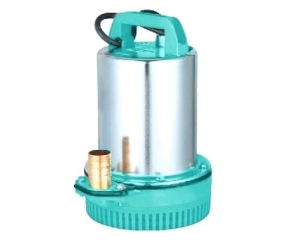
In this post, we’ll discuss the fundamental operation of a Booster Pump, break down its components, explain the differences between various types, and explore its applications across residential, commercial, and industrial settings. We will also examine energy efficiency considerations, maintenance practices, and selection guidelines so that you can make informed decisions when choosing the right Booster Pump for your system. Additionally, tables comparing pump types and selection factors will help visualize key differences and make technical comparisons easier for both engineers and decision-makers. By the end of this article, you will gain a comprehensive understanding of Booster Pumps and learn how to optimize their operation for long-term efficiency and reliability.
A Booster Pump is a mechanical device designed to increase the pressure of water or other fluids within a piping system, ensuring that the fluid reaches the desired outlets at the necessary flow rate and pressure, which is especially critical in high-rise buildings, large commercial complexes, and industrial plants where standard municipal pressure or gravity-fed systems cannot meet demand. Unlike standard pumps, which primarily transport fluid from one location to another, a Booster Pump is specifically engineered to maintain consistent pressure, compensate for pressure drops caused by long piping runs or system height, and adjust to variable flow demands without compromising system stability. This ability to manage fluctuations while providing steady pressure makes Booster Pumps indispensable in modern fluid management systems, where inconsistent water supply can lead to operational inefficiencies, equipment wear, and user dissatisfaction.
Booster Pumps are used not only in high-rise apartments but also in commercial buildings such as hotels and hospitals, as well as industrial facilities including manufacturing plants, food processing units, and cooling tower systems, where maintaining optimal pressure is critical for performance and safety. Their core functions include maintaining stable pressure, enhancing flow to meet peak demand, compensating for low source pressure, and protecting plumbing and system equipment from damage caused by pressure variation. Understanding these functions is the first step in selecting, installing, and maintaining an effective Booster Pump system.
The operation of a Booster Pump revolves around increasing the pressure of fluid using mechanical energy, which is typically provided by an electric motor, and converting that energy into kinetic and then pressure energy through the pump impeller and casing. When fluid enters the Booster Pump through the inlet, it passes into the impeller, which accelerates the fluid, increasing its velocity. As the water or fluid passes through the pump casing and diffusers, the velocity energy is converted into pressure energy, resulting in a steady, high-pressure output at the outlet. Modern Booster Pumps often include sensors and control systems that continuously monitor both inlet and outlet pressure as well as flow rate, automatically adjusting the motor speed in variable-speed models to maintain desired pressure levels while minimizing energy consumption and mechanical wear.
The flow dynamics within a Booster Pump are influenced by system design, including pipe length, diameter, bends, and friction losses, all of which affect the pump’s efficiency and performance. Advanced systems also incorporate feedback loops that allow the pump to respond dynamically to sudden changes in demand, preventing pressure drops at remote outlets and ensuring a uniform supply across multiple points of use. In industrial applications, Booster Pumps can be integrated with programmable logic controllers (PLCs) to synchronize operation with other equipment, further improving efficiency and safety.
A typical Booster Pump system consists of several critical components, each playing a specific role in ensuring effective and reliable operation. The pump head is the component responsible for converting the motor's mechanical energy into fluid pressure, and it must be carefully matched to the system’s flow and pressure requirements to avoid inefficiency or premature wear. The electric motor powers the impeller and can be designed for energy efficiency, including options such as permanent magnet motors or high-efficiency induction motors, depending on application requirements.
The control system monitors real-time pressure and flow, enabling automation of start/stop cycles, pressure regulation, and even remote operation through IoT-enabled monitoring in modern installations. Pressure tanks are often integrated to stabilize system pressure, minimize pump cycling, and reduce energy waste, particularly in systems with variable demand. Sensors and safety devices protect the Booster Pump from damage caused by dry running, overpressure, or system failures, while optional features such as variable-speed drives and smart monitoring further enhance operational flexibility and energy efficiency. Proper integration of these components ensures that the Booster Pump provides consistent performance while extending equipment life and reducing maintenance requirements.
Booster Pumps are available in a variety of configurations, each suited to specific applications and pressure requirements. Single-stage Booster Pumps employ a single impeller to increase fluid pressure and are generally simpler, cost-effective, and easier to maintain, but they are limited in the pressure boost they can provide and are most suitable for low-rise buildings. Multi-stage Booster Pumps use multiple impellers arranged in series to achieve higher pressures, offering smooth flow and optimal performance in high-rise structures, although they require more complex installation and higher initial investment.
Centrifugal Booster Pumps rely on radial or axial impellers to efficiently handle large flow rates and are typically compact, but they may not perform well at very high pressures. Vertical Inline Booster Pumps are installed directly inline with piping, saving space and simplifying integration, although their high-pressure capability may be limited. End-Suction Booster Pumps are horizontal pumps with suction from one end, providing robust performance in industrial applications but requiring more floor space and maintenance attention. Variable-speed Booster Pumps adjust motor speed in real time to match system demand, enhancing energy efficiency and minimizing wear, whereas constant-speed models operate at a fixed speed, offering simplicity at the cost of higher energy consumption in systems with fluctuating demand.
Type | Application | Advantages | Limitations |
Single-Stage | Residential, low-rise buildings | Simple, cost-effective, easy to maintain | Limited pressure boost |
Multi-Stage | High-rise buildings, commercial | High pressure, smooth flow | Complex, higher cost |
Centrifugal | Large flow industrial systems | Efficient for high volume, compact | Less effective for high pressures |
Vertical Inline | Space-limited installations | Compact, inline installation | Limited high-pressure output |
End-Suction | Industrial, heavy-duty | Robust, industrial-grade | Large footprint, maintenance-intensive |
Booster Pumps are employed across residential, commercial, and industrial applications to address pressure inconsistencies and ensure uniform flow. In residential settings, they provide adequate water supply for high-rise apartments, private homes with multiple bathrooms, and swimming pools or spa circulation systems. In commercial environments such as hotels, hospitals, and office complexes, Booster Pumps ensure reliable pressure for guest rooms, laundry facilities, kitchens, and medical equipment, which is critical for operational efficiency and user comfort. Industrial applications include manufacturing plants, food and beverage processing, chemical facilities, and HVAC systems, where precise pressure control is essential to maintain productivity, prevent equipment damage, and meet regulatory standards.
Application | Flow Rate (GPM) | Pressure Requirement (psi) | Recommended Pump Type |
Residential High-Rise | 10–50 | 40–80 | Multi-Stage Centrifugal |
Hotel | 50–150 | 50–100 | Variable-Speed Vertical Inline |
Hospital | 30–100 | 60–120 | Multi-Stage Constant-Speed |
Industrial Plant | 100–500 | 50–150 | End-Suction or Multi-Stage |
Modern Booster Pumps integrate energy-saving and smart control features, which allow variable-speed operation to adapt pump output according to real-time demand, resulting in significant reductions in electricity consumption and mechanical stress. IoT-enabled monitoring provides real-time alerts for pressure drops, flow abnormalities, and maintenance needs, enabling predictive maintenance and minimizing downtime. Additionally, flow optimization features ensure even water distribution, reduce energy waste, and extend the lifespan of connected plumbing and equipment.
Proper maintenance of Booster Pumps includes regular inspection of the motor, impeller, and control systems to detect unusual vibrations, noises, or pressure fluctuations, which could indicate wear or impending failure. Sensors and safety devices must be checked periodically to prevent dry running or overpressure conditions, and filters should be cleaned or replaced to prevent debris accumulation. Following manufacturer guidelines and implementing a preventive maintenance schedule can prolong the pump’s lifespan, improve reliability, and reduce operational costs over time.
Selecting the correct Booster Pump requires analysis of multiple factors including required flow rate, desired pressure, system height, pipe configuration, water quality, available installation space, and energy efficiency considerations. For variable-demand systems, variable-speed pumps are generally recommended to save energy and reduce wear. Proper sizing ensures that the pump can handle peak demand without causing overpressure or cavitation, and materials should be chosen based on water chemistry and potential corrosion. Installation and commissioning should follow manufacturer guidelines to optimize performance and prevent early failure.
Factor | Consideration | Recommendation |
Flow Rate | Peak vs. average | Choose pump slightly above peak flow |
Pressure | Outlet requirement | Ensure minimum pressure at farthest point |
Energy | Consumption & cost | Variable-speed models preferred |
Installation | Space limitation | Vertical Inline for compact spaces |
Water Quality | Sediment & corrosion | Stainless steel or corrosion-resistant |
How does a booster pump differ from a regular pump?
A booster pump increases water pressure and maintains steady flow, while a regular pump mainly moves water without boosting pressure. It is equipped with pressure tanks, sensors, and control systems for stable performance.
Can a booster pump handle both hot and cold water?
Yes, many booster pumps can handle both, but check the maximum operating temperature in the specifications to ensure safe operation for hot water applications.
How often should a booster pump be maintained?
Generally, every 6–12 months. Maintenance includes checking the motor, impeller, sensors, and pressure tank to prevent breakdowns.
What is the typical lifespan of a booster pump?
A well-maintained booster pump can last 10–15 years, depending on usage, water quality, and system conditions.
Are variable-speed booster pumps more energy-efficient than constant-speed models?
Yes, variable-speed pumps adjust output to real-time demand, saving energy and reducing wear compared to fixed-speed pumps.


