
Views: 0 Author: Site Editor Publish Time: 2026-01-23 Origin: Site


Wondering about your submersible pump running cost? Your electricity bill can vary widely each month. It depends on key factors like pump size and usage. This guide will show you how to calculate and reduce it. Shanghai People Enterprise Group Pump Co., Ltd. offers efficient pumps to help lower costs.
Calculating your submersible pump electricity cost is straightforward. You only need three pieces of information: your pump's power rating, how long it runs, and your local electricity rate. This simple formula gives you control and clarity over a major household expense.
Your utility company charges you for energy in kilowatt-hours (kWh). One kilowatt-hour means using 1,000 watts of power for one hour. It's the standard unit for all submersible pump energy consumption calculations. Think of it as the "currency" for your electricity bill.
First, locate your pump's power rating. Check the nameplate on the motor or the user manual. It will be listed in watts (W) or horsepower (HP). Remember, 1 horsepower is approximately equal to 746 watts. This number is the foundation of your submersible pump operating cost estimate.
How many hours does your pump run each day? For a well pump, this depends on your household's water usage. It cycles on and off automatically to maintain pressure. You can estimate this by checking your water meter or using your pump's flow rate and daily water consumption.
Find your electricity rate on your monthly utility bill. It's usually expressed as a cost per kWh (e.g., $0.15/kWh). Rates vary significantly by region and can change throughout the day with time-of-use plans. This variable greatly affects your final submersible pump power consumption cost.
Here is the simple formula to estimate your daily cost:
Daily Cost = (Pump Power in kW) × (Daily Run Hours) × (Electricity Rate $/kWh)
To use it, first convert your pump's wattage to kilowatts by dividing by 1,000. Then, plug in your numbers.
The following table outlines the core calculation steps clearly:
Step | Action | Example for a 1 HP Pump |
1. Find Power (kW) | Locate pump wattage (W) and divide by 1000. | 750W / 1000 = 0.75 kW |
2. Find Daily Run Time | Estimate total hours pump runs per day. | 4 hours per day |
3. Find Electricity Rate | Check your utility bill for $/kWh. | $0.18 per kWh |
4. Calculate Daily Cost | Multiply: kW × Hours × $/kWh. | 0.75 kW × 4 hrs × $0.18 = $0.54/day |
5. Calculate Monthly Cost | Multiply daily cost by 30. | $0.54 × 30 = $16.20/month |
Let's walk through a real example. Assume you have a 0.5 HP pump (about 375W). It runs for 3 hours each day. Your electricity rate is $0.20 per kWh.
1. Convert 375W to kilowatts: 375 / 1000 = 0.375 kW.
2. Daily energy use: 0.375 kW × 3 hours = 1.125 kWh.
3. Daily cost: 1.125 kWh × $0.20 = $0.225.
4. Monthly cost: $0.225 × 30 = $6.75.
This shows how even a small pump can add up over time.
Many websites offer free submersible pump calculator tools. You simply input your pump's details and local rate. They provide a quick cost estimate. These tools are great for a fast check, but understanding the manual calculation helps you verify the results.
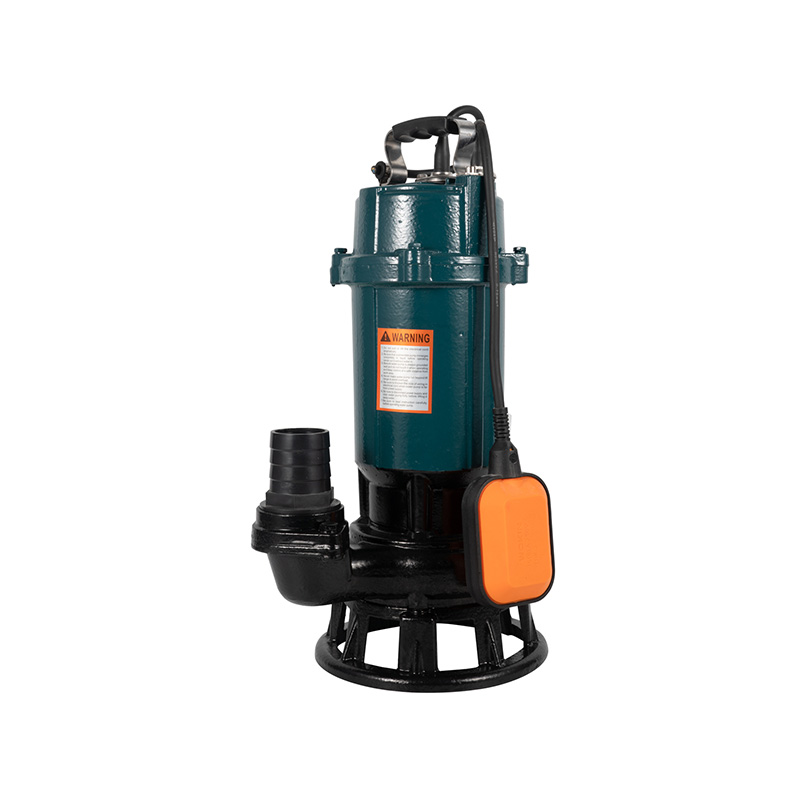
The size of your pump's motor is the single biggest factor in its energy appetite. A larger pump simply needs more power to operate.
Horsepower (HP) directly indicates potential energy use. A 1 HP pump uses roughly twice the power of a 0.5 HP pump under similar conditions. This is why proper sizing is so critical for managing your submersible pump running cost.
Not all motors with the same HP rating are equal. A standard 1 HP motor might draw 800W, while a high-efficiency model might only draw 700W to do the same job. This difference directly lowers your submersible pump electricity cost. For instance, pumps from Shanghai People Enterprise Group Pump Co., Ltd. are engineered with optimized hydraulic models that minimize flow loss, contributing to lower operating wattage.
Your pump's wattage is the base number in the cost formula. A higher wattage means more kilowatt-hours are consumed every single hour the pump runs. It's the fundamental multiplier for your entire submersible pump operating cost.
How often your pump runs is just as important as how powerful it is. A small pump running constantly can cost more than a large pump running briefly.
A family of six will run their well pump much more than a single person. Irrigation systems, filling pools, or constant water usage in a business all increase run time. This directly multiplies your energy use.
Well pumps use a pressure switch to turn on and off. Short, frequent cycles (called "cycling") are less efficient and harder on the pump than longer, steady runs. Excessive cycling can significantly inflate your submersible pump energy consumption.
You can estimate run time. The average person uses 80-100 gallons of water per day. Divide your household's total daily gallon use by your pump's flow rate (in gallons per minute). This gives you the total minutes of runtime per day.
Where you live has a huge impact on your final bill. The same pump will cost different amounts in different states or countries.
Electricity rates are set by local utilities and regulatory bodies. Rates in high-cost areas like California or Hawaii can be double or triple those in states with lower costs. This makes the location a major variable in your cost to run a submersible pump.
Some utilities charge different rates at different times of day (peak vs. off-peak). If your pump runs mostly during peak afternoon hours, your cost will be higher. A flat rate charges the same price 24/7.
Energy prices tend to increase over time. A pump that costs $30 per month to run today might cost $40 per month in a few years. Investing in an efficient pump now provides a hedge against future price hikes.
A pump's efficiency determines how much water it moves per watt of electricity. An old, worn-out pump is a financial drain.
Modern pumps are designed for higher efficiency. They may have better seals, improved impeller designs, or advanced motors. This can reduce your submersible pump power consumption by 20-30% compared to an old model. The internal flow channel design in pumps from Shanghai People Enterprise Group Pump Co., Ltd., leveraging precision fluid dynamics, is a key example of engineering focused on maximizing hydraulic efficiency.
An older 1 HP pump might draw 900W, while a new high-efficiency model draws 750W. Over 4 hours daily use at $0.15/kWh, that's a savings of about $2.70 per month, or over $32 per year.
Watch for longer run times to achieve the same water pressure, unusual noises, or a gradual increase in your electricity bill without a change in usage. These can indicate a pump that's working harder and costing you more.
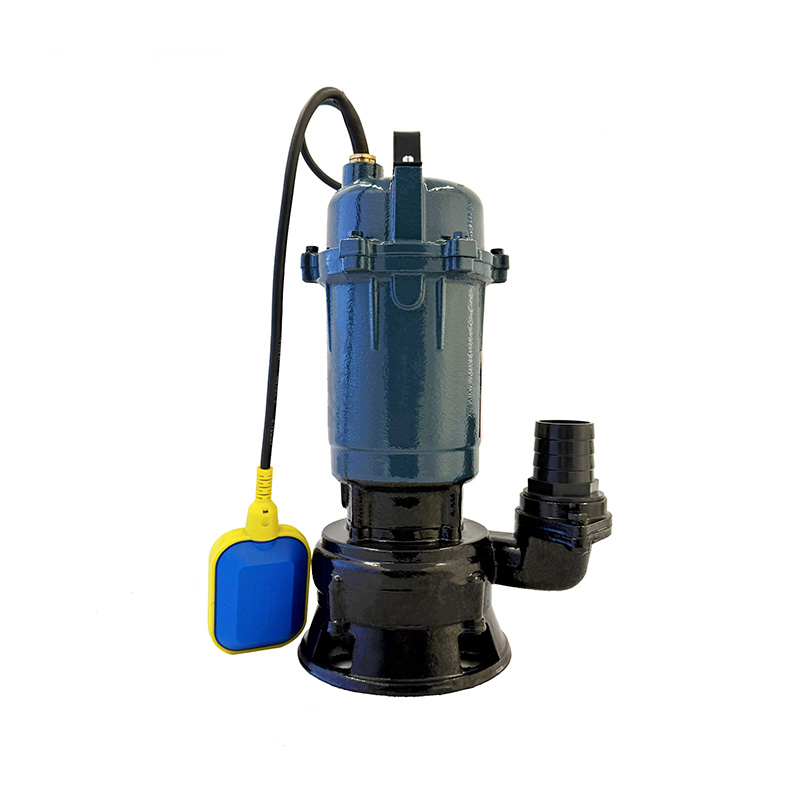
The physical work your pump must do is called "Total Dynamic Head" (TDH). It's the total height it must lift water, plus friction from pipes.
Lifting water requires energy. Pumping from 100 feet deep uses significantly more power than pumping from 50 feet. Every extra foot of depth adds to your submersible pump running cost.
Long pipe runs, small pipe diameters, and many elbows or fittings create resistance. Your pump must work harder to overcome this friction, increasing energy use. Optimizing your plumbing layout can reduce this hidden cost.
Using properly sized pipes, minimizing bends, and ensuring your pump is correctly sized for your well's depth are crucial. A professional assessment can identify inefficiencies. Selecting a pump built with robust materials, like the high-strength cast iron or stainless steel options from Shanghai People Enterprise Group Pump Co., Ltd., ensures longevity and sustained performance even in demanding system conditions.
Let's look at estimated monthly costs for common pump sizes. These are based on an average electricity rate of $0.15/kWh and typical residential run times.
Pump Size (HP) | Approx. Running Wattage | Daily Run Time (Hours) | Estimated Monthly Cost |
1/3 HP (Small Sump/Utility) | 500 - 750W | 2 - 4 | $4.50 - $13.50 |
1/2 HP (Standard Home Well) | 750 - 1,100W | 2 - 5 | $6.75 - $24.75 |
1 HP (Larger Home/Irrigation) | 1,000 - 1,500W | 3 - 6 | $13.50 - $40.50 |
1.5 HP (Deep Well/Heavy Use) | 1,500 - 2,500W | 4 - 8 | $27.00 - $90.00 |
5+ HP (Industrial/Agriculture) | 4,000W+ | 8+ | $144.00+ |
A small pump for a garden pond or light drainage might run 2 hours a day. Its monthly submersible pump operating cost could be under $10, making it very affordable.
This is the workhorse for many homes. With moderate use (3-5 hours daily), expect costs between $15 and $40 per month. This is a typical submersible pump electricity cost for a family.
Large pumps run for extended periods. Their energy use is substantial, often exceeding $100 monthly. For farms or businesses, this is a major operational expense that merits efficiency investments.
You can lower your costs without replacing your entire system. These actionable strategies offer quick wins and long-term savings.
A leaking toilet or dripping faucet causes your pump to cycle on unnecessarily. Fixing leaks is the cheapest and fastest way to reduce pump run time and lower your submersible pump energy consumption.
A standard 20-gallon pressure tank might cause your pump to start 30 times a day. Upgrading to an 80-gallon tank can cut that to 10 cycles. This reduces wear and saves energy from frequent motor startups.
A VSD allows the pump motor to adjust its speed to match demand, rather than just turning on/off at full power. This can dramatically improve efficiency, especially in systems with varying flow needs.
Clean intake screens, check for worn seals, and ensure the pressure switch is calibrated. A well-maintained pump runs smoother and uses less power. Think of it as a tune-up for your pump's fuel economy.
If your pump is over 10 years old, a new model could pay for itself through energy savings in a few years. Look for pumps with high efficiency ratings. The initial investment lowers your submersible pump running cost for the next decade.
For those looking to decouple from the grid or operate in remote locations, solar power is a viable option.
Yes, you can. It requires a solar panel array, a charge controller, batteries for storage, and a solar inverter capable of handling the pump's high starting surge wattage. It's a popular solution for remote irrigation.
The upfront cost is high, but you eliminate ongoing electricity costs. The payback period depends on your current submersible pump electricity cost, system size, and available sunlight. For high-use applications in sunny areas, it can be a sound investment.
Generators are a common backup for power outages. However, running a pump on a generator is expensive due to fuel costs. It's best reserved for emergencies rather than regular use to manage your submersible pump operating cost.
Managing your submersible pump running cost requires understanding key factors like size, usage, and local rates. Simple calculations and maintenance can bring immediate savings. For long-term efficiency, investing in a correctly sized, high-efficiency pump is crucial. Choosing reliable equipment from Shanghai People Enterprise Group Pump Co., Ltd. ensures durable performance and lower lifetime costs for your water system.
A: The primary factor is the pump's power rating (wattage/HP), which directly determines its submersible pump electricity cost per hour of operation.
A: Use this formula: (Pump kW) x (Daily Hours) x (Electricity Rate $/kWh) x 30. This estimates your submersible pump operating cost.
A: Costs vary due to pump size, efficiency, daily run time, and local submersible pump energy consumption rates, leading to a wide monthly range.
A: Fix water leaks, install a larger pressure tank, and perform regular maintenance. For maximum savings, consider a high-efficiency model.


