
Views: 0 Author: Site Editor Publish Time: 2026-04-28 Origin: Site


What if your pump fails not because of poor quality, but because it was selected, installed, or operated incorrectly? Even a high-quality Submersible Pump can fail early if it runs dry, handles the wrong liquid, or works outside its rated range.
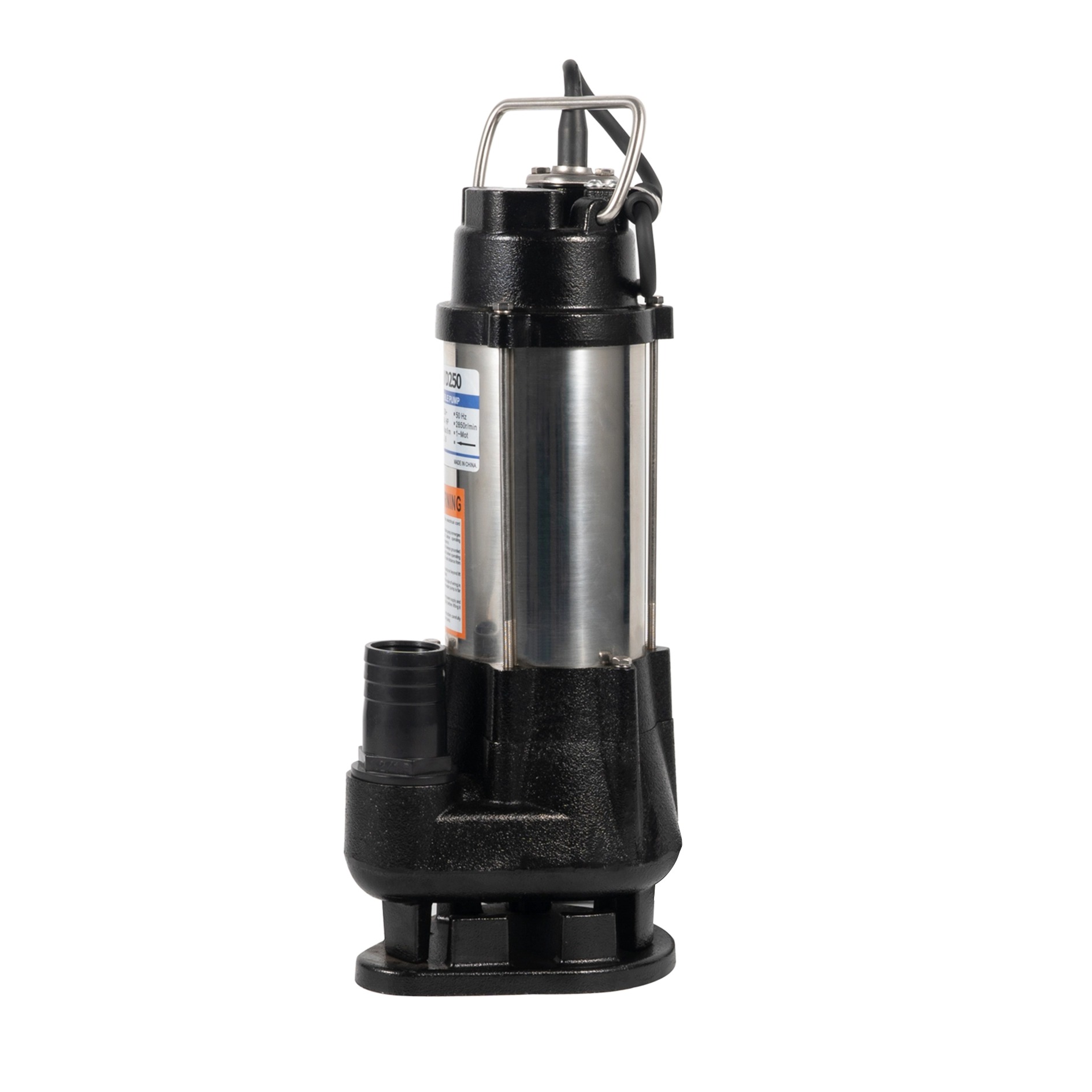
In this guide, you’ll learn how to use a Submersible Pump safely and efficiently, including installation, operation, maintenance, troubleshooting, and how to choose the right solution from Booster Pump, Submersible Pump for Sewage And Drainage, and Waste Water Lifting Station products.
A Submersible Pump is a pump designed to operate while submerged in liquid. Unlike a surface pump, which pulls water from above the water source, a Submersible Pump pushes water from inside the liquid. This design usually makes the Submersible Pump more efficient, especially in deep wells, drainage pits, sewage tanks, basements, ponds, construction sites, and wastewater systems.
A typical Submersible Pump includes a sealed motor, pump casing, impeller, discharge outlet, cable, mechanical seal, and sometimes a float switch or control system. The motor drives the impeller, and the impeller creates pressure to move liquid through the discharge pipe.
The main advantage of a Submersible Pump is that it works directly in the liquid. This helps reduce suction problems, improves cooling, lowers noise, and saves installation space. However, because a Submersible Pump operates underwater, correct electrical protection, installation depth, cable handling, and liquid compatibility are very important.
A Submersible Pump is commonly used for:
● Deep well water supply
● Basement drainage
● Flood water removal
● Agricultural irrigation
● Sewage discharge
● Construction site dewatering
● Wastewater transfer
● Industrial water handling
● Municipal drainage systems
● Rainwater and stormwater pumping
If you want stable and long-term performance, you need to understand how to use a Submersible Pump properly before starting operation.
Knowing how to use a Submersible Pump correctly can help prevent many common pump failures. A Submersible Pump may stop working not because of poor manufacturing quality, but because of dry running, blockage, wrong voltage, unsuitable liquid, incorrect installation, or lack of maintenance.
For example, if a clean water Submersible Pump is used in sewage or muddy water, the impeller may become clogged. If a Submersible Pump is placed directly on sand or sludge, abrasive particles may enter the pump and cause wear. If the pump runs without enough water, the motor may overheat and the mechanical seal may be damaged.
Proper operation also improves efficiency. A correctly installed Submersible Pump can deliver better flow, lower energy consumption, and more reliable performance. For commercial, agricultural, municipal, and industrial users, this means lower operating costs and fewer emergency repairs.
A Submersible Pump can be used in many industries and water management systems. The correct application depends on the pump type, liquid condition, required head, flow rate, material, and control system.
Common applications include:
● Residential use: basement drainage, garden ponds, rainwater tanks, domestic water supply
● Agricultural use: irrigation, groundwater extraction, pond drainage, livestock water supply
● Commercial use: hotel drainage, building water supply, underground parking drainage
● Industrial use: cooling water circulation, wastewater transfer, process water handling
● Municipal use: stormwater drainage, sewage systems, wastewater treatment plants
● Construction use: site dewatering, foundation pit drainage, tunnel drainage
● Mining use: slurry drainage, groundwater removal, dirty water transfer
Different applications require different pump designs. A small clean water Submersible Pump is not suitable for heavy sewage. A sewage Submersible Pump is not always suitable for abrasive slurry. A deep well Submersible Pump is designed for vertical borehole installation, not for open sump drainage.
As a professional pump manufacturer, we recommend choosing a pump according to the actual application, liquid condition, installation environment, and required performance. Although many users search for how to use a Submersible Pump, not every pumping problem requires the same type of pump. In some situations, a Booster Pump or a Waste Water Lifting Station may be more suitable.
Product Category | Main Application | Suitable Liquid | Typical Users |
Booster Pump | Increasing water pressure in buildings, irrigation systems, water supply networks, and industrial pipelines | Clean water or treated water | Homes, hotels, farms, factories, commercial buildings |
Submersible Pump for Sewage And Drainage | Sewage discharge, basement drainage, construction dewatering, stormwater removal, and wastewater transfer | Dirty water, sewage, rainwater, drainage water with solids | Contractors, municipalities, wastewater plants, property managers |
Waste Water Lifting Station | Collecting and lifting wastewater from low-level areas to higher drainage or sewer systems | Domestic wastewater, commercial wastewater, sewage | Villas, basements, underground bathrooms, commercial buildings, municipal projects |
A Booster Pump is mainly used when the existing water pressure is not strong enough. In many homes, buildings, farms, hotels, factories, and irrigation systems, water may be available, but the pressure may be too low for stable use. A Booster Pump helps increase pressure and maintain consistent water supply.
A Booster Pump is different from a Submersible Pump because it is usually installed outside the water source and works as part of a pressurized pipeline system. It is commonly used for household water pressure boosting, high-rise building water supply, agricultural irrigation, industrial pipeline systems, hotel water systems, and water treatment equipment.
If the user’s main problem is low water pressure rather than water removal, a Booster Pump is usually the better solution.
A Submersible Pump for Sewage And Drainage is designed to work directly inside dirty water, sewage pits, drainage wells, sumps, construction sites, and wastewater tanks. This type of Submersible Pump is suitable for removing wastewater, stormwater, rainwater, and liquids containing certain solid particles.
A Submersible Pump for Sewage And Drainage is widely used in basement drainage, flood water removal, sewage discharge, septic tank drainage, construction site dewatering, municipal drainage, and industrial wastewater transfer.
When choosing a Submersible Pump for Sewage And Drainage, users should pay attention to solid handling capacity, impeller design, motor protection, pump material, cable length, and maximum submersion depth. For dirty water and sewage applications, anti-clog performance is especially important.
A Waste Water Lifting Station is a complete wastewater collection and lifting system. It is commonly used when wastewater cannot flow naturally to the main sewer line by gravity. Instead of using only one pump, a Waste Water Lifting Station usually includes a tank, pump, control system, inlet and outlet connections, non-return valve, and sometimes alarm protection.
A Waste Water Lifting Station is especially useful for underground bathrooms, basement kitchens, villas, commercial buildings, hotels, shopping centers, public facilities, and municipal wastewater systems.
A Waste Water Lifting Station is different from a single Submersible Pump because it provides a more integrated and automatic wastewater management solution. For projects where wastewater must be collected, stored, and lifted to a higher discharge point, a Waste Water Lifting Station is often the most reliable option.
Before using a Submersible Pump, you should inspect the pump and confirm that it matches the working conditions. This step is essential for safety and performance.
Different pump types are designed for different liquids. Before operation, confirm whether your pump is a clean water Submersible Pump, deep well Submersible Pump, sewage Submersible Pump, slurry Submersible Pump, stainless steel Submersible Pump, or Submersible Pump for Sewage And Drainage.
Using the wrong pump type can cause clogging, corrosion, overheating, low flow, or motor failure.
Every Submersible Pump has technical specifications. Before operation, check:
● Flow rate
● Head or lift height
● Power rating
● Voltage
● Phase
● Frequency
● Outlet size
● Maximum submersion depth
● Cable length
● Liquid temperature range
● Solid particle handling capacity
● Pump material
● Protection grade
The Submersible Pump must match the power supply and actual application. For example, a three-phase industrial Submersible Pump should be connected through a proper control panel and protection system. A small household Submersible Pump may use a simpler plug-and-play design, but it still needs proper grounding and leakage protection.
Before lowering the Submersible Pump into water, check the pump body, cable, plug, outlet, screws, lifting handle, and casing. Look for cracks, broken insulation, loose parts, rust, or physical damage.
Never use a Submersible Pump with a damaged cable. Because the pump operates in water, cable damage can create serious electrical risk.
The inlet and impeller area should be clean. Stones, leaves, plastic, rope, mud, and fibers can block the pump and reduce performance. A blocked Submersible Pump may vibrate, overheat, or stop completely.
For a Submersible Pump for Sewage And Drainage, inspect the impeller design and make sure the solid passage is not blocked. For a drainage Submersible Pump, clean the inlet screen regularly.
The installation area should be stable, clean, and suitable for pump operation. Avoid placing the Submersible Pump directly in heavy mud, sand, or sludge unless the pump is specifically designed for that environment.
If the bottom is dirty, place the Submersible Pump on a stable base or suspend it slightly above the bottom. This helps reduce sand intake and extends pump life.
Because a Submersible Pump works in water and uses electricity, safety must be taken seriously. Before operation, follow these precautions:
● Disconnect power before installation or maintenance.
● Use a properly grounded power supply.
● Install leakage protection or a residual current device.
● Use overload protection for the motor.
● Do not touch the water while the pump is connected to electricity.
● Never lift the Submersible Pump by the power cable.
● Do not run the Submersible Pump dry.
● Keep people away from the water during operation.
● Do not use the pump for flammable or explosive liquids unless it is specially designed for that purpose.
● Use waterproof cable connectors where necessary.
● Follow the manufacturer’s operation manual.
For large pumps, three-phase pumps, municipal pumps, or industrial Submersible Pump systems, installation should be handled by qualified professionals.
Correct installation is the foundation of reliable operation. The following steps explain how to install a Submersible Pump safely and efficiently.
Connect the discharge pipe or hose to the outlet of the Submersible Pump. The pipe diameter should match the outlet size or the manufacturer’s recommendation. A pipe that is too small will increase friction loss and reduce flow.
Use suitable fittings, clamps, threaded joints, or adapters. Make sure the connection is tight and leak-free. Avoid sharp bends because they increase pressure loss and reduce the efficiency of the Submersible Pump.
Use a rope, stainless steel cable, or lifting chain to lower and lift the Submersible Pump. Never use the electrical cable to lift the pump. Pulling the cable may damage the cable seal and allow water to enter the motor.
For heavy-duty or industrial Submersible Pump models, use proper lifting equipment and make sure the lifting device can support the pump weight.
Slowly place the Submersible Pump into the water source. Keep the pump upright unless the design allows horizontal installation. Make sure the pump is fully submerged before starting.
Do not allow the inlet to touch mud or sand directly. Keep enough clearance from the bottom to prevent sediment from entering the Submersible Pump.
If your Submersible Pump has a float switch, make sure it can move freely. The float switch should not be blocked by walls, pipes, cables, or debris. A float switch helps prevent dry running by turning the pump off when the water level becomes too low.
For automatic drainage applications, the float switch is one of the most important protection devices for a Submersible Pump.
Confirm that voltage, frequency, and phase match the pump nameplate. If the Submersible Pump is three-phase, check the rotation direction. Wrong rotation can cause low flow, abnormal noise, and poor efficiency.
Use overload protection, leakage protection, and a control box if required. For larger Submersible Pump systems, a qualified electrician should complete the electrical connection.
Turn on the Submersible Pump and observe the water discharge. Water should flow smoothly from the outlet. Listen for unusual noise and check whether the pump vibrates.
After starting, monitor:
● Flow rate
● Discharge pressure
● Water level
● Cable condition
● Pipe leakage
● Motor current
● Noise and vibration
If abnormal operation occurs, stop the Submersible Pump immediately and inspect the system.
After installation, the Submersible Pump should be operated within its rated conditions. Correct operation is essential for long service life.
Most submersible pumps rely on surrounding liquid for cooling. If the water level becomes too low, the Submersible Pump may overheat. Dry running can damage the mechanical seal, motor, and impeller.
Use a float switch, water level sensor, or controller to protect the Submersible Pump from dry running.
The water level should remain above the minimum operating level. If the water level changes frequently, automatic control is recommended. For wells, tanks, and drainage pits, water level monitoring helps protect the Submersible Pump and improves system reliability.
Do not use a clean water Submersible Pump for sewage, slurry, corrosive liquid, oil, hot water, or chemical liquid unless the pump is designed for that application.
For sewage and dirty water, choose a Submersible Pump for Sewage And Drainage. For wastewater collection below sewer level, choose a Waste Water Lifting Station. For clean water pressure improvement, choose a Booster Pump.
A Submersible Pump should not operate beyond its rated head, flow, power, temperature, or depth. Overload can damage the motor and reduce efficiency.
Always check the pump performance curve before selection. A Submersible Pump should work near its recommended operating range for best performance.
Frequent starting and stopping can shorten motor life. If your Submersible Pump starts and stops too often, check the float switch setting, tank size, pressure control, or water level condition.
For variable-demand systems, a variable frequency drive may help the Submersible Pump run more smoothly and efficiently.
Modern pump users want more than basic water movement. They want safer operation, lower energy consumption, automation, and easier maintenance. The following table compares different pump system types.
System Type | Main Components | Advantages | Best For |
Manual Submersible Pump System | Pump, cable, discharge pipe, manual switch | Simple structure, lower cost, easy temporary use | Small drainage jobs, temporary water removal, occasional use |
Automatic Submersible Pump System | Pump, float switch, control box | Prevents dry running, convenient operation, better protection | Basements, tanks, sumps, farms, drainage systems |
Smart Submersible Pump System | Pump, sensors, controller, VFD, remote monitoring | Energy saving, remote control, predictive maintenance | Industrial plants, wastewater systems, irrigation projects, municipal facilities |
Booster Pump System | Pump, pressure tank, pressure switch, controller | Stable water pressure, improved water supply | Buildings, homes, hotels, irrigation, commercial facilities |
Waste Water Lifting Station | Tank, pump, controller, valves, alarm system | Automatic wastewater collection and lifting | Basements, underground bathrooms, villas, commercial buildings |
The latest pump industry trend is moving toward high-efficiency motors, variable frequency control, smart monitoring, and predictive maintenance. For users of Submersible Pump systems, this means better control, lower energy costs, and fewer unexpected failures.
The running time of a Submersible Pump depends on the pump design, duty rating, motor cooling, liquid level, voltage stability, and working condition. Some pumps are designed for continuous operation, while others are designed for intermittent use.
A continuous-duty Submersible Pump can run for long periods if it remains fully submerged and operates within rated conditions. However, even a continuous-duty Submersible Pump can fail if the inlet is blocked, the voltage is unstable, the liquid is too hot, or the pump runs dry.
For long operation, users should check:
● Duty rating
● Water level
● Motor temperature
● Voltage stability
● Current draw
● Inlet cleanliness
● Discharge pressure
● Cable condition
● Thermal protection
If your project requires 24-hour operation, choose a heavy-duty Submersible Pump with proper motor protection, strong sealing, and reliable cooling.

Maintenance is a key part of learning how to use a Submersible Pump. Regular inspection can prevent clogging, overheating, leakage, vibration, and performance loss.
Remove mud, leaves, fibers, stones, and other debris from the pump body and inlet. For a Submersible Pump for Sewage And Drainage, cleaning should be more frequent because solids and fibers can accumulate around the impeller.
Check the cable for cracks, cuts, wear, or exposed wires. A damaged cable is dangerous and should be replaced immediately. Never operate a Submersible Pump with damaged electrical insulation.
The impeller moves the liquid. If the impeller is worn, blocked, or damaged, the Submersible Pump may produce low flow, vibration, or noise. Clean the impeller area and inspect it regularly.
If the Submersible Pump uses a float switch, test it regularly. Make sure the float switch starts and stops the pump correctly. A stuck float switch may cause dry running or flooding.
Mechanical seals prevent water from entering the motor. Bearings support smooth motor rotation. If the Submersible Pump produces grinding noise, strong vibration, or leakage, stop operation and arrange inspection.
If the Submersible Pump will not be used for a long time, clean it, dry it, and store it in a dry and ventilated place. Protect the pump from freezing temperatures, direct sunlight, and corrosive environments.
Even a good Submersible Pump may experience problems if it is used incorrectly or maintained poorly. The table below summarizes common problems and solutions.
Problem | Possible Cause | Recommended Solution |
Pump does not start | No power, damaged cable, wrong voltage, blocked impeller, overload protection activated | Check power supply, inspect cable, clean impeller, reset protection |
Pump runs but no water comes out | Low water level, blocked inlet, airlock, damaged impeller, leaking pipe | Submerge pump fully, clean inlet, inspect pipe and impeller |
Low flow | Clogged screen, pipe too small, excessive head, worn impeller, low voltage | Clean pump, use proper pipe size, check head, inspect voltage |
Pump overheats | Dry running, overload, poor cooling, wrong liquid, blocked impeller | Stop pump, restore water level, clean pump, verify application |
Noise or vibration | Debris inside pump, bearing wear, cavitation, loose installation | Stop pump, inspect impeller, check installation, service bearings |
Frequent start-stop | Float switch issue, unstable water level, small tank, incorrect control setting | Adjust float switch, check controller, improve tank sizing |
Do not repeatedly restart a faulty Submersible Pump. Repeated restarting may cause greater damage. If troubleshooting does not solve the issue, contact the manufacturer or a professional technician.
Choosing the right pump depends on the actual problem you need to solve. Although many users search for how to use a Submersible Pump, not every water system requires the same pump type. In some cases, a Booster Pump or a Waste Water Lifting Station may be more suitable.
If water is available but the pressure is too low, choose a Booster Pump. A Booster Pump is ideal for water supply systems, irrigation pipelines, high-rise buildings, hotels, factories, and commercial facilities.
A Booster Pump is commonly used to:
● Increase tap water pressure
● Improve shower and faucet water flow
● Support irrigation systems
● Maintain stable pressure in industrial pipelines
● Improve building water supply
● Support water treatment systems
If the main issue is low pressure, a Booster Pump is usually more suitable than a Submersible Pump.
If your goal is to remove dirty water, rainwater, sewage, or wastewater from a pit, basement, construction site, or drainage area, choose a Submersible Pump for Sewage And Drainage.
A Submersible Pump for Sewage And Drainage is suitable for:
● Sewage discharge
● Basement flooding
● Stormwater drainage
● Construction site dewatering
● Septic tank pumping
● Municipal wastewater transfer
● Industrial dirty water discharge
For these applications, users should focus on anti-clog performance, solid passage size, motor protection, and pump material.
If wastewater is generated below the sewer line and cannot flow out naturally, a Waste Water Lifting Station is the best solution. A Waste Water Lifting Station collects wastewater in a tank and automatically lifts it to a higher drainage pipe or sewer system.
A Waste Water Lifting Station is commonly used in:
● Underground bathrooms
● Basement toilets
● Basement kitchens
● Villas
● Hotels
● Shopping centers
● Commercial buildings
● Public facilities
● Municipal wastewater systems
Compared with a single Submersible Pump, a Waste Water Lifting Station offers a more complete and automatic wastewater lifting solution.
Learning how to use a Submersible Pump correctly helps improve safety, efficiency, and service life. Before operation, check the pump type, specifications, liquid compatibility, installation depth, discharge pipe size, and power supply. During use, keep the pump fully submerged, avoid dry running, and operate it within the rated range.
For different applications, choose the right solution: a Booster Pump for water pressure boosting, a Submersible Pump for Sewage And Drainage for dirty water and sewage removal, or a Waste Water Lifting Station for automatic wastewater lifting.
If you need professional pump selection, OEM customization, or technical support, Shanghai People Enterprise Group Pump Co., Ltd. can provide reliable solutions for residential, commercial, agricultural, municipal, and industrial projects.
Yes, some submersible pumps are designed for continuous operation. However, the Submersible Pump must remain fully submerged, operate within its rated head and flow range, and have proper motor protection. Always check the manufacturer’s duty rating before long-term operation.
If a Submersible Pump runs dry, the motor can overheat and the mechanical seal can fail. Dry running may also damage the impeller and shorten pump life. A float switch or water level controller is recommended to prevent dry running.
The installation depth depends on the pump model, motor design, cable length, pressure rating, and maximum submersion depth. A deep well Submersible Pump is designed for greater depths, while a small drainage Submersible Pump is usually suitable for shallow applications.
Common reasons include low water level, blocked inlet, airlock, damaged impeller, leaking discharge pipe, wrong rotation direction, or excessive head. Stop the Submersible Pump, inspect the system, clean the inlet, and confirm that the pump is fully submerged.
Maintenance frequency depends on the application. A clean water Submersible Pump may need periodic inspection, while a Submersible Pump for Sewage And Drainage should be checked more often. In harsh environments, inspect the inlet, impeller, cable, float switch, seals, and bearings regularly.


