
Views: 0 Author: Site Editor Publish Time: 2026-03-24 Origin: Site


High pressure matters in many systems. Many engineers ask: how does a multistage centrifugal pump work? This pump increases pressure step by step using several impellers. In this guide, you will learn the working principle and stages. Reliable pump solutions from Shanghai People Enterprise Group Pump Co., Ltd. help ensure stable performance.
A multistage centrifugal pump is a pump that contains multiple impellers mounted on a single rotating shaft. Each impeller forms one stage of the pumping process. As liquid flows through each stage, the pump increases the pressure gradually rather than all at once. This design allows the system to produce higher discharge pressure while maintaining stable hydraulic performance.
In many industrial systems, pressure requirements are far higher than what a single impeller can provide. Multistage pumps solve this problem by dividing the pressure generation process into several steps. Each impeller accelerates the liquid and transfers kinetic energy to the fluid. The diffuser then converts velocity into pressure. By repeating this process across several stages, the pump gradually increases pressure without excessive energy loss.
This design is commonly used in applications where fluid must travel long distances or reach high elevations. For example, boiler feedwater systems, reverse osmosis plants, and municipal water supply systems often require pumps capable of delivering high pressure continuously. Multistage centrifugal pumps provide a reliable solution for these demanding operating conditions.
The main difference between a single-stage pump and a multistage centrifugal pump lies in how they generate pressure. A single-stage pump uses one impeller to increase the energy of the fluid. The pump accelerates the liquid once and produces a certain level of pressure before the fluid exits the pump casing.
In contrast, a multistage centrifugal pump increases pressure through multiple impellers arranged sequentially. Each impeller increases the pressure slightly before passing the liquid to the next stage. This repeated process allows the pump to produce much higher discharge pressure compared with a single-stage design.
The following table highlights the key differences between these two pump types.
Feature | Single-Stage Pump | Multistage Centrifugal Pump |
Number of impellers | One | Multiple |
Pressure generation | Single step | Gradual step-by-step increase |
Typical applications | Low to medium pressure systems | High pressure systems |
Efficiency at high pressure | Lower | Higher |
System complexity | Simple | More complex but more capable |
Each stage of a multistage centrifugal pump contributes additional energy to the fluid. When liquid exits the first impeller, it already has increased pressure and velocity. The diffuser then directs the liquid into the next stage. The next impeller again accelerates the liquid and raises its pressure further.
Because this process repeats several times, the final pressure becomes the sum of all stage pressure increases. Engineers can therefore adjust the pump design simply by adding or removing stages. More stages produce higher pressure while maintaining similar flow characteristics.
This approach improves efficiency in high-pressure systems. Instead of forcing one impeller to generate extreme pressure, the workload is distributed across several stages. As a result, energy transfer becomes smoother and mechanical stress decreases.
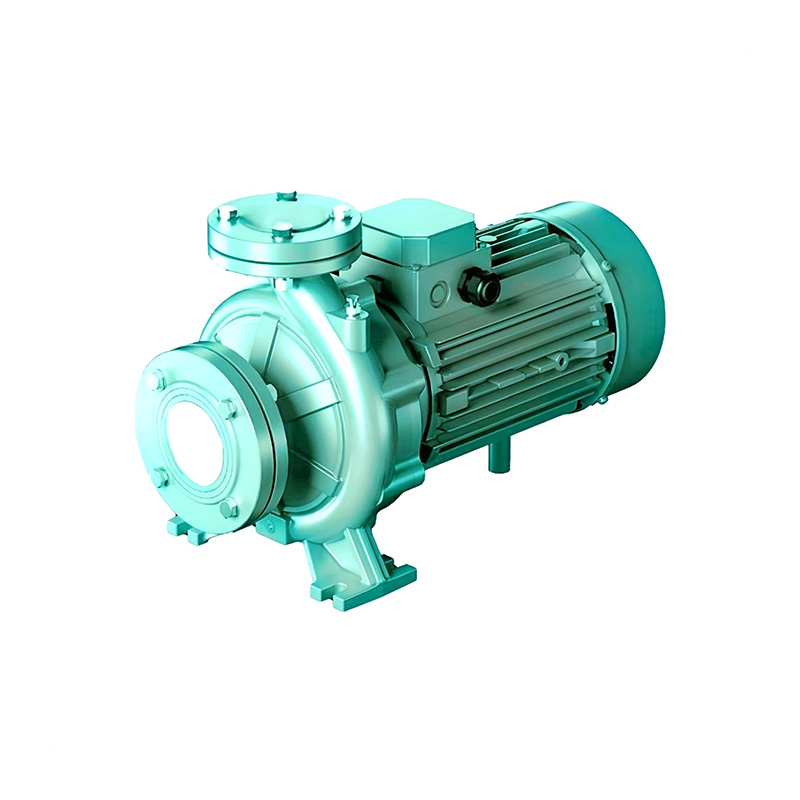
The pumping process begins when fluid enters the suction port of the pump. The liquid flows into the pump casing and moves toward the first impeller. At this stage, the fluid pressure is relatively low and equal to the suction pressure of the system.
The impeller is connected to a rotating shaft driven by an electric motor. When the motor starts, it rotates the shaft at high speed. This rotational motion creates centrifugal force inside the pump chamber.
As the impeller rotates, its curved blades push the liquid outward from the center of the impeller toward the outer edge. This motion increases the velocity of the fluid. The centrifugal force generated by the rotating impeller causes the liquid to gain kinetic energy.
Once the fluid reaches the outer edge of the impeller, it leaves the impeller channel and enters the diffuser section. At this moment, the fluid has high velocity but relatively moderate pressure.
The diffuser or guide vane section surrounds the impeller. Its purpose is to slow down the fluid and convert kinetic energy into pressure energy. When velocity decreases inside the diffuser, the pressure increases according to fluid dynamics principles.
This process prepares the fluid for the next stage. The diffuser also directs the liquid toward the inlet of the next impeller. Efficient diffuser design is essential for maintaining pump efficiency and minimizing turbulence.
After leaving the diffuser, the partially pressurized fluid enters the next impeller stage. The process then repeats. Each stage accelerates the fluid and converts velocity into pressure again. This repeated energy transfer is what defines the centrifugal pump multistage operation explained in pump engineering.
As fluid travels through each stage, pressure increases gradually. The amount of pressure increase per stage depends on the impeller diameter, rotational speed, and hydraulic design. When the liquid reaches the final stage, the cumulative pressure increase becomes significant.
After passing through the final impeller and diffuser, the liquid exits the pump through the discharge outlet. At this point, the fluid has significantly higher pressure compared with the suction inlet. This high-pressure output allows the pump to move liquid through pipelines, elevated systems, or industrial processes that require strong pressure.
The following table summarizes the step-by-step working process.
Pump Stage | Process | Result |
Suction | Fluid enters pump inlet | Low pressure fluid enters system |
Impeller rotation | Fluid accelerates outward | Velocity increases |
Diffuser section | Velocity converts to pressure | Pressure rises |
Next stage entry | Fluid enters next impeller | Pressure increases further |
Final discharge | Fluid exits pump | High pressure output |
Tip: Always verify system head requirements before selecting the number of pump stages. Too few stages reduce pressure, while excessive stages may increase energy consumption.
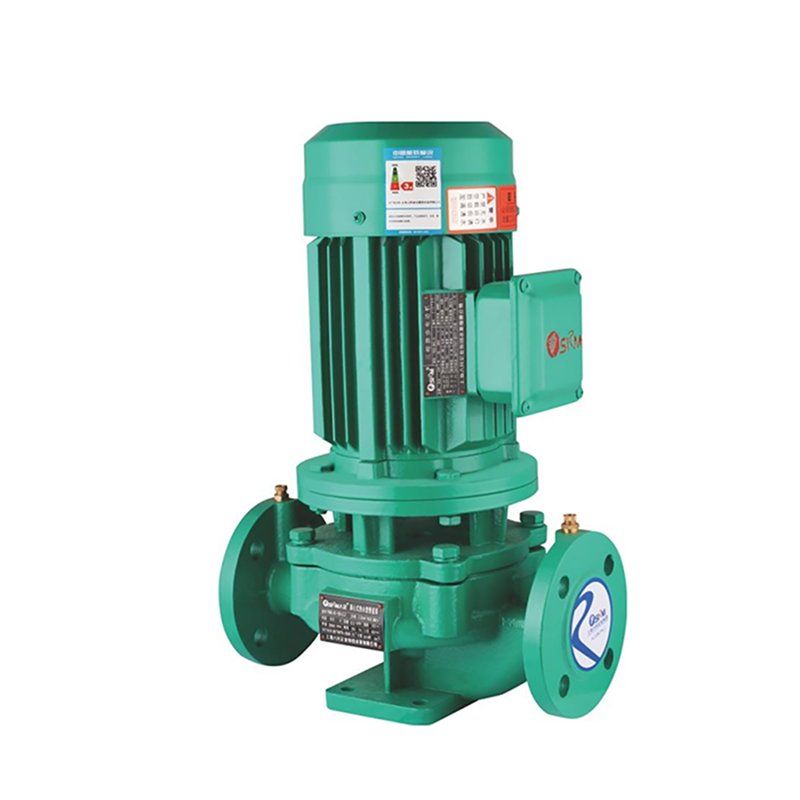
Impellers are the core working components of a multistage centrifugal pump and are responsible for transferring mechanical energy from the motor to the fluid. Each impeller is mounted on the rotating shaft and spins at high speed when the motor operates. As the impeller rotates, centrifugal force pushes the liquid from the center of the impeller outward along the curved blades. This motion increases the velocity of the fluid and begins the pressure-building process inside the pump.
In multistage centrifugal pumps, several impellers are arranged in series along the shaft. Each impeller represents one stage of pressure increase. As fluid moves from one impeller to the next, additional kinetic energy is added to the liquid. This sequential energy transfer allows the pump to gradually increase pressure without placing excessive stress on a single component. The design of the impeller—including blade angle, diameter, and material—directly affects pump efficiency, flow stability, and overall hydraulic performance. For this reason, modern pump designs often optimize impeller geometry to improve efficiency and reduce turbulence inside the pump.
Diffusers are stationary components located around or after the impellers in a multistage centrifugal pump. Their primary function is to convert the high velocity of the fluid leaving the impeller into pressure energy. When fluid exits an impeller, it contains significant kinetic energy. The diffuser channels gradually slow down the fluid while guiding it toward the next stage of the pump. According to fluid dynamics principles, reducing velocity allows pressure to increase.
The diffuser also helps stabilize the fluid path between stages. Without a properly designed diffuser, fluid flow could become turbulent and reduce pump efficiency. In multistage pumps, diffusers ensure that the liquid enters the next impeller smoothly and at the correct angle. This controlled transition improves hydraulic efficiency and reduces internal energy loss. In many industrial pump systems, optimized diffuser designs significantly contribute to maintaining stable pressure and minimizing vibration during long-term operation.
The shaft is a critical structural component that connects all impellers and transfers rotational power from the motor to the pump stages. When the motor operates, the shaft rotates continuously, causing all impellers mounted along it to spin simultaneously. This synchronized rotation enables each stage of the pump to perform its function in sequence.
Because the shaft carries the mechanical load generated by multiple impellers and rotating parts, it must be manufactured with high mechanical strength and precision. During operation, the shaft experiences torsional stress, vibration forces, and hydraulic loads. If the shaft is not properly balanced or aligned, it may cause excessive vibration, bearing wear, or seal damage. For this reason, pump shafts are typically made from high-strength materials and carefully engineered to ensure durability and smooth operation in demanding industrial environments.
The pump casing encloses all internal components of the multistage centrifugal pump and forms the main pressure boundary of the system. Its design determines the internal flow path of the fluid as it moves through the different stages. The casing directs the fluid from the suction inlet to the first impeller, guides it through each stage, and finally channels it to the discharge outlet.
In addition to guiding the fluid, the casing protects internal components such as impellers, diffusers, and the shaft assembly. It must withstand internal pressure, mechanical loads, and environmental conditions during pump operation. A well-designed casing helps maintain stable flow patterns and prevents leakage or structural damage. In many modern pump systems, the casing is engineered to minimize turbulence and energy loss while ensuring safe operation under high pressure.
Component | Function | Importance |
Impeller | Generates centrifugal force | Drives fluid movement |
Diffuser | Converts velocity to pressure | Improves efficiency |
Shaft | Transfers motor power | Synchronizes stage rotation |
Casing | Encloses pump structure | Maintains pressure containment |
Horizontal multistage centrifugal pumps feature a shaft that is positioned horizontally relative to the ground. This design allows the pump components to be arranged in a straight line within a horizontal casing. Horizontal pumps are widely used in industrial environments because they can handle large flow volumes while maintaining high pressure.
These pumps are commonly applied in boiler feedwater systems, high-pressure washing equipment, and industrial circulation systems. Their horizontal layout also makes them easier to inspect and maintain in many industrial facilities. Technicians can access components such as bearings, seals, and impellers without dismantling complex vertical structures. Because of these advantages, horizontal multistage pumps are frequently chosen for applications where high capacity and convenient maintenance are important.
Vertical multistage pumps use a vertical shaft configuration where the impellers are stacked on top of one another. This design significantly reduces the footprint of the pump system and makes it ideal for installations where floor space is limited. Buildings, water treatment facilities, and pressure boosting stations often rely on vertical multistage pumps for efficient water delivery.
In these systems, water enters from the lower section of the pump and moves upward through multiple stages before exiting the discharge outlet at higher pressure. Vertical pumps are especially effective in municipal water supply and HVAC circulation systems. Their compact structure allows them to fit into confined spaces while still delivering high performance and efficient pressure generation.
Borehole multistage pumps are specifically designed for deep well and groundwater extraction applications. These pumps are typically installed vertically inside boreholes or wells and are capable of lifting water from significant depths below ground level. Because groundwater sources often require high pressure to transport water to the surface, multistage pump designs are ideal for this purpose.
The stacked impeller configuration allows the pump to gradually increase pressure as the water travels upward through the pump stages. Borehole pumps are commonly used in agricultural irrigation systems, rural water supply networks, and mining operations. Their ability to operate reliably in submerged environments makes them an essential solution for deep groundwater extraction.
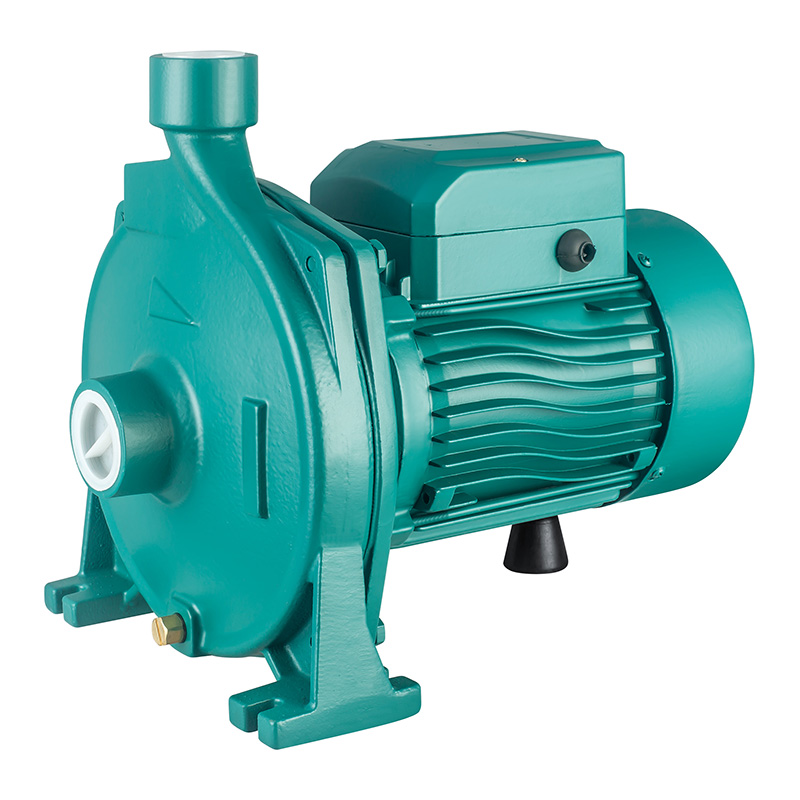
One of the most important characteristics of multistage centrifugal pumps is their ability to increase pressure sequentially. Instead of generating all required pressure in a single step, the pump distributes the pressure generation process across multiple stages. Each stage consists of an impeller and diffuser that work together to add energy to the fluid.
As fluid passes through each stage, its velocity increases due to centrifugal force from the rotating impeller. The diffuser then converts this velocity into pressure energy before directing the fluid to the next stage. By repeating this process several times, the pump gradually builds pressure while maintaining smooth and controlled fluid flow.
The total discharge pressure produced by a multistage centrifugal pump is closely related to the number of stages inside the pump. Each stage contributes a certain amount of pressure increase depending on the impeller design and rotational speed. When multiple stages are combined, their individual pressure increases accumulate to produce a significantly higher final discharge pressure.
Engineers often select the number of stages based on the required system head. If a system requires higher pressure, additional stages can be included in the pump design. Conversely, fewer stages may be used when moderate pressure is sufficient. This flexibility makes multistage pumps highly adaptable to different industrial requirements.
Although the pressure increases as fluid moves through multiple stages, the overall flow rate of the pump generally remains stable when operating at a constant speed. This characteristic allows multistage centrifugal pumps to deliver high pressure without sacrificing flow consistency. Stable flow conditions are essential in many industrial systems where pressure fluctuations could disrupt process operations.
Because of their balanced hydraulic design, multistage pumps can maintain efficient performance over long operating periods. Proper system design and pump selection ensure that the pump operates near its optimal efficiency point. When properly installed and maintained, multistage centrifugal pumps provide reliable pressure generation and consistent fluid transport in a wide range of industrial and municipal applications.
Multistage centrifugal pumps provide several operational advantages in high-pressure applications. Their design allows pressure to build gradually rather than in a single step. This reduces mechanical stress and improves system reliability.
The pump also operates efficiently because energy transfer occurs across multiple stages. Instead of forcing a single impeller to produce extreme pressure, several impellers share the workload. This design improves energy efficiency and reduces wear on internal components.
Another advantage is flexibility. Engineers can adjust pressure capability by changing the number of stages. This modular design allows pumps to adapt to different system requirements.
Note: Many modern centrifugal pump products integrate precision impeller design and modular structures that improve hydraulic efficiency and simplify maintenance. Solutions developed by Shanghai People Enterprise Group Pump Co., Ltd. are designed to support long-term industrial operation with stable pressure output and durable materials suitable for demanding environments.
Multistage centrifugal pumps are widely used in industries that require stable high-pressure fluid transportation. Water treatment facilities use them to deliver clean water across municipal networks. Power plants rely on them for boiler feedwater supply, where high pressure is essential for steam generation.
Agricultural irrigation systems also benefit from multistage pump technology. These systems distribute water over large fields and require pumps capable of maintaining consistent pressure across long distances.
Industrial processes such as chemical production, oil refining, and food manufacturing use multistage centrifugal pumps for reliable fluid transport. In many infrastructure projects, pump systems designed by Shanghai People Enterprise Group Pump Co., Ltd. are used to support municipal water supply, agricultural irrigation, and building pressure boosting systems where dependable high-pressure fluid movement is required.
Multistage centrifugal pumps raise pressure step by step through several impellers, delivering stable high-pressure fluid transport in demanding systems. Reliable pump solutions from Shanghai People Enterprise Group Pump Co., Ltd. offer durable design, efficient performance, and dependable operation for industrial and municipal applications.
A: It uses several impellers in series. Each stage increases pressure. This multistage centrifugal pump working principle delivers high pressure with stable flow.
A: A multistage centrifugal pump provides higher pressure. Each impeller adds energy, making it suitable for high-pressure water supply and boiler feed systems.
A: Multistage centrifugal pumps are used in municipal water supply, irrigation systems, industrial circulation, and boiler feedwater transport.
A: The number of stages depends on required pressure. Higher system head usually requires more stages in the multistage centrifugal pump system.


