


Where do you get water when surface sources fail? The answer often lies deep underground. A borehole pump is the key technology that taps into this vital resource. This guide explains what a borehole pump is and how it works. You'll learn about different borehole pump types and their applications. Discover reliable pumping solutions from Shanghai People Enterprise Group Pump Co., Ltd.
At its simplest, a borehole pump is a specialized water pump designed to be installed inside a narrow, deep hole drilled into the ground—a borehole. Its primary job is to lift water from an underground aquifer to the surface. Unlike many surface pumps, it is built to operate while fully submerged in water, often at great depths.
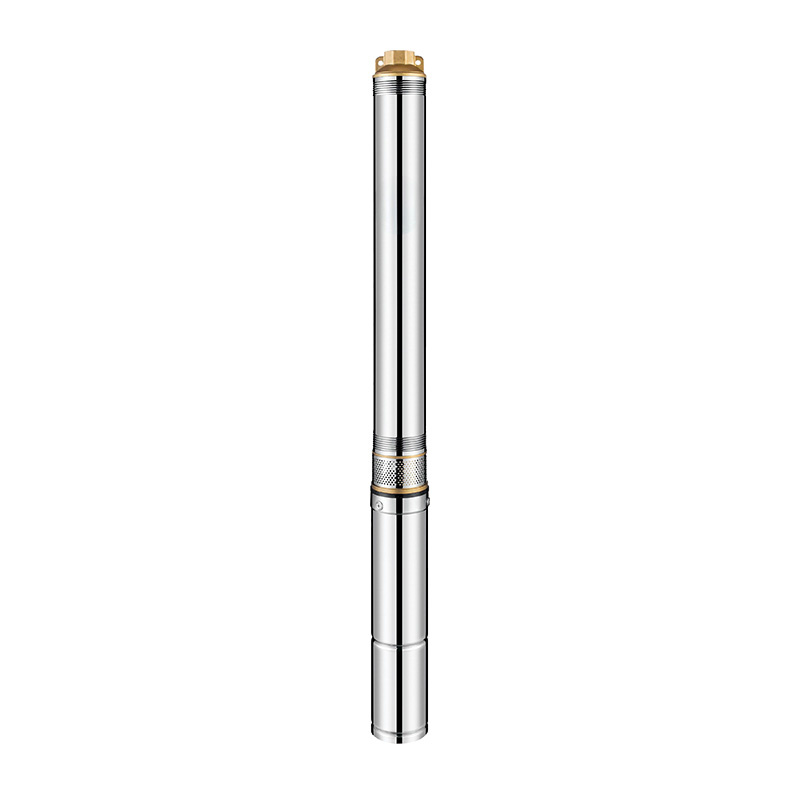
Think of it as a long, slender, powerful tube. It is lowered down a drilled hole until its intake is well below the water level. An electric motor inside the pump spins an impeller, creating the force needed to push water up through a pipe to the surface. This simple yet effective design is the answer to what is a borehole pump for millions of users worldwide.
Several features set borehole pumps apart:
● Submersible Design: The entire motor and pump assembly works underwater. This eliminates the need for suction lift, making it highly efficient for deep wells.
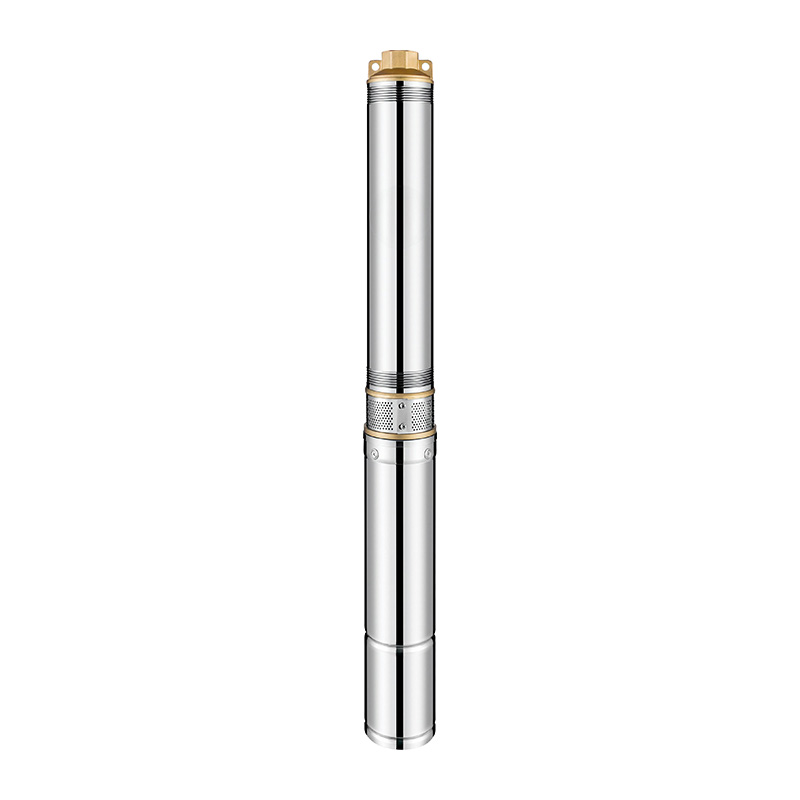
● Cylindrical and Slim: They have a long, narrow shape to fit inside the borehole casing, which is typically only a few inches wider than the pump itself.
● Built for Pressure: These pumps are engineered to generate significant pressure to overcome the vertical lift (head) from deep underground.
● Durable Materials: Constructed from corrosion-resistant materials like stainless steel to withstand long-term immersion.
The terms are related but distinct. A borehole is a deep, narrow hole drilled by a machine. A well can be broader and may be dug by hand or machine. The borehole pump is the device installed inside either structure to extract the water. Essentially, the borehole or well is the "container," and the pump is the "tool" that empties it.
The core mission is straightforward: reach deep aquifers and deliver water reliably to the point of use. This makes them indispensable where other water sources are inadequate or non-existent.
Understanding the mechanics demystifies this essential piece of equipment. The process is a brilliant application of centrifugal force and engineering.
Because the pump is submerged, it pushes water rather than pulling it. "Pushing" is much more efficient for lifting water over long vertical distances. This is the fundamental advantage of a borehole submersible pump.
1. Sealed Electric Motor: Located at the bottom of the unit, it is hermetically sealed to prevent water ingress.
2. Impellers: Stacked in series (especially in multi-stage pumps), these rotating discs are the "heart." They spin rapidly, imparting velocity and pressure to the water.
3. Intake Screen: A filter at the pump's bottom prevents sand and large debris from entering and damaging the impellers.
4. Discharge Outlet: The point where pressurized water exits into the riser pipe heading to the surface.
1. Activation: The control system (like a pressure switch) signals the pump to start.
2. Impeller Action: The motor spins the impellers, creating a low-pressure zone at the intake.
3. Water Intake: Groundwater is drawn into the pump through the screen.
4. Pressure Generation: The spinning impellers accelerate the water, converting kinetic energy into pressure.
5. Water Lift: The pressurized water is forced up the vertical drop pipe to the surface storage or pressure tank.
"Head" refers to the total vertical distance the pump must lift the water, plus pressure needed for the delivery system. A deeper borehole requires a pump capable of generating higher pressure. This is a critical specification when selecting a deep well borehole pump.
While submersible types dominate, understanding the full range is key to proper selection.
Pump Type | Key Mechanism | Best For | Typical Depth Range |
Multi-Stage Submersible | Multiple impellers stacked in series for high pressure. | Deep residential, agricultural, and industrial boreholes. | 100 - 1000+ feet |
4" Submersible Pump | Standard slimline design for common borehole diameters. | Most domestic and farm water supply boreholes. | Up to 600 feet |
6" Submersible Pump | Larger diameter for higher flow rates. | Municipal supply, large irrigation systems. | Up to 800 feet |
Line-Shaft Turbine Pump | Motor at surface, shaft drives impeller downhole. | Very high volume industrial applications. | Variable, often very deep |
This is the most common type for residential and agricultural use. Its sealed, submersible design offers reliability, efficiency, and quiet operation. The multi-stage impeller configuration allows it to generate the high pressure needed for deep sources. Manufacturers like Shanghai People Enterprise Group Pump Co., Ltd. offer extensive series of these pumps, engineered for durability and high performance across demanding applications.
"Multi-stage" means the pump has several impellers arranged in sequence. Water passes from one impeller to the next, with pressure increasing at each stage. This design is why a borehole water pump can lift water from several hundred feet below. These advanced hydraulic designs ensure efficient energy use, a hallmark of professionally engineered pumps.
Here, the motor sits above ground. A long vertical shaft connects it to the pump bowl assembly at the bottom of the borehole. These are used for extremely high-flow applications, like municipal water plants, where easy motor access for maintenance is a priority.
The versatility of borehole pump types makes them suitable for a wide array of settings.
For homes not connected to a municipal grid, a borehole pump provides a private, dependable water source for drinking, bathing, cleaning, and gardening.
They are the backbone of crop irrigation, providing large volumes of water on demand to sustain agriculture in arid regions or during dry seasons.
Entire villages or small towns often rely on a centralized high-capacity borehole pumping system for their communal water needs.
Factories, resorts, mining operations, and other facilities use borehole pumps for process water, cooling, or general supply, ensuring operational independence.
Choosing a borehole system offers significant benefits over relying on surface water or delivered water.
You control your own water source. This eliminates dependency on municipal systems and protects you from external water shortages or restrictions.
Groundwater is often naturally filtered through layers of rock and soil, resulting in clean, cool water that typically requires less treatment than surface water.
After the initial investment in drilling and borehole pump installation, the ongoing costs are primarily just electricity for pumping. This is far cheaper than regularly purchasing and transporting water by truck.
Their unique cylindrical design is the only practical solution for extracting water from modern, machine-drilled boreholes, which are deep and narrow to minimize drilling costs.
A successful installation depends on careful planning and understanding your specific needs.
Calculate your peak water demand (in gallons per minute - GPM) and total daily usage. This determines the pump size and horsepower required. A typical household may need 5-10 GPM.
You must know the static water level (where the water sits naturally), the pumping water level (where it drops to during pumping), the borehole diameter, and its sustainable yield (how much water it can provide per hour).
TDH is the total pressure the pump must overcome. It includes:
● Vertical Lift: From the pumping water level to the surface.
● Surface Pressure: Needed at your taps (e.g., 40-60 PSI).
● Friction Loss: Resistance in the pipes. Selecting a pump with a TDH rating that matches or exceeds your calculated need is crucial.
Using your required Flow (GPM) and calculated TDH, you can consult a pump performance curve to select the right model. Oversizing wastes energy; undersizing fails to meet demand. For robust and reliable performance, products from established manufacturers like Shanghai People Enterprise Group Pump Co., Ltd. provide clear technical specifications and a wide performance range, supporting accurate selection for diverse projects.
To appreciate its value, it helps to compare it to alternatives.
Extraction Method | Mechanism | Max Practical Depth | Pros | Cons |
Borehole Submersible Pump | Submerged motor pushes water. | 1000+ feet | Efficient for deep wells, reliable, quiet. | Requires professional installation. |
Jet Pump (Above Ground) | Creates suction to pull water. | ~25 feet | Lower initial cost, easy DIY service. | Inefficient for deep wells, noisy, can lose prime. |
Hand Pump | Manual lever action. | ~200 feet | No electricity needed, simple. | Very low flow, labor-intensive. |
Solar Surface Pump | Solar panels power a surface pump. | Shallow wells only | Green, low operating cost. | Limited by sunlight, not for deep wells. |
A borehole pump is a specialized submersible pump for extracting groundwater. It works by pushing water from deep underground to the surface. This makes it ideal for homes, farms, and industries needing a reliable water supply. Choosing a durable, efficient pump is key for long-term success. Shanghai People Enterprise Group Pump Co., Ltd. offers robust borehole pumps designed for performance and longevity in demanding applications.
A: A borehole pump is a specialized submersible water pump designed to lift water from deep underground sources through a narrow drilled hole.
A: A submersible motor powers impellers to push water up a pipe. Proper borehole pump installation ensures it operates efficiently at depth.
A: The main advantages are reliable access to clean groundwater, independence from municipal supply, and suitability for a wide range of borehole pump types.
A: Multi-stage submersible borehole pumps can reach over 1000 feet, depending on the model and the power of its motor.


